
For years, a persistent belief offered comfort against the otherwise grim trajectory of global environmental trends: that common sense would ultimately prevail. As the catastrophic consequences of dismantling the living world become increasingly obvious, the reasoning went, even the most rapacious resource exploiters would eventually come around. After all, nobody wants to live on a dead planet.
There were, and in some regions still are, tangible signs that this perspective was not merely wishful thinking. Since 2015, largely driven by domestic policies in China, the total global area undergoing reforestation has steadily increased. Simultaneously, thanks in significant part to conservation efforts in Brazil, the global rate of forest destruction has experienced a marked decline. Historical records maintained since 1988 show that the area of the Brazilian Amazon cleared annually has dropped significantly, currently standing at a fraction of its historical peak. Over the past four years, shifting government priorities in Brazil have successfully driven down deforestation rates by 71%. With Luiz Inácio Lula da Silva seeking re-election, projections suggested the country could potentially achieve zero deforestation by 2030, offering a glimpse of an international environmental arc bending slowly toward sustainability.
Yet this hopeful outlook failed to account for a darker, more complex dynamic: a perverse delight in systemic destruction harbored by a small cohort within the global economic and political elite. Within certain far-right circles, a faction appears driven by an ideological animus that prioritizes spite over self-preservation. In the United States, Donald Trump’s systematic removal of environmental protections on public lands, his administration’s targeted initiatives to open parts of Yosemite National Park to private development, and sustained assaults on the operational capacity of the US National Park Service and the US Forest Service illustrate this shift. Alongside these measures, the systematic gutting of the Endangered Species Act is framed partly as a direct response to intensive lobbying by agricultural, logging, fossil fuel, and mining interests.
However, policy analysts and observers argue that commercial lobbying does not fully explain the breadth of these actions. More potent, observers suggest, is a vengeful desire to inflict political and cultural damage. It is unlikely that political figures harbor a specific hatred for organisms like the monarch butterfly; rather, the animosity appears directed at the people who value them. Dismantling the habitats upon which endangered species depend functions as a manifestation of promised political retribution. Media investigations into administrative budget cuts and policy rollbacks reveal a broader pattern: when traditional conservation measures, public lands, and regulatory frameworks are championed by political opponents, environmentalists, liberals, socialists, feminists, and civil servants, they become targets for systematic dismantling simply because they are valued by the political opposition.
Wiping fragile ecosystems off the map serves as a stark, permanent demonstration of political power. Ecological extinction leaves an irreversible scar on the landscape—a permanence that appeals directly to authoritarian impulses. Furthermore, it acts as an effective mechanism for harming populations that resist far-right hegemony: Indigenous communities and other people of color who disproportionately bear the brunt of environmental degradation, alongside regulatory agencies, scientific institutions, and the broader intelligentsia.
At the core of this ideological shift is a direct challenge to the concept of empathy itself. In contemporary political discourse across various media platforms, the concept of empathy is frequently disparaged by far-right commentators as a form of weakness or a liability, framing those who express concern for human welfare or ecological preservation as targets for political subjugation. This worldview, which rationalizes the destruction of environmental and social support systems, has found a receptive audience among voters persuaded by populist rhetoric and promises of aggressive law-and-order policies.

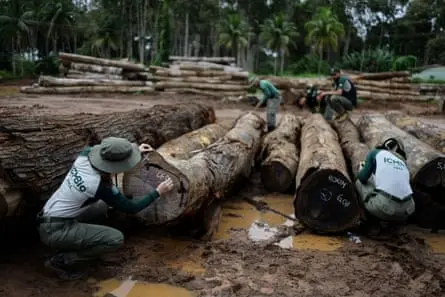
This political phenomenon finds a striking parallel in South America, where the political lineage of Bolsonaroism continues to cast a long shadow over Brazil’s ecological future. Politically and stylistically, Flávio Bolsonaro mirrors his father, the jailed former president Jair Bolsonaro, whose tenure marked a catastrophic era for the Amazon rainforest. During Jair Bolsonaro’s presidency, ecological destruction was openly accelerated; deforestation rates surged by 59% over four years, while violent conflicts involving illegal ranchers, loggers, and goldminers escalated dramatically across Indigenous territories. Unchecked resource extraction became official state policy, pursued regardless of its long-term economic or social costs.
The underlying ideology of Brazil’s far-right movement is frequently summarized by its proponents as "beef, Bible, and bullets." This formula combines aggressive opposition to land rights, ultra-conservative evangelism, and the expansion of cattle ranching, which remains the primary driver of deforestation in the Amazon and a potent symbol of regional machismo. Jair Bolsonaro frequently expressed nostalgia for Brazil’s military dictatorship spanning from 1964 to 1985—a regime that enjoyed active foreign support and during which political dissidents faced severe state-sponsored violence. Despite these explicit historical warnings, political polarization has kept the movement viable. Following a strong showing in the first round of voting on October 4, Flávio Bolsonaro emerged as a formidable contender for the presidency.
A victory in the runoff election threatens to unleash a renewed wave of ecological degradation across multiple vital biomes, extending far beyond the Amazon basin to include the Atlantic Forest in the south, the Pantanal wetlands, the Pampa grasslands, and the biodiverse savannahs of the Cerrado. Observers characterize this approach as politics driven by an intentional unravelling of national life-support systems, pursued with little regard for the downstream consequences.
International alliances have further complicated domestic environmental battles. Donald Trump has actively worked to influence regional politics in South America, viewing the hemisphere through an extractive lens reminiscent of historical resource exploitation. For far-right demagogues across the region, mass deforestation and the tipping points of sudden ecosystem collapse represent an irreversible political reality: once an ecosystem is destroyed, restoration becomes nearly impossible, permanently altering the demographic and ecological landscape for Indigenous populations, environmental advocates, and future generations.
The rise of this political current offers sobering lessons about contemporary governance. It demonstrates that ruling-class opposition to progressive reform can extend to self-sabotage, preferring widespread ecological impoverishment over any redistribution of wealth or planetary stewardship. It also highlights the efficacy of modern communication channels—spanning traditional media, digital platforms, and ideological pulpits—in framing destructive policies as necessary or inevitable through the application of state force.
Against this backdrop, the traditional assumption that humanity’s basic survival instinct will prevent planetary ruin faces a new challenge. High-profile figures in the technology sector have popularized notions of multi-planet civilization that treat Earth as ultimately disposable, weakening the cultural consensus around terrestrial preservation. As political movements continue to champion resource extraction and environmental deregulation, the struggle to protect the planet’s remaining ecosystems remains closely tied to the broader defense of democratic institutions, scientific integrity, and public empathy.