


The stock market has a persistent habit of surprising everyone, leaving financial analysts and everyday investors alike dusting off old refrains about record-breaking valuations and inevitable downturns. When the market crashes, anxiety flares as retirement portfolios shrink. Yet, even when equities surge to unprecedented highs, a different brand of worry takes hold. Investors whisper that a catastrophic correction is looming, especially as the current market boom is driven by the white-hot frenzy of artificial intelligence.

For those who have tuned out the daily financial theater to focus on living their lives, the serenity is well-earned. But the broader narrative surrounding the AI boom is hard to ignore. Market observers worry that while artificial intelligence is unquestionably a monumental technological advancement, the speculative mania surrounding it is moving too fast and reaching too high. Many fear a replay of the dot-com crash of the early 2000s—an era that ironically fueled the early career and path to early retirement for prominent financial commentator Mr. Money Mustache, before the subsequent bust nearly derailed his livelihood and citizenship application.

As questions surrounding this latest investment cycle mount, veterans of past financial booms and busts are once again addressing public anxiety. Discussions on the topic have taken center stage at financial independence gatherings like Camp FI Midwest and upcoming forums such as the Bogleheads conference. The core anxiety remains remarkably consistent across generations: how can anyone remain comfortably retired and sleep peacefully at night with so much turmoil in the world?

Will the AI Bubble Ruin Our Retirement?
Achieving financial independence and stepping away from traditional work for over two decades brings a certain comfort with market volatility. Yet, even long-term retirees occasionally encounter questions from friends expressing genuine astonishment that anyone can remain relaxed given the state of global affairs. A typical list of modern anxieties includes political instability, persistent inflation, the looming shadow of the AI bubble, mounting national debt, and simmering international conflicts threatening broader destruction.

Curiously, these exact themes echo concerns raised two decades ago. Looking back to 2006, the worries of the day felt just as existential. Back then, society wrestled with controversial political leadership, wars in the Middle East, national debt, inflation, and a notoriously overvalued housing market that eventually triggered the Great Financial Crisis. Instead of artificial intelligence threatening jobs, the prevailing fear was widespread economic outsourcing to India and China. There was even an intense global debate over "Peak Oil," with doomsday predictions claiming fossil fuel consumption would inevitably outstrip supply—an outcome that was ultimately upended by technological shifts.

Despite the severe shock of the Great Financial Crisis—historically the largest market crash since the Great Depression—the long-term trajectory of the markets tells a different story. Broad market indexes demonstrate that disciplined, long-term investments have historically weathered even the most violent storms. Furthermore, global living standards improved dramatically over that same twenty-year span. Extreme poverty rates plummeted, infant mortality was cut in half, and clean energy adoption surged as the cost of solar panels dropped drastically. Pure electric vehicle adoption similarly transitioned from a theoretical concept to a major market share.

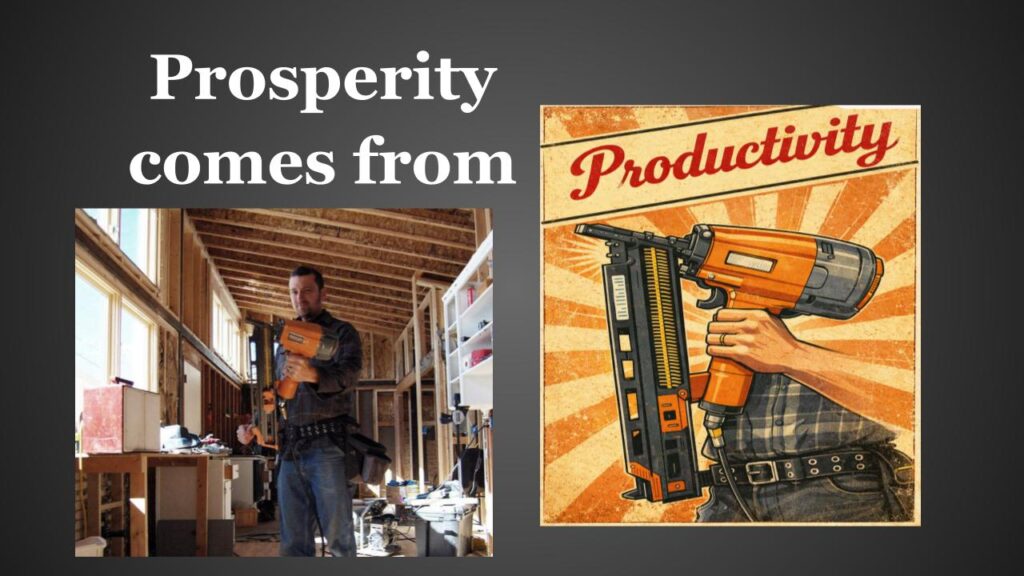
This historical context raises a fundamental question: is it truly different this time? Skeptics point to the staggering scale of the U.S. national debt, the unprecedented velocity of the AI bubble, or theoretical concerns regarding superintelligent systems spinning out of control. Financial media outlets thrive on crafting compelling, fear-driven narratives. However, these pessimistic outlooks frequently overlook a foundational economic reality: true prosperity does not originate from financial systems or stock market tickers, which are ultimately human-constructed abstractions. Instead, prosperity stems entirely from productivity.

Productivity, Happiness, and the Nature of Fear
The world of capitalism is inherently volatile, characterized by choppy waters and wild cyclical swings. Beneath those waves, however, real people perform tangible work and develop genuine innovations. If a financial system collapses due to unsustainable valuations, society has historically demonstrated the capacity to reset the numerical framework and return to productive labor. The fundamental tools driving economic growth, higher standards of living, and early retirement capabilities remain rooted in human productivity.
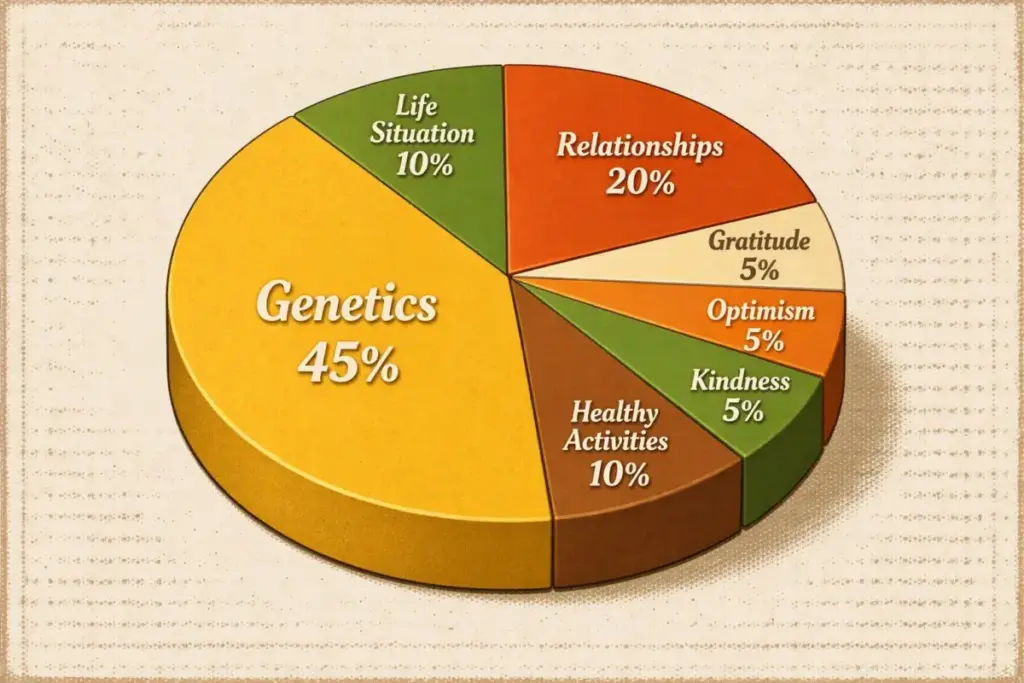
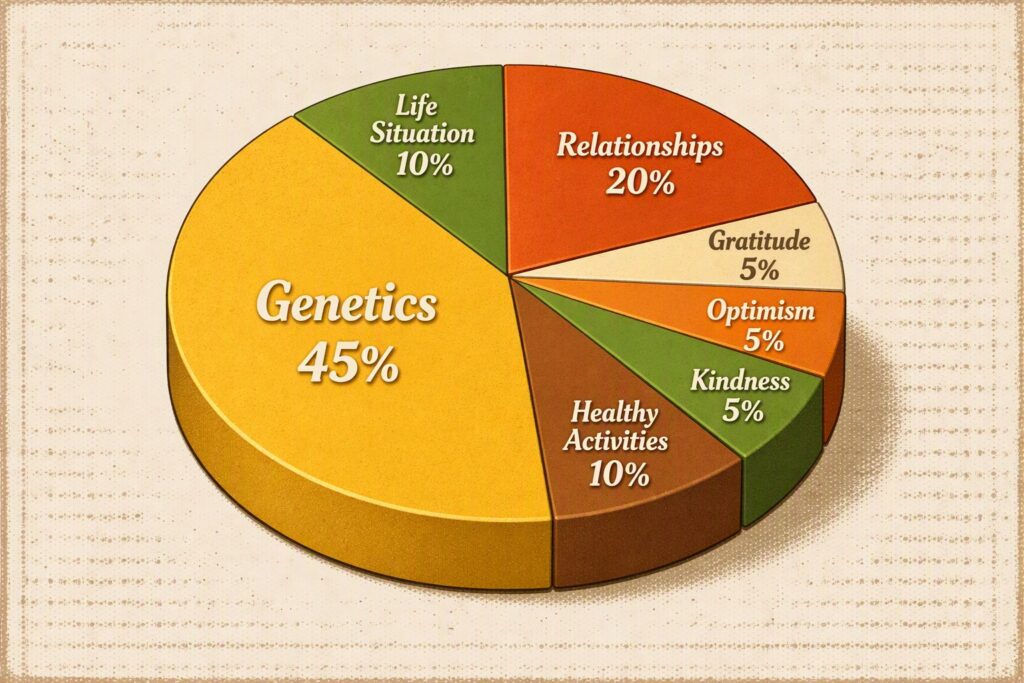
Once a society achieves a certain baseline standard of living, human happiness tends to plateau along financial dimensions. Advanced economies surpassed those minimum requirements decades ago, shifting the focus of well-being toward non-financial factors. Psychological research suggests that wealth is merely a minor component of a broader happiness pie. Genetics, strong personal relationships, the practice of gratitude and optimism, and engagement in healthy physical activities heavily outweigh monetary accumulation in determining overall life satisfaction.
Yet, despite understanding these principles, anxiety persists even within financially secure communities. The root of the issue lies in human biology. As a species, humans evolved primarily as danger-detection machines. This pervasive background fear served as an evolutionary defense mechanism against predators, disease, and scarcity. The complication of modern life is that once immediate physical dangers are mitigated, the human brain continues scanning the horizon for new threats, effectively moving the goalposts of anxiety.

When physical survival is secure, people pivot to worrying about social standing, monetary comparisons, or granular lifestyle details like neighborhood property upkeep and complex tax strategies. Fortunately, this innate fear response can be managed through self-awareness and rational thinking. Understanding personal history—such as childhood experiences with financial scarcity or trauma—helps contextualize modern anxieties, separating past conditioning from present reality.
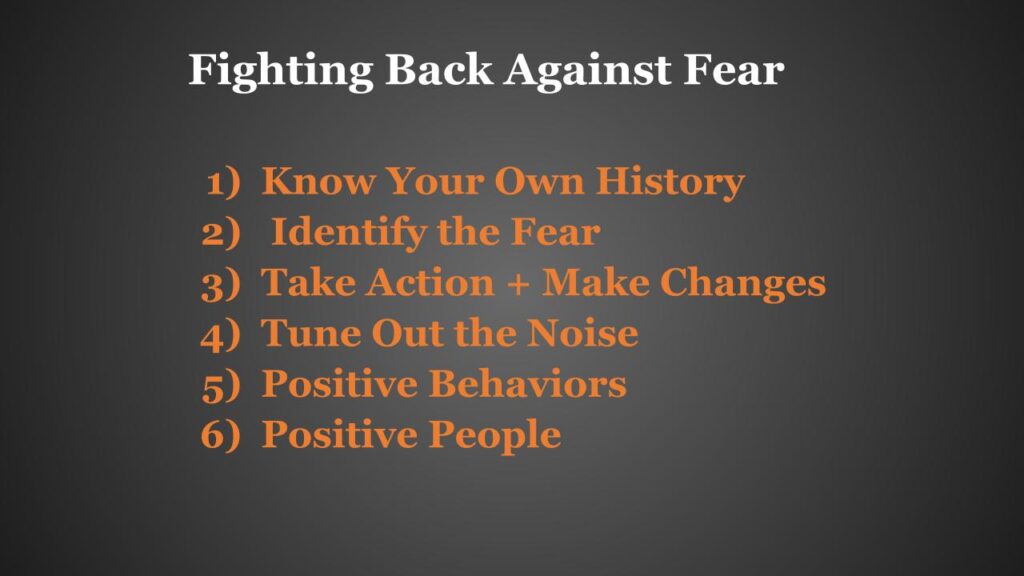
Directly confronting and defining worst-case scenarios often reveals that feared outcomes are far less catastrophic than imagined. Taking concrete action makes the unfamiliar familiar, building the resilience and confidence required to navigate shifting circumstances. By intentionally curating mental diets—such as reducing exposure to sensationalized daily news—individuals can align their daily routines with physical and mental well-being rather than perpetual alarm.

Viewing Technological Shifts as Experiments
Approaching modern uncertainties through the framework of experimentation alters the psychological response to change. Whether evaluating a minor lifestyle adjustment or a major life transition like early retirement, treating life choices as experiments removes the paralysis of perfection.

This experimental mindset applies directly to the current artificial intelligence wave. Rather than succumbing to doom-scrolling and generalized dread, analyzing the underlying mechanics of AI reveals it to be a powerful technological lever—effectively a cognitive nail gun designed to enhance efficiency and productivity. While technological revolutions historically displace certain administrative and operational roles, they simultaneously reduce service costs and catalyze entirely new industries, much like the advent of the internet and mobile computing.
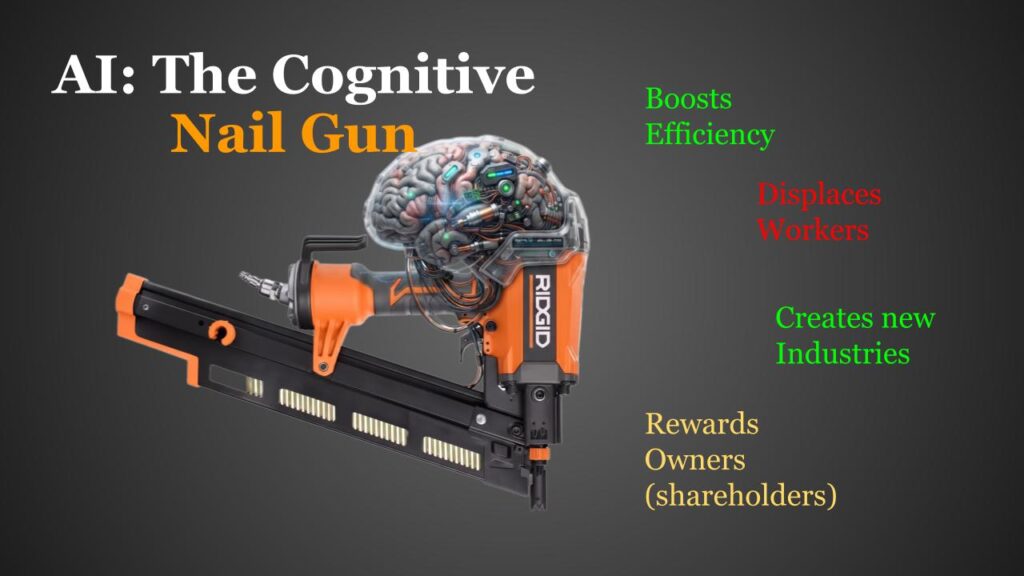
The economic rewards of these innovations naturally tend to favor those who own the underlying infrastructure, including everyday investors holding broad market portfolios. Artificial intelligence represents another wave of opportunity, requiring individuals to choose whether to react with fear or to use the shift as a catalyst for ongoing learning, adaptation, and purposeful engagement. Ultimately, overcoming persistent anxiety requires confronting the root causes of fear rather than merely treating its symptoms, keeping in mind that personal growth and fulfillment lie just beyond the threshold of what feels uncomfortable.