



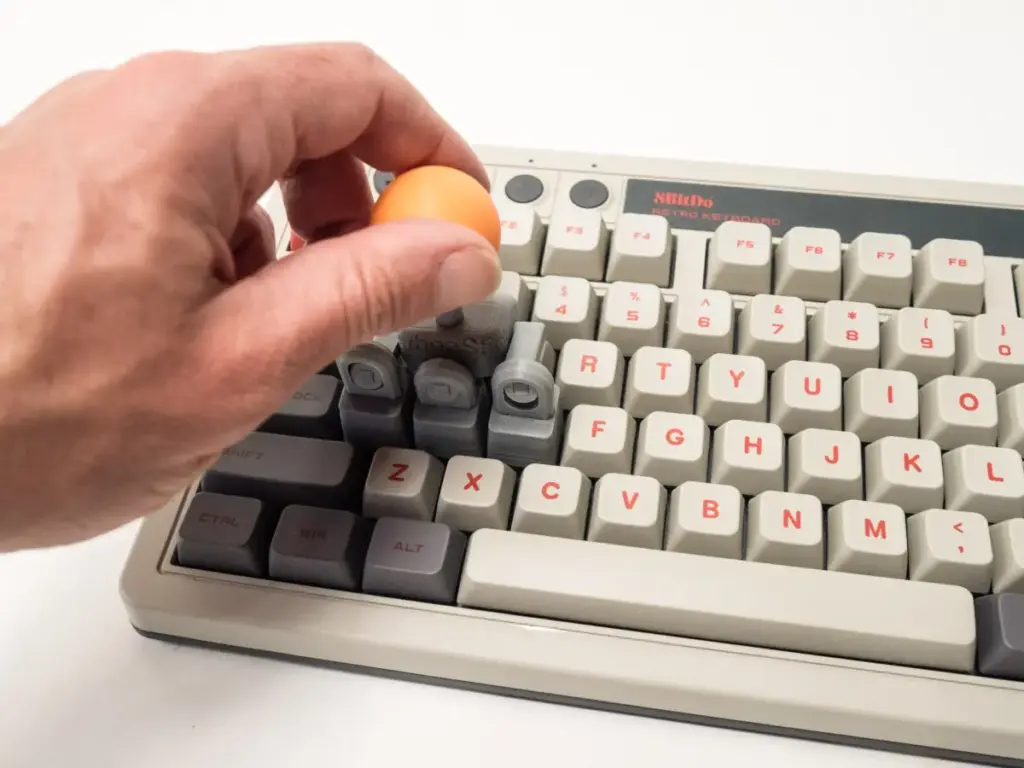
For mechanical keyboard enthusiasts and retro gaming fans alike, desktop peripherals are more than just tools for typing; they are canvases for customization. From custom keycaps and artisan switches to completely bespoke layouts, the mechanical keyboard community thrives on hardware modifications. Now, a clever new 3D-printed accessory called the KeyboaStick is offering a fresh way to interact with standard keyboards, blending the tactile precision of a physical joystick with the everyday utility of a traditional desktop setup.
Priced accessibly between $0 and $17 depending on whether users choose to print the files themselves or purchase pre-made versions, the KeyboaStick has quickly captured the attention of the maker and gaming communities. Designed by Korean creator FunOrNothing, the accessory is hosted on MakerWorld and has generated significant discussion across online maker forums and community Discord servers.
The core concept behind the KeyboaStick is deceptively simple: it transforms a standard cluster of keys—most commonly the WASD configuration used for movement in PC games, or dedicated arrow keys—into an articulated mini-joystick. Using a series of 3D-printed linkages, the accessory attaches to custom keycaps that replace the standard keys. When the user pushes the joystick in any direction, the mechanical linkages depress the underlying switches in precise combinations, translating analog-style directional input into standard digital keyboard commands.

One of the most notable engineering achievements of the KeyboaStick is its manufacturing accessibility. The design features joints that largely print in place, reducing the need for complex multi-part assembly or specialized hardware fasteners. Furthermore, the model has been engineered with a forgiving design tolerance, meaning it can be successfully fabricated even on older, less-than-perfectly-calibrated 3D printers that might struggle with high-precision prints.
For those who decide to download and print the model themselves, the assembly process is designed to be straightforward. According to hands-on testing, the components fit together seamlessly with minimal post-processing required. While users might notice a slight initial resistance or a somewhat sticky movement when aiming toward the sides, the mechanism remains fully functional for real-time applications. Even under the pressure of fast-paced retro gameplay—such as navigating through the Emerald Hill Zone in Sonic the Hedgehog 2—the controller modification proves capable of handling standard gaming inputs without hindering performance.
The popularity of the KeyboaStick has inevitably brought broader attention to the challenges faced by independent designers in the open-source hardware community. Like many successful 3D-printable designs, the files and concepts have frequently been appropriated by unscrupulous commercial sellers on various online marketplaces without proper attribution or support for the original creator. To combat this and provide a reliable avenue for enthusiasts who lack access to a 3D printer, FunOrNothing has partnered with official channels to offer finished prints directly through the RadianLab store on Etsy.
The ecosystem surrounding the KeyboaStick has also expanded beyond the initial WASD configuration. The designer has since introduced alternative versions tailored for different keyboard layouts, including a quick-replace option designed for faster installation and removal. Additionally, a redesigned Pro version has been developed and made available as a physical print through the RadianLab Etsy shop, promising enhanced mechanical performance and smoother directional movement for demanding users.

While hardware modifications of this nature are undeniably fun and breathe new life into standard peripherals, they also introduce a humorous learning curve. Testers have jokingly blamed the accessory for sudden virtual downfalls—such as encountering a Game Over screen in the notoriously difficult Chemical Plant Zone—though industry observers note that such mishaps are far more likely a reflection of player skill than any mechanical limitation of the 3D-printed joystick itself.
As 3D printing continues to intersect with mainstream consumer electronics and gaming culture, projects like the KeyboaStick demonstrate the ongoing ingenuity of independent creators. By bridging the gap between traditional mechanical keyboards and classic analog controllers using desktop fabrication tools, the KeyboaStick offers a low-cost, highly engaging modification that turns ordinary hardware into something extraordinary.