


The Chicago culinary scene has long embraced ambition, but few recent openings match the cultural and historical scope of Muhājir, the summer debut from acclaimed chefs Zubair Mohajir and Jacob Dela Cruz. Located in the vibrant Lincoln Park neighborhood, the restaurant represents a deliberate and exciting departure for both chefs. Known widely for their previous work crafting intricate, highly technical tasting menus, Mohajir and Dela Cruz have pivoted toward an interactive, wood-fired shared-plate concept that spans the culinary traditions of Europe, the Middle East, and Southeast Asia.
For diners accustomed to the rigid pacing of traditional tasting menus, Muhājir offers a breath of fresh air. The atmosphere is grounded in the primal warmth of an open hearth, where oak wood, olive wood, and coal burn continuously to impart deep, smoky complexities into every dish. Stepping behind the swinging kitchen doors reveals a meticulous operation where ancient culinary techniques are revived, refined, and executed at a dizzying pace. A typical day of prep and service at the Lincoln Park establishment is a masterclass in global gastronomy, blending centuries-old recipes with modern kitchen precision.
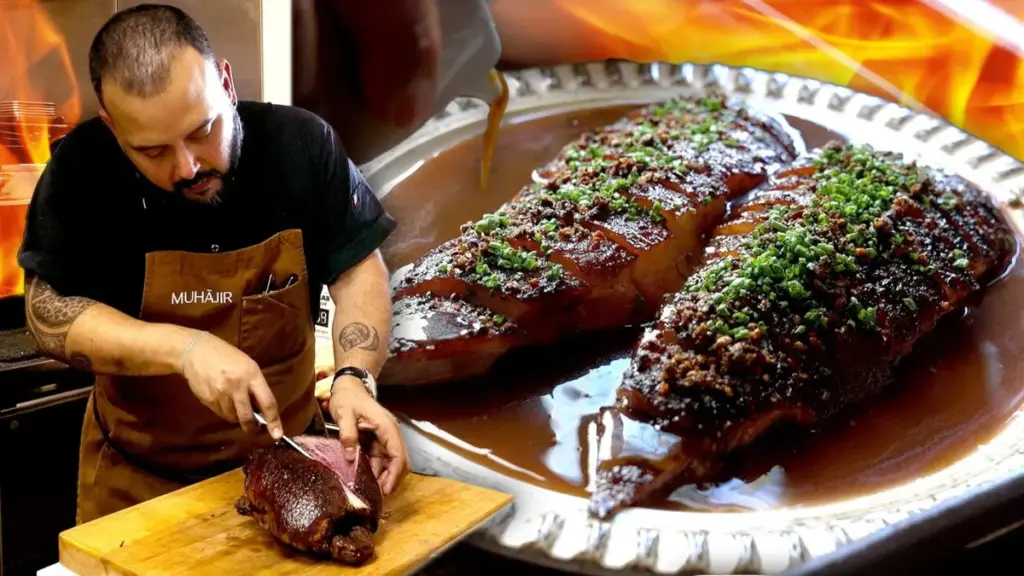
The culinary journey at Muhājir begins long before the first guests arrive for evening service. Prep work often starts with the careful breakdown of rare halal duck, intended for the restaurant’s ambitious Duck Numidian dish. This centerpiece is not a modern invention, but rather a faithful recreation of a 920-year-old recipe originating from southern Spain—a culinary artifact that the chefs have spent years workshopping and perfecting. Every part of the bird is utilized with zero waste in mind. The wings and neck are slowly rendered down to create a rich, deeply concentrated duck jus served on the side. Meanwhile, the duck legs are transformed into a tender confit that gets folded into a savory duck rice, complemented by dry-aged duck breasts. During service, these breasts hang gracefully over the open fire before receiving a final, crisp finish in the oven, marrying historical reverence with contemporary execution.
Before diving into the heavier mains, the meal frequently begins with an array of vibrant starters designed to awaken the palate. The kitchen prepares a diverse selection of globally inspired dips and shattas, utilizing surprising flavor profiles and ingredients ranging from creamy cream cheese to earthy fava beans. These accompaniments are served alongside freshly baked roasted focaccia and crisp papadam, establishing an immediate cross-cultural dialogue that sets the tone for the rest of the menu.

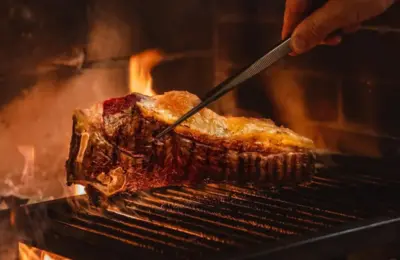
The kitchen’s beating heart is undeniably its custom hearth and oven, fueled by a carefully calibrated mix of oak wood, olive wood, and coal. This trifecta of woods provides a nuanced smoke that permeates the ingredients without overwhelming them. One of the prime examples of this hearth-centric cooking is the preparation of whole branzino. Before the fish ever touches the grill, it undergoes an intensive breakdown process where every single bone is meticulously removed by hand. To achieve the ultimate texture, the whole branzinos spend several days resting in the refrigerator, allowing the skin to dry out so it can blister and crisp up instantly upon hitting the blistering heat of the fire. Once cooked to perfection, the fish is laid over a luxurious, velvety sauce crafted from walnuts, yogurt, and fresh coriander, then crowned with a bright, acidic relish to cut through the richness of the fish and nuts.
Transitioning from the delicate seafood to the heavier, heartier proteins reveals yet another layer of the menu’s geographical and historical depth. The Beef Cheek Nihari stands out as a tribute to Pakistani culinary tradition, executed with uncompromising standards. Utilizing premium halal wagyu beef, the dish is heavily seasoned with a toasted and ground spice blend featuring cinnamon, black pepper, coriander, cumin, clove, and cardamom. The beef is initially roasted on high heat to lock in its natural juices before being slowly braised in its own fat for an astonishing 14 hours. The same aromatic spices are infused into a potent jus that accompanies the meat throughout its long cooking process. True to the communal spirit of the restaurant, the Nihari is brought directly to the table in the ornate clay pot in which it was cooked, inviting guests to share in the warmth and tradition of the dish.
Accompanying these heavy hitters are house-made specialties like the saffron rice dumplings known as faraa. Treated with the same reverence and technique as fine pasta, these delicate dumplings are tossed with seasonal vegetables and a luscious cream sauce, demonstrating the kitchen’s technical versatility beyond meat and fish.
The relentless energy of the Muhājir kitchen—from breaking down whole branzinos to tending to massive fires for braising wagyu beef cheeks—captures the essence of what makes Mohajir and Dela Cruz’s latest venture one of the most talked-about openings of the season. For food enthusiasts eager to witness how centuries-old recipes from Spain, Pakistan, and beyond are brought to life over an open flame, the restaurant offers an immersive look into a kitchen where history and modern technique seamlessly collide.