

Brno is hitting its stride, and the maker community is leading the charge. Often playfully overshadowed by its larger neighbor, Prague, the city likes to joke that it is merely a village. Yet, with a substantial local population and approximately 80,000 university students, there is nothing small about Brno’s creative energy. Driven by young minds, big ideas, and an appetite for technology, craftsmanship, and hands-on experimentation, the city has firmly established itself as fertile ground for modern making.
Since its launch in 2019, Maker Faire Brno has expanded significantly, welcoming around 7,500 visitors and hundreds of creators from across Czechia and neighboring regions. Fab Lab Brno has served as a vital partner to the Make More team—the organizers behind Maker Faire events throughout the country—helping to cultivate the community one maker at a time. The momentum continues to build as Maker Faire Brno returns for its eighth edition, bringing together engineers, artists, students, and curious minds.

The venue itself is an integral part of the experience. Brno’s Exhibition Halls are uniquely suited for a Maker Faire, offering striking architecture, soaring ceilings, floods of natural light, and even an integrated planetarium. Spanning a sprawling main hall along with countless nooks and crannies to explore, the venue turns every corner into an encounter with curiosity in action, clever engineering, creative experimentation, and serious technical talent.

Prusa Research Fuels the Maker Spirit in Brno
As a driving force behind the explosion of Maker Faires across the Czech Republic, Prusa Research brings its distinctive maker spirit directly to Brno. Known globally for its integrated, in-house manufacturing approach, Prusa serves as a shining example of Czech ingenuity and demonstrates what happens when making is placed at the heart of a business.

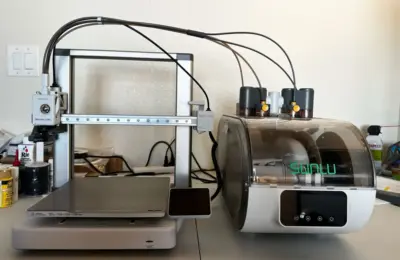
For this year’s event, attendees have the chance to participate in the Maker Challenge, where clever ideas and 3D printing can give discarded items a second life as useful, functional tools. Successful participants just might head home with a brand-new Prusa 3D printer to fuel their next big idea. For those unable to make the trip to Brno, Prusa will also be showcasing its innovations at Maker Faire Rome the following week.

Showcasing Innovation: Projects on Display
Maker Faire is where the boundaries between engineering, art, science, and everyday problem-solving naturally blur. The 2026 lineup in Brno features a diverse array of projects, ranging from custom audio equipment and DIY electronics to resourceful agricultural initiatives, accessible technology, and hands-on mechanical tinkering.

Among the standout exhibits is Acoustika 3D, a custom-designed, 3D-printed loudspeaker created by SIMPLIXITY. Combining a passion for Drum & Bass with engineering and 3D printing, the project invites visitors to explore what lies inside the enclosure and discover how physical design shapes acoustic sound.

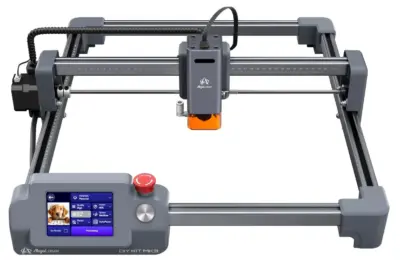
In the realm of fine art and technical craftsmanship, Sublisica by maker Jan Grygerek turns tiny frozen soap-bubble crystals into the starting point for a surprising fusion of photography, chemistry, and design. When off-the-shelf equipment proved inadequate, Grygerek designed his own custom engraving machine to permanently preserve these fleeting patterns on glass.

Agricultural resourcefulness is also on display with Biouhel, a project that demonstrates how piles of pruned branches and garden waste can be transformed into biochar. This porous, carbon-rich material helps soil retain vital water and nutrients while offering potential long-term carbon-storage benefits through a straightforward, inventive process.

Academic institutions are well represented, with Masaryk University’s computer science labs bringing theoretical concepts into the physical world. Their interactive displays feature robots that draw with pens and marionettes controlled by human movement, making algorithms, robotics, and human-computer interaction tangible and engaging.

Other notable exhibits include material and equipment showcases from 3Dfil.cz, and interactive bearing stations where visitors of all ages can practice removing and reinstalling components from skateboards, roller skates, and bicycles. Meanwhile, the Brno University of Technology is presenting KAMaRAD, a prototype that pairs sensors with millimeter-wave radar to detect road hazards and enhance safety for cyclists and other vulnerable street users.

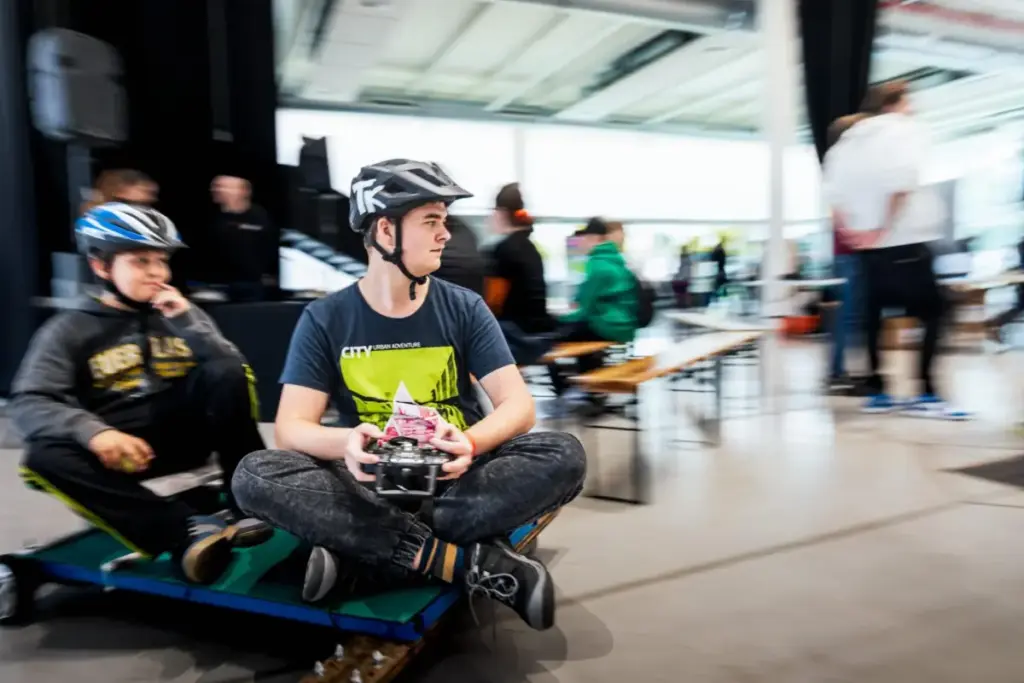
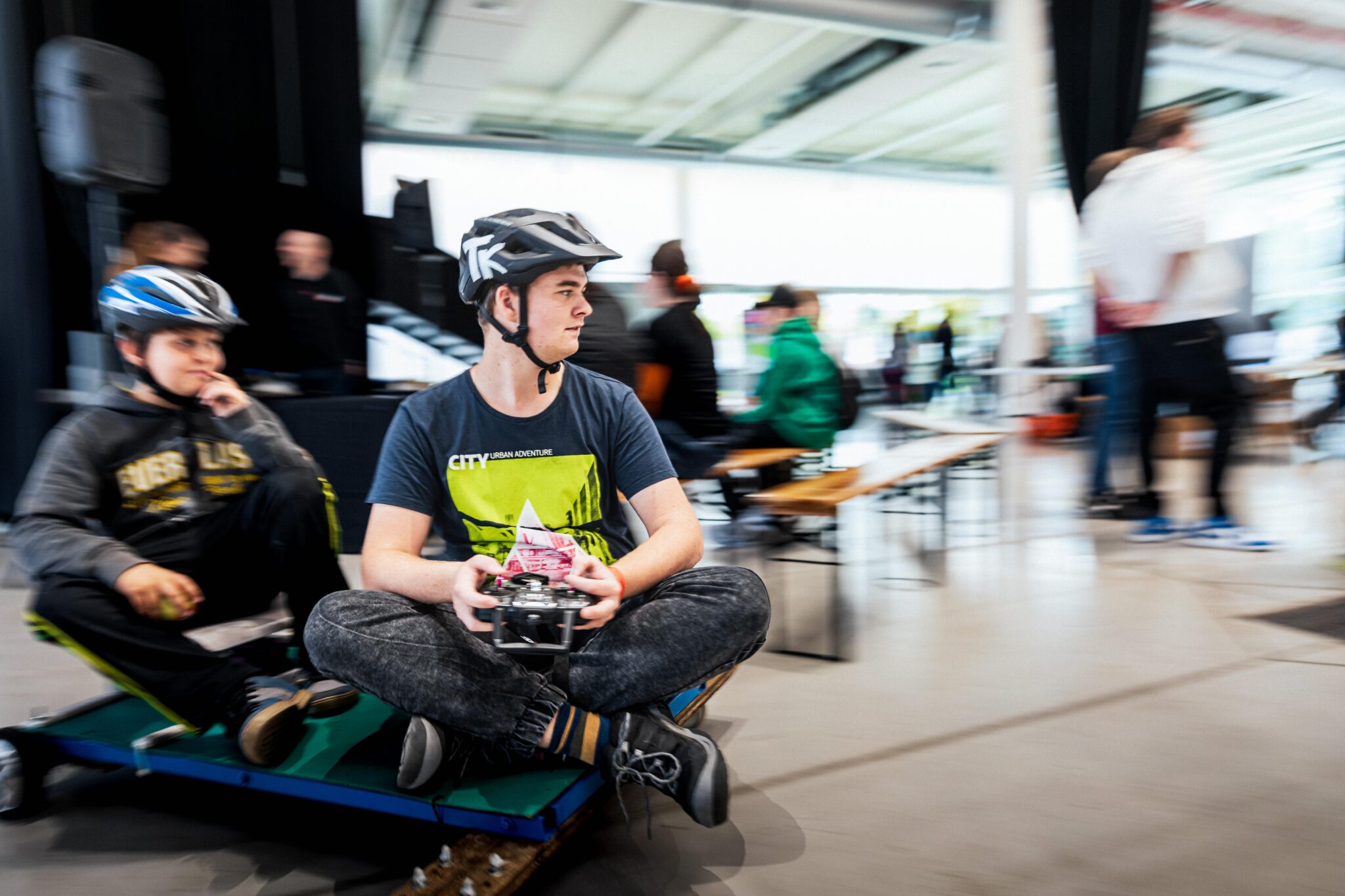
For those drawn to traditional crafting combined with mechanical movement, Baťa Customs invites visitors to sand, paint, assemble, and customize their own wooden gravity racers. On the electronic and musical front, RaveBOX provides a hands-on synthesizer and sequencer where tinkerers can twist knobs, build rhythms, and explore experimental soundscapes. Additionally, student projects like the high-performance 3D-printed RC jet boat developed at Brno University of Technology highlight the integration of durable engineering polymers, high-current power supplies, and custom onboard telemetry controlled by ESP32 chips to transmit real-time GPS speed, battery voltage, and component temperatures to the shore.

Hands-On Learning: Workshops in Focus
Maker Faire Brno is designed to be an interactive experience where visitors can roll up their sleeves and build things themselves. The 2026 workshop schedule covers a wide spectrum of disciplines, including 3D printing, robotics, electronics, space engineering, textiles, and traditional crafts.

Ranging from quick thirty-minute introductions to immersive ninety-minute sessions, the workshops cater to children, teens, adults, and families alike. Some activities introduce absolute beginners to foundational concepts, while others allow experienced makers to dive deep into professional-grade tools and techniques. Participants frequently leave with a tangible creation, whether it is a small robot, a printed object, a soldered circuit, or a personalized piece of design.

The workshop program explores diverse technological avenues. In 3D printing sessions, participants can design and print space-themed objects or explore ceramic printing and parametric design. Robotics enthusiasts can build and program Otto robots, assemble combat robots, or master basic soldering techniques, while more advanced tinkerers explore STM32 microcontrollers or construct digital clocks using NXP development boards.

Space engineering takes center stage through collaborative efforts with student teams. The YSpace team guides participants in building working CubeSat models, while the rocket team SoRC helps attendees design and print space-inspired objects. Younger visitors can launch water rockets powered simply by water and compressed air.

Smart device workshops, such as those hosted by LaskaKit, allow participants to build Wi-Fi-connected e-paper information displays that merge electronics with practical daily use. Meanwhile, the intersection of textiles and technology is explored at the Nitlab workshop, where attendees use punch cards to control knitting machines and produce patterned scarves, blending analog craft with mechanical ingenuity.

Beyond the workshop tables, the festival features a dedicated Repair Zone that highlights the principles of the right-to-repair movement by demonstrating how broken items can be restored to working order. The main stage hosts a packed schedule of events, featuring a 24-hour Student Hardware Hackathon, space exploration insights from ESERO Czech Republic, spectacular science demonstrations, and open discussions on hardware hacking, Arduino, and 3D printing advancements. With two days dedicated to sharing knowledge and technical creativity, Maker Faire Brno continues to serve as a vital annual gathering for the region’s thriving maker community.