


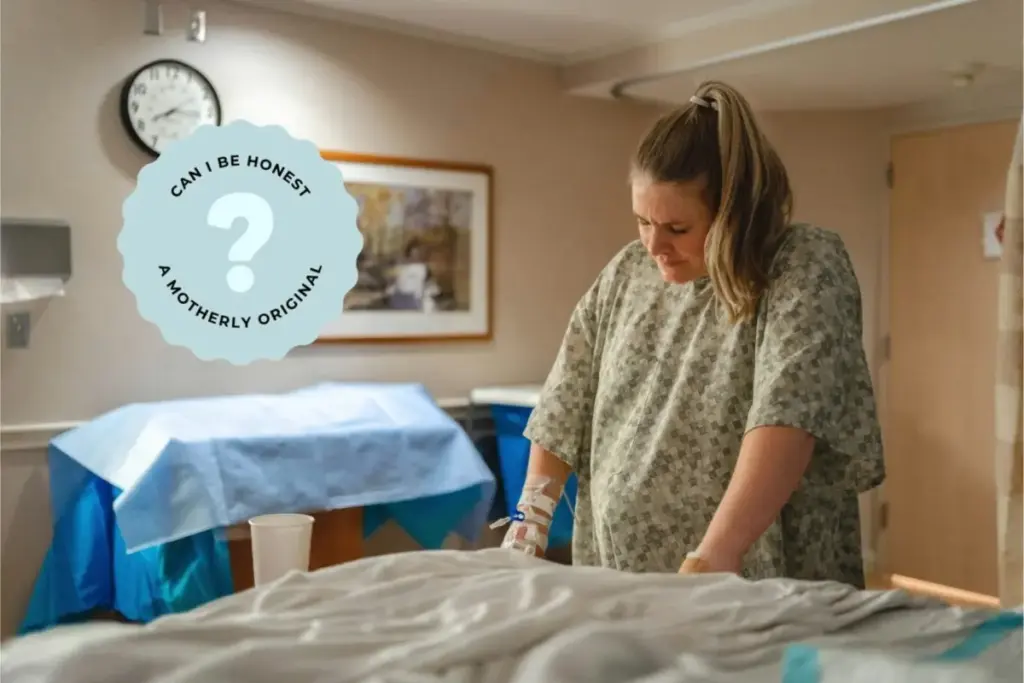
For many expectant mothers, the physical expectations of childbirth are built on a familiar script derived from pop culture and casual conversations: water breaks, rhythmic contractions begin in the abdomen, and eventually, the process shifts to pushing. But for a significant number of women, that script is completely upended by a phenomenon that many report receiving little to no warning about until it is actively happening to them.

Marisa Petrarca, writing about her own harrowing birth experience, recalls that she thought she would instinctively recognize a contraction the moment she felt one. Instead, like countless other mothers, she discovered that the reality of labor can diverge sharply from common cultural narratives, largely due to a condition known as back labor.

It was only during a casual lunch at a small Chinese restaurant at 20 weeks pregnant—while asking a friend to walk her through the details of childbirth—that Petrarca first heard the phrase. Her friend described a level of lower back pain so intense that it completely overshadowed every other aspect of the delivery. At the time, Petrarca mentally brushed the warning aside, attempting to manifest an easier fate for herself. Yet, her friend’s visceral description was ultimately not far from the clinical reality she would soon face.

What is Back Labor?
Medical professionals define back labor not as a separate medical event, but as a distinct and frequently agonizing manifestation of regular uterine contractions.

According to Brandye Wilson-Manigat, MD, a board-certified OB-GYN, back labor is a term used to describe intense pain focused primarily in the lower back during the labor process. This severe discomfort is widely believed to occur when the baby’s position places increased pressure on the mother’s sacrum, tailbone, and surrounding pelvic tissues during contractions. Because of this positioning, the resulting pain is felt much more acutely in the back rather than across the front of the abdomen.

The physical sensations reported by patients can vary, though they are uniformly challenging. Some women describe it as a relentless, crushing pressure in the lower back that never truly recedes, while others notice sharp, debilitating spikes of pain that worsen dynamically with each incoming contraction. While pain is inherently subjective, many clinicians and patients note that back labor is frequently described as significantly more intense, exhausting, and difficult to cope with than traditional, anterior-focused labor.

For Petrarca, the abstract concept became a brutal reality at 37 weeks pregnant. She awoke from a nightmare about lower back pain, only to realize the agony was entirely real and inescapable. Certain that labor had begun, she and her partner rushed to the hospital, where the pain reached levels so overwhelming that she still struggles to fully articulate or remember the experience. When she asked a nurse if this specific agony was back labor, the response was a kind but simple affirmation: "It could be!"

Sent home initially to rest because the baby was safe and contractions were irregular, Petrarca found no relief. The pain returned the following night with greater severity, accompanied by vomiting, which prompted an immediate return to the hospital. Writhing in the backseat of her car, she urged her husband to drive faster, drawing confused and worried glances from anyone who happened to look inside the vehicle.

Upon arrival at the hospital, medical monitors revealed a new complication: the baby’s heart rate had begun showing signs of distress. While her care team closely watched the fetal monitor as contractions arrived and receded, Petrarca felt virtually nothing in her abdomen. Instead, the unrelenting back pain dictated the entire experience, arriving on its own punishing schedule until the sensation stopped feeling like something happening to her body and began to feel like an overwhelming force happening around her.

When the time finally arrived to begin pushing, Petrarca realized she still had no baseline understanding of what a traditional contraction felt like. Had she missed the abdominal signals entirely? Was the agonizing back pain masking everything else? Questions lingered about whether anyone could ever provide a definitive explanation for what happened to her body and why.

Why Do Some Women Experience Intense Back Labor?
Despite advances in obstetric care, physicians note that they cannot always predict or pinpoint the exact physiological triggers for severe back labor. While fetal positioning is a primary contributor, it is rarely the sole factor.

Dr. Wilson-Manigat explains that while back labor can serve as a strong clinical clue that the baby’s skull—known medically as the occiput—is resting against the back, or posterior, wall of the mother’s pelvis, it is not a definitive diagnostic sign on its own. A complex interplay of anatomical variables often dictates the experience, many of which are entirely beyond anyone’s control. These include the specific shape and structural dimensions of the mother’s pelvis, a baby that is simply too large for the available pelvic space, or various physiological conditions that prevent the infant from rotating smoothly into the optimal anterior position during descent.

This medical reality underscores a broader question frequently asked by patients lying in hospital beds: If back labor is both common and deeply confusing, why is it so rarely discussed openly before women enter the delivery room?

Dr. Wilson-Manigat points out that back labor is not the universal baseline experience for every birth, meaning it often gets left out of casual conversations or generalized pregnancy preparation. Furthermore, because many of the physical coping strategies, breathing techniques, and pain management options overlap with those used in traditional labor, it is frequently categorized under the broad umbrella of labor pain rather than treated as a distinct phenomenon. It is not an alternative type of labor, but rather a profoundly different and often more punishing way of experiencing the exact same physiological process.

For many new mothers, the lack of definitive answers can be frustrating. The desire for absolute clarity—to understand precisely what is happening inside the body and to be able to recount the experience with authority rather than lingering confusion—is entirely natural. Yet, the medical reality remains nuanced and variable.

Reflecting on her journey, Petrarca notes that back labor occupies a strange middle ground in maternal health: it is uncommon enough to completely ambush an unprepared mother, but common enough that it demands a permanent place in prenatal education. Expecting mothers deserve to know prior to delivery that posterior positioning and intense back pain are distinct possibilities. Above all, for those who find themselves navigating the grueling reality of back labor, the reassuring truth remains that, like all forms of labor, it eventually comes to an end—and the experience on the other side brings its own profound reward.