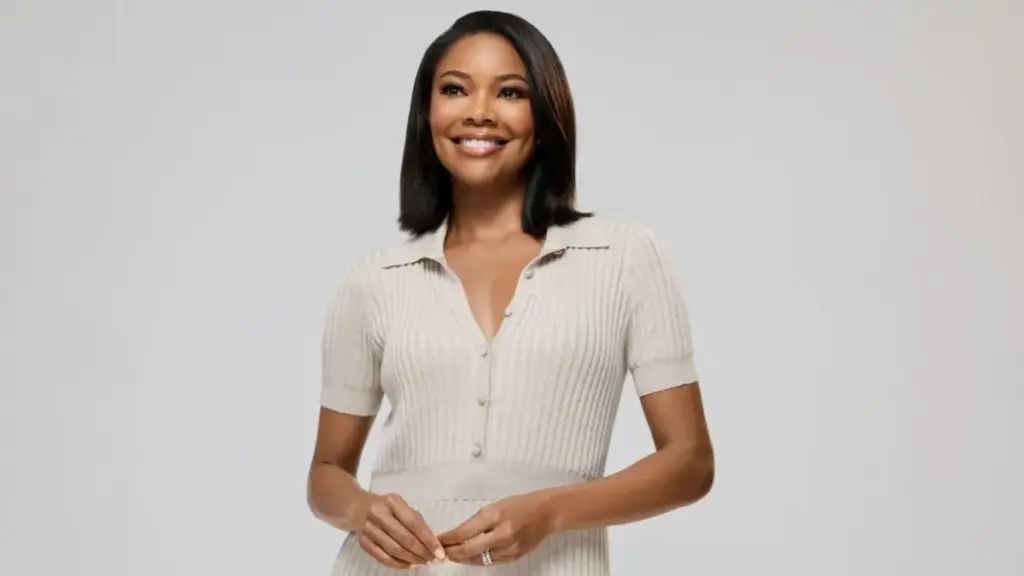
Filming a romantic scene opposite a co-star two decades her junior, Gabrielle Union-Wade faced a situation familiar to millions of working women, but rarely spoken about on a professional film set. Right as the camera rolled and the director called action, a severe hot flash hit. The sudden spike in body temperature and ensuing physical response could easily have been mistaken for something else by anyone watching on the monitors.

"The way it was reading to other people was like I was scared or nervous, and honey, I am old hat at this," Union-Wade recalls with the frankness that has long defined her public persona. She was menopausal, on the clock, under intense studio lighting, and facing a moment with nowhere to hide.

That professional hurdle is just one of many reasons the acclaimed actress, producer, and author has made it a top priority to drag perimenopause and menopause out of the shadows. Her recent advocacy efforts include partnering with Bayer on their "Life Doesn’t Stop for a Hot Flash" campaign, aiming to normalize a biological transition that affects roughly two million American women every year. For many, symptoms like hot flashes can persist for up to a decade, overlapping with peak career years, active parenting, and demanding personal schedules.

Union-Wade recently sat down to discuss the realities of managing menopause, the unexpected ways it impacts daily life, and how she is parenting through the transition so that younger generations grow up without the stigma that past decades imposed. Backing her up on the clinical side is women’s health nurse practitioner Barbara Dehn, widely known as Nurse Barb, who emphasizes that medical guidance remains critical for women navigating this stage.

For Union-Wade, the journey began much earlier than she anticipated. Long before any of her close friends began experiencing shifts, she entered perimenopause in her late 30s. The realization did not come from a sudden hot flash or a missed period, but rather from routine fertility bloodwork that flagged the transition. Until that moment, menopause was not something occupying her thoughts.

"I just felt like I had more time," she notes.

That sense of time evaporated when the first severe hot flash arrived, accompanied by the unmistakable physical distress that prompts many women to question their own bodies. Beyond the internal thermostat going haywire, she encountered smaller, frustrating physical changes, such as the sudden appearance of chin hairs—prompting a practical habit of stashing tweezers in every vehicle she owns.

According to Nurse Barb, these disjointed symptoms often catch women off guard because perimenopause does not always announce itself with textbook clarity. Instead of a dramatic event, it can begin as a subtle clammy sensation at the back of the neck upon waking up—classic nocturnal symptoms that are frequently dismissed or misattributed to stress, anxiety, or thyroid issues.

The unpredictability of hot flashes poses a distinct challenge in high-stakes environments like a professional film set, where schedules are rigid and time translates directly to financial expenditure. Without a warning bell or a graceful way to exit a scene, Union-Wade had to adapt quickly. Portable hand-held fans offered temporary relief, and she even experimented with placing cold packs typically reserved for sprained ankles inside her garments. While these makeshift remedies helped in the moment, she knew she needed a sustainable medical solution.

"I can’t be a nonstop sweaty mess. That’s not sexy. What are our options?" she asked her healthcare provider.

Together, they explored treatments, eventually settling on a non-hormonal prescription option designed to manage moderate to severe hot flashes. Nurse Barb points out that because every woman’s physiological makeup is different, there is no single product or silver bullet that works universally. The most important step is opening a dialogue with a qualified medical professional to discover what approach fits an individual’s lifestyle and health profile.

Despite the prevalence of these symptoms, many women still encounter hurdles when seeking medical help. While hot flashes dominate the conversation, menopause brings a wide array of secondary symptoms, from sleep disturbances and cognitive fatigue to mood shifts. Women who bring these concerns to their medical providers frequently report being dismissed or having their physical experiences minimized.

Nurse Barb attributes this gap in care partly to a broader lack of specialized training among medical providers regarding menopausal health management. Too often, women are left to navigate a complex medical transition on their own, piecing together advice from friends or internet searches. Both Union-Wade and Nurse Barb stress the importance of persistence—advocating for oneself and seeking out a practitioner who listens, validates symptoms, and offers evidence-based treatments.

Fortunately, cultural conversations around aging and women’s health are shifting. If you talk to women in their forties and beyond, group chats are increasingly filled with shared notes, symptom tracking, and mutual commiseration. This open exchange stands in stark contrast to past generations, where women were largely expected to suffer in silence, viewing biological realities as personal failures or shameful secrets.

Union-Wade actively participates in these candid spaces, dropping knowledge into her own friend groups with a casual approach that breaks down isolation. The primary message she shares with her peers is simple yet crucial: struggling with menopause is not a choice or a personal failing; it is a matter of biology.

That commitment to transparency extends directly into her home life. Union-Wade has been parenting her young daughter, Kaavia, while navigating the full spectrum of perimenopausal and menopausal symptoms. Rather than hiding physical discomfort or treating her body’s changes as taboo subjects, she has welcomed her daughter’s natural curiosity. When a hot flash strikes at home, Kaavia—acting as a self-appointed helper—frequently arrives with ice water and a towel, asking what she can do to assist her mother.

In the household Union-Wade shares with her husband, Dwyane Wade, a normal bodily process is never shrouded in shame or embarrassment. By answering questions honestly and in an age-appropriate manner, Union-Wade is intentionally raising a daughter who will feel comfortable discussing her own health without stigma. Observing how a mother treats her own body leaves a lasting impression on children long before they have the vocabulary to articulate it, setting a foundation of self-respect and body literacy.

Throughout the transition, Union-Wade remains focused on a core truth: going through menopause does not diminish a woman’s identity, professional sharpness, or worth. She regularly pushes back against societal narratives that attempt to box menopausal women into narrow, outdated stereotypes.

"Going through menopause doesn’t mean you’re less sexy," she emphasizes, noting that it should never make a woman feel less deserving of career advancement, leadership roles, or personal fulfillment.

Her advice to friends and fans experiencing similar transitions is rooted in self-compassion and empowerment. She views the stage not as a decline, but as a natural evolution—a period of personal power to be claimed rather than feared. On film sets where crews once misinterpreted her physiological response for anxiety, she now recognizes that the internal heat was merely a physical reaction, and certainly nothing to be afraid of.