


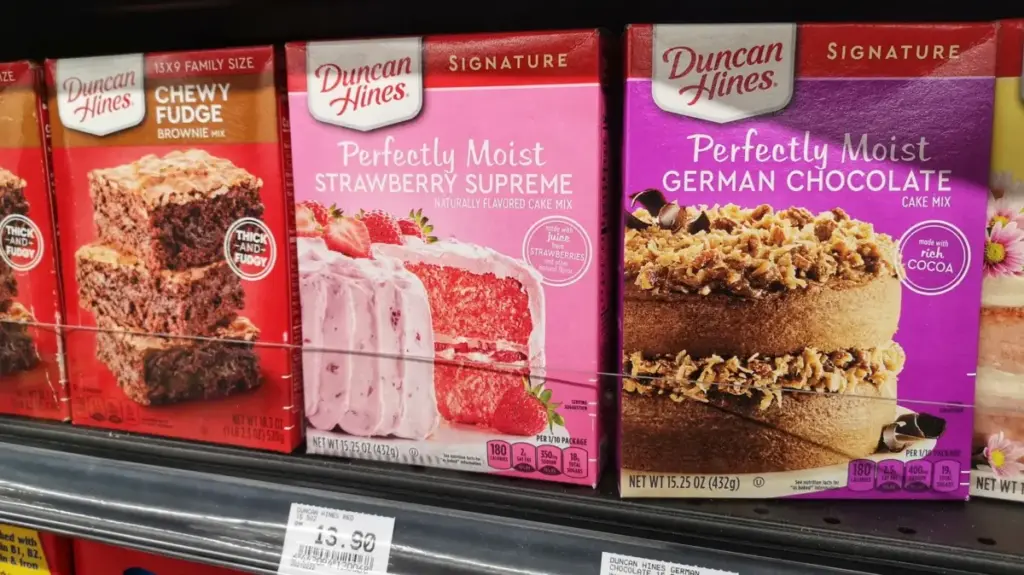
For more than half a century, the name Duncan Hines has been synonymous with home baking, conjuring memories of weekend kitchen projects, celebratory birthdays, and the comforting aroma of warm desserts drifting through the house. Yet, the brand’s expansive history is also marked by countless culinary experiments—products introduced during the mid-20th-century boom of convenience foods that ultimately failed to secure a permanent place on grocery store shelves and quietly vanished into the annals of food history.
Among these elusive products is the Burnt Sugar Cake Mix, a specialty item launched by Duncan Hines during the 1950s. Designed to capture the rich, bittersweet complexity of a traditional culinary masterpiece, the mix featured a distinct innovation for its time: a dedicated packet of burnt sugar syrup tucked inside the cardboard box. Designed to be stirred directly into the batter, this syrup was meant to replicate the deep, caramelized notes that define the flavor profile of a genuine burnt sugar cake. Despite backing from the company through multiple luxe print advertisements highlighting its convenience and gourmet appeal, the product’s tenure on supermarket shelves was remarkably brief, leaving behind only vintage marketing ephemera and the memories of those who baked it.
The history of burnt sugar cake itself stretches back far beyond the mid-century convenience food era, tracing a complex path through American culinary traditions. Food historians note that the recipe has deep roots in the U.S. South, emerging during the post-Emancipation era when skilled Black chefs and home cooks faced severe shortages of brown sugar. To recreate the rich, molasses-like depth of brown sugar when it was unavailable or too costly, resourceful cooks mastered the technique of caramelizing white sugar to deep amber perfection.
This inventive technique birthed a distinct style of cake characterized by its robust, bittersweet flavor profile. By the early 1900s, the recipe had begun spreading geographically, moving beyond its southern origins to captivate palates across the country. Over time, it transitioned from a clever substitution method into a celebrated special occasion cake, frequently baked for major holidays, community gatherings, and important church functions where families wanted to showcase their finest baking skills.
As the recipe moved northward, it forged a particularly strong cultural and culinary association with the New England region. Its popularity in the northeast quadrant of the United States became so widespread that even notable literary figures of the era embraced the tradition; historical records indicate that famed poet Emily Dickinson maintained her own relationship with a variation of the style, famously known for her penchant for rich regional cakes.
By the 1940s and 1950s, the visual and structural presentation of the burnt sugar cake had evolved significantly. While it retained its intensely rich flavor, its physical appearance began to more closely resemble a traditional caramel layer cake. Bakers constructed tall, multi-tiered cakes frosted generously with sweet burnt sugar icing, often finishing the presentation by lacing the top and sides with an amber-colored sugar sauce that dripped down the edges. It was a centerpiece dessert, demanding time, patience, and a delicate hand to caramelize the sugar precisely without letting it cross the line into bitterness.
It was precisely this labor-intensive reputation that prompted mass-market baking companies like Duncan Hines to attempt a packaged shortcut. By the mid-1950s, post-war American consumers were embracing convenience products that promised scratch-quality results with a fraction of the preparation time. The introduction of the Burnt Sugar Cake Mix was a direct response to this cultural shift, aiming to democratize a complex regional favorite by packaging the difficult caramelization step into a liquid pouch.
However, public reception was lukewarm at best. While convenience foods dominated the market, the specific, acquired taste of heavily caramelized burnt sugar did not resonate broadly enough with the post-war consumer base, whose palates were increasingly drawn toward lighter, sweeter, and more uniform flavor profiles like standard yellow, devil’s food, and white cakes. By the arrival of the 1960s, public tastes shifted dramatically toward newer commercial food innovations and emerging flavor sensations. Faced with sluggish sales and a shifting culinary zeitgeist, Duncan Hines quietly discontinued the mix, abandoning the flavor profile as the decades marched forward.
Though the commercial mix failed to capture the American public’s enduring loyalty, the legacy of burnt sugar cake did not vanish entirely. In more recent years, the dessert has begun to experience a quiet renaissance among contemporary home bakers. As interest in culinary heritage and scratch-baking techniques surges, modern food enthusiasts are rediscovering vintage recipes, bringing the historic cake back to its traditional place of prominence at modern social gatherings and family tables.
Today, while store shelves remain devoid of a dedicated boxed mix for burnt sugar cake, the culinary landscape offers an abundance of resources for those looking to recreate the treat from scratch. A wealth of both vintage recipe cards and modern interpretations are readily available, allowing bakers to replicate the robust, artisanal flavor of the historic cake in their own kitchens whenever they choose. This modern resurgence serves as a fitting continuation for a recipe that was originally preserved through generations of hands-on transmission, passing from cook to cook and era to era long before it ever found its way into a cardboard box.