



The financial world has experienced a profound shift following nearly a decade and a half of relative stability. After hovering near historic lows for over a decade, interest rates have climbed sharply back to levels not seen in two decades, forcing consumers, investors, and economists alike to reevaluate long-standing financial assumptions.
This dramatic turnaround has sparked widespread debate across media outlets, leaving many individuals wondering how to interpret the new economic climate. While financial news cycles frequently focus on the blow-by-blow updates of incremental rate hikes, the more pressing issue for everyday consumers remains practical: how to navigate these changes in strategy, particularly regarding long-term investments and major milestones like purchasing a home.

To understand the current environment, it helps to look at the mechanisms that brought the economy to this point. For most of the past two decades, monetary policy functioned much like a vehicle with the gas pedal pressed firmly to the floor. Under the leadership of Federal Reserve Chairman Jerome Powell and his predecessors, the central bank injected liquidity into the system by maintaining near-zero interest rates.
This prolonged period of cheap credit fueled immense economic activity. Mortgages became highly accessible, allowing buyers to stretch their purchasing power and driving robust demand across both existing housing markets and new construction. Simultaneously, low-cost borrowing and abundant venture capital encouraged entrepreneurs to launch businesses, lease commercial spaces, establish manufacturing facilities, and hire workforces. These employees, in turn, participated broadly in the consumer economy, purchasing homes, vehicles, and modern household amenities.
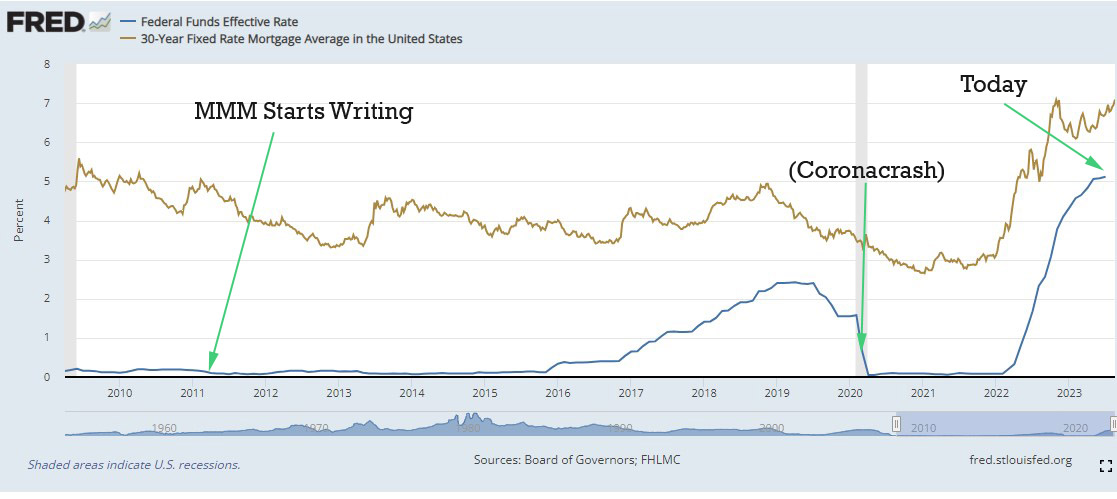
This extended cycle of monetary stimulus supported substantial economic growth, innovation, and general prosperity. However, the prolonged excess of liquidity eventually created a scenario where too much money began chasing too few goods, particularly in the housing sector. This imbalance triggered a significant spike in inflation, prompting the Federal Reserve to adjust its approach.
To cool the overheating economy, the central bank eased its foot off the accelerator, raising benchmark interest rates. As a result, the broader economic pace has noticeably moderated. Borrowing costs for mortgages have risen substantially, prompting many prospective homebuyers to delay their purchases. Corporations facing higher debt-servicing costs have similarly scaled back capital expenditures, leading to reduced hiring and notable workforce reductions across major technology firms, alongside a period of heightened caution within the banking sector.

Public discourse surrounding these economic adjustments often reflects starkly divergent viewpoints. Critics from across the political spectrum frequently characterize the current climate as a period of severe economic hardship and decline. Yet, these pessimistic narratives often contrast sharply with fundamental economic indicators, such as historically low unemployment rates and resilient overall economic output. Analysts suggest that the current phase represents a necessary stabilization period designed to temper inflation and allow the economy to digest a prolonged cycle of monetary expansion.
Evaluating Investment Strategies Amid Market Shifts
For everyday investors, a primary concern centers on whether to adjust equity portfolios in anticipation of a potential market downturn. Historically, the stock market has demonstrated long-term upward trajectories despite periodic, unpredictable corrections. Because market timing remains notoriously difficult, attempting to cycle in and out of equities during volatile periods often proves counterproductive.

Following a period of market adjustment, major U.S. indices experienced a modest pullback from previous peaks, leaving valuations relatively flat over a multi-year horizon when factoring in inflation and nominal gains. For disciplined investors purchasing broad-market index funds on a regular schedule, lower asset prices often present an opportunity to acquire shares at a relative discount compared to previous market highs.
Concurrently, the emergence of high-yield savings accounts and money market funds offering attractive returns—such as yields around 4.5 percent or higher—has introduced a new dynamic for cash management. In an environment where interest rates remained below one percent, equities easily outperformed cash equivalents. However, with conservative fixed-income instruments offering meaningful yields, investors must weigh the guaranteed, stable return of cash against the long-term growth potential of discounted equities. Many financial strategists advocate for a balanced approach that maintains steady equity accumulation while recognizing the short-term utility of secure, higher-yielding cash reserves.

The Real Estate Market and Housing Affordability
Perhaps the most direct impact of higher interest rates is felt in the housing market. The rapid escalation of mortgage rates from historic lows near three percent to over seven percent has fundamentally altered the economics of homeownership.
For the average buyer utilizing a typical down payment, the monthly cost of financing a home has increased dramatically, significantly diminishing purchasing power for the same nominal home price. Concurrently, homeowners locked into low-fixed-rate mortgages face a strong disincentive to sell, severely restricting housing inventory and contributing to market stagnation.
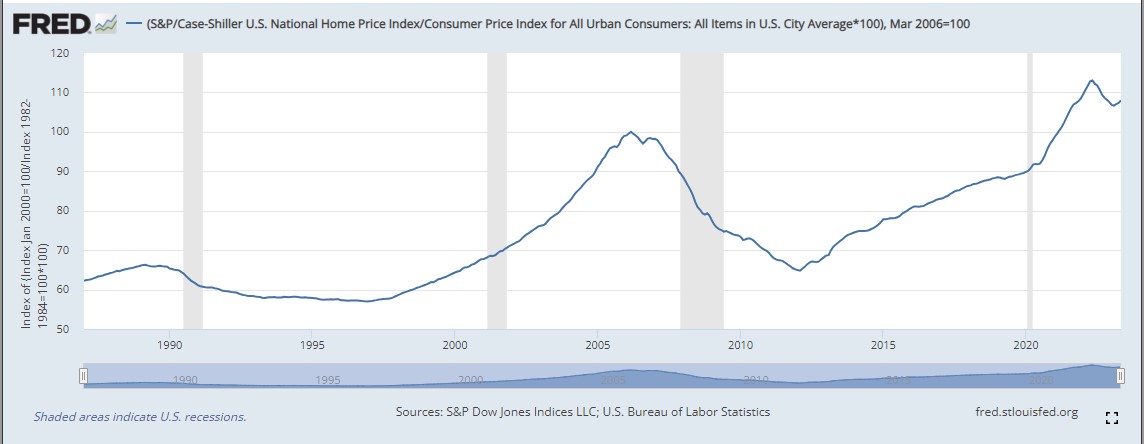
This contraction in buying power is a deliberate mechanism of monetary tightening, designed to cool demand, reduce competition, and ultimately stabilize or reduce home prices. However, the broader trajectory of housing costs depends heavily on fundamental supply-side factors, including construction labor costs, material expenses, and local regulatory frameworks.
While material costs have benefited from long-term efficiencies and technological advancements in manufacturing and building practices, regulatory hurdles and complex zoning restrictions in many municipalities continue to constrain new supply. In regions where zoning reforms encourage flexible development and pedestrian-friendly housing, affordability has seen more favorable adjustments. Nevertheless, nationwide inflation-adjusted home prices remain elevated, leading market observers to debate whether future adjustments will manifest as nominal price declines or a prolonged period of flat valuations that gradually align with future wage growth.
The Outlook for Interest Rates and Economic Indicators
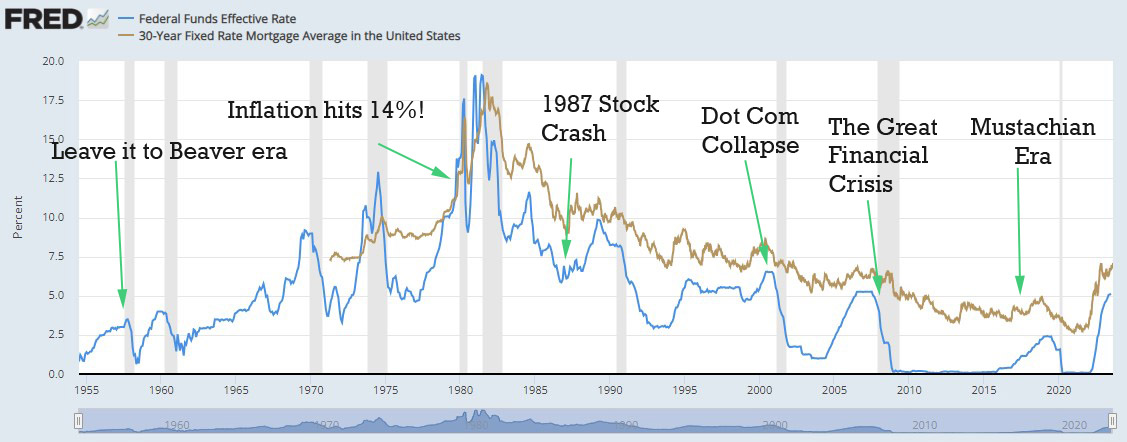
The current interest rate environment, while elevated compared to the anomalous zero-rate era of the 2010s, aligns closely with historical long-term averages when viewed across a multi-decade perspective. Whether these rates will decline in the near term depends largely on future inflation metrics and broader labor market data.
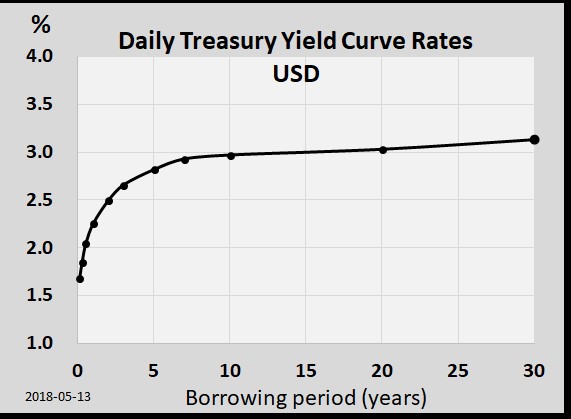
Market expectations regarding future rate adjustments are often reflected in the U.S. Treasury yield curve. An inverted yield curve—where short-term yields significantly exceed long-term yields—typically indicates that bond market participants anticipate future rate reductions, often associated with a slowing economy or an impending recession. Historically, an inverted yield curve has preceded most economic downturns over the past several decades, serving as a closely monitored indicator for macroeconomic forecasters.
While macroeconomic trends and monetary policies remain outside the control of individual consumers, financial planners emphasize that personal financial resilience relies on fundamental principles rather than market timing. Maintaining a balanced lifestyle, managing personal debt responsibly, and preserving adequate savings allow individuals to navigate economic transitions from a position of stability. By focusing on consistent saving, disciplined spending, and long-term planning, individuals can successfully weather short-term fluctuations in interest rates and broader market conditions.