



Published September 22, 2026, by Amanda Hays
The international trade in wildlife has long posed a severe threat to global biodiversity, but a specialized and increasingly lucrative pipeline is pushing one particular primate species closer to the brink of extinction. Driven by the relentless demand of the American animal experimentation industry, international monkey smuggling has reached critical levels, weaving together wildlife trafficking, transnational organized crime, and substantial public health risks.
According to recent findings and investigations highlighted by People for the Ethical Treatment of Animals (PETA), the global laboratory supply chain is heavily reliant on wild-caught long-tailed macaques. Year after year, United States experimenters allocate top-dollar budgets to acquire primates for laboratory settings, where the animals are subjected to toxicity tests, invasive procedures, and pharmaceutical trials. This insatiable domestic demand has created a lucrative market for wildlife traffickers operating across Southeast Asia, who are cashing in on the vulnerability of dwindling wild populations.
PETA investigators have identified a sharp and alarming surge in monkey-smuggling cases along the porous border between Thailand and Cambodia. This latest spike coincides with the resumption of monkey imports from Cambodia into the United States following a nearly three-year halt. That previous hiatus was directly tied to a sprawling federal investigation into the illicit monkey supply chain and the laundering of wild-caught animals. Across the broader Southeast Asian region, authorities have seized thousands of endangered monkeys in recent years, a trend that mirrors the drastic and well-documented population decline of long-tailed macaques in their natural forest habitats.
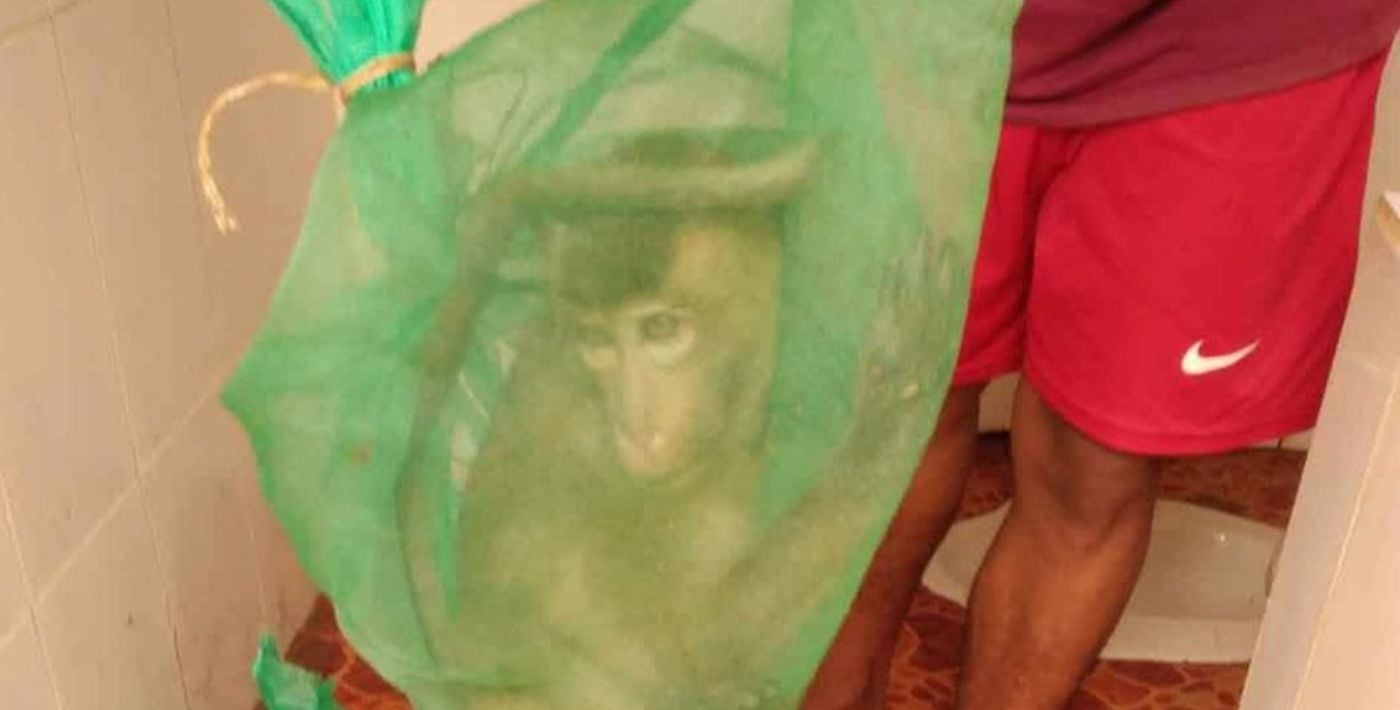
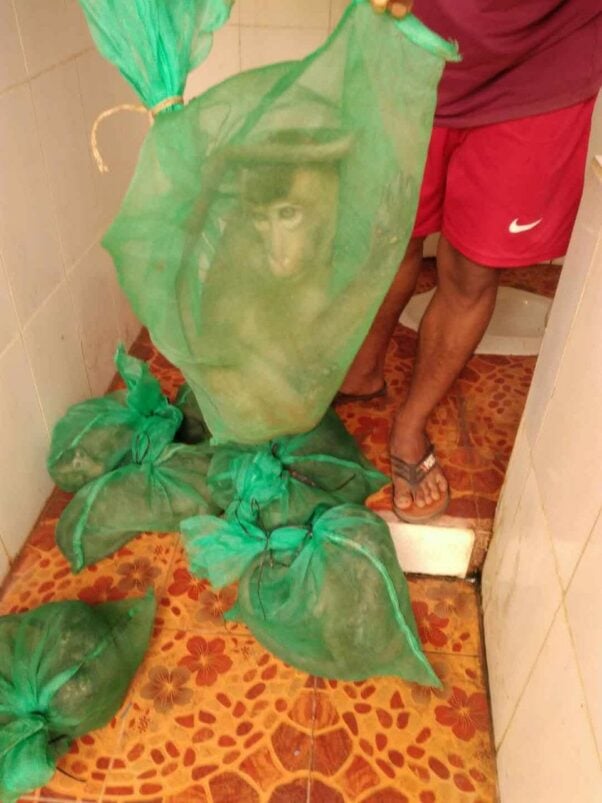
The mechanics of this illicit trade are brutal. Wildlife traffickers routinely target monkeys in the wild, tearing family groups apart—including nursing mothers and their dependent babies—before forcing them into confined mesh bags or cramped wooden crates. These captured animals endure grueling, multi-day journeys across international borders to clandestine breeding farms. Tosted into vehicles with barely enough room to shift their weight, the terrified, injured primates are routinely transported for hours or days without adequate food, water, or ventilation.
Upon surviving the journey to intermediary and breeding facilities, the animals are typically housed in filthy, barren conditions. In many instances, these wild-caught macaques are systematically integrated into the legal supply chain by being intentionally and falsely labeled as "captive-bred." Once outfitted with falsified documentation, they are exported to international buyers, seamlessly entering the global laboratory pipeline under a veneer of legitimacy.
Monkey Smuggling Surges Across Southeast Asia
The recent surge in reported monkey-smuggling cases along the Thailand-Cambodia border represents only one front in a much larger, regional trafficking crisis. Past law enforcement investigations, border interdictions, and subsequent prosecutions in Cambodia, Vietnam, China, and Laos have repeatedly exposed how easily wild-caught monkeys can be stripped of their origins. By exploiting loopholes, corrupt networks, and forged paperwork, traffickers routinely launder wild primates, successfully funneled them into the global monkey-abduction pipeline.
The scale of this underground economy came into sharp focus in 2022, when U.S. federal authorities uncovered a massive, high-level scheme allegedly utilizing falsified permits to launder tens of thousands of wild-caught long-tailed macaques from Cambodia into the American biomedical experimentation industry. Court filings and federal indictments detailed how wild primates harvested from protected forests were systematically rebranded as captive-bred stock and sold for millions of dollars to U.S.-based research entities and pharmaceutical suppliers.
Monkeys, Weapons, and Drugs
The mechanics of monkey smuggling do not operate in a vacuum; rather, the trade is deeply embedded within broader transnational criminal enterprises. The established transit routes, clandestine vehicles, and shadowy syndicates that traffic illegal firearms, narcotics, and other high-value contraband are frequently leveraged to move monkeys and other protected wildlife across borders with impunity.
Illustrating the convergence of these illicit markets, Thai authorities near the Thai-Cambodian border seized a substantial cache of weaponry, including AK-47 assault rifles and more than 24,000 rounds of ammunition, from a suspected smuggling ring in August 2026. Law enforcement debriefings and suspect statements subsequently revealed that long-tailed macaques were routinely transported by the exact same trafficking networks, utilizing the very same boats and vehicles historically relied upon to move illegal cigarettes, undocumented laborers, and other contraband.
A similar pattern has been documented in Vietnam, where criminal syndicates historically involved in trafficking pangolin scales, elephant ivory, and other protected wildlife species have seamlessly expanded their operations to include the cross-border transportation of live monkeys into neighboring China.
Compromised Science
Beyond the devastating conservation impacts and animal welfare violations, the reliance on smuggled wild-caught primates fundamentally undermines the integrity of biomedical research itself. The primate experimentation industry has long maintained that utilizing purpose-bred, specific pathogen-free, and well-characterized laboratory monkeys is essential for controlling scientific variables and generating reliable, reproducible research data.
However, when wild-caught monkeys are fraudulently introduced into the system and falsely certified as captive-bred, that carefully manufactured semblance of scientific control collapses entirely. Wild primates carry unknown genetic lineages, undocumented health histories, and diverse environmental exposures. Introducing these variables into controlled laboratory studies introduces hidden confounding factors that can severely compromise the validity, reliability, and reproducibility of the research being conducted.
U.S. Public Health is at Risk
The unregulated and clandestine entry of primates into the United States introduces significant and unpredictable public health hazards. Every monkey imported from an unknown origin and through illicit channels represents an unquantified disease vector. Primates captured directly from natural forests and smuggled across international borders arrive devoid of legitimate health certificates, medical histories, or documentation regarding the pathogens they may have encountered during their brutal transit inside squalid crates, cardboard boxes, and commercial cargo holds.

Public health records indicate that among the tens of thousands of monkeys imported annually into the United States for laboratory research, a significant number have historically arrived carrying dangerous and easily transmissible zoonotic pathogens. These include tuberculosis, melioidosis, Shigella bacteria, and Herpes B virus—all of which pose serious, easily communicable health risks to humans.
When wild-caught monkeys of dubious health status are introduced into established breeding colonies at supplier and smuggler facilities, they run the risk of seeding these pathogens into broader captive populations, creating vectors that can be difficult to monitor, trace, or contain.
What You Can Do
Legislators and animal advocacy organizations have increasingly focused on structural policy changes to address both the conservation crisis and the associated biosecurity threats. The Preventing Risky Importation of Monkeys to Avoid Toxic Exposures, or PRIMATE Act, has been introduced as a legislative measure designed to halt the importation of monkeys designated for use in laboratory experiments. Proponents argue the measure would provide critical breathing room for endangered species populations to recover while simultaneously mitigating severe public health risks to the American populace.
Advocacy groups are currently urging individuals residing in the United States to contact their Congressional representatives to advocate for co-sponsorship of the PRIMATE Act. Simultaneously, international campaigns are calling upon broader public participation to petition the U.S. Department of Health and Human Services to take decisive administrative action to shut down the transnational monkey-abduction pipeline once and for all.