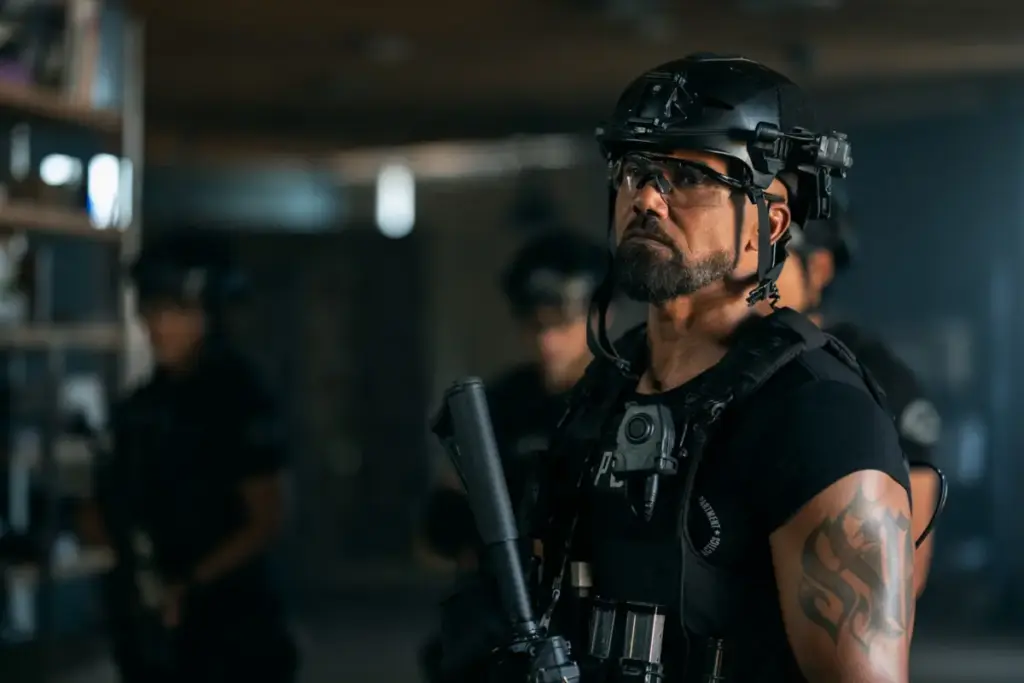
Just one year after wrapping an acclaimed eight-season run on CBS’s hit procedural “S.W.A.T.,” Shemar Moore is stepping back into the tactical boots of his stoic, righteous, and deeply human character, Sergeant II Daniel “Hondo” Harrelson Jr. This time, however, the veteran lawman is making his return on an entirely new network in the gritty spinoff series “S.W.A.T. Exiles.” Created by Jason Nig and slated to debut on Starz, the new series picks up two years after the conclusion of the original show, finding Hondo in a profoundly altered state of both personal and professional life.
Divorced, isolated, and carrying the heavy emotional baggage of a disgraced exit from the Los Angeles Police Department, Hondo is a far cry from the confident squad leader fans grew to love over nearly a decade on network television. His departure from the LAPD followed a catastrophic, botched raid that tragically ended with the death of one of his young squad members—an incident that has left deep, unhealed scars. These days, instead of leading high-stakes tactical operations across the sun-drenched streets of Southern California, Hondo finds himself working as a reluctant, disillusioned bodyguard for some of Los Angeles’s most insufferable and out-of-touch billionaire tech bros.
His routine of quiet misery is upended, however, when LAPD Commander Robert Hicks—with actor Patrick St. Esprit reprising his familiar role from the original series—approaches Hondo with an unexpected proposition. Hicks offers him the chance to command a brand-new unit within the department. Deeply resentful following his forced and ignominious retirement, Hondo begrudgingly accepts the position, driven partly by a lack of better options and partly by a lingering duty to the badge. Yet, it does not take long for him to realize that his return to the department is not a gesture of redemption; rather, he is being set up to fail.
Positioned as a solid and dependable sequel to a well-liked procedural, “S.W.A.T. Exiles” smartly utilizes many of the same narrative and stylistic tricks that made the original show a long-running favorite among viewers. At the same time, by introducing a brand-new, vastly different team and a handful of compelling, serialized storylines, the show proves right out of the gate that it can stand firmly on its own two feet without relying entirely on nostalgia.
The 10-episode first season—of which four episodes were made available for critical review—opens on an ordinary, quiet day in Los Angeles, immediately offering audiences a stark glimpse into Hondo’s desolate home life. Aside from a stack of unwashed dishes resting in the sink and a kitchen refrigerator calendar completely covered in the colorful doodles of his young daughter, there are few visible signs of life in the house. He moves through his daily routine entirely on autopilot, nursing a bitter resentment toward his past and working out his relentless anguish with endless sets of push-ups in his empty living room. Each day tends to bleed indistinguishably into the next, which ultimately makes Hicks’s offer to suit up once more impossible to pass up, even if his gut tells him trouble is looming.
Yet, almost as soon as he steps foot inside his newly assigned headquarters, Hondo recognizes that this fresh assignment is not what it appears to be on the surface. It is abundantly clear to anyone paying attention that the LAPD is currently wrestling with a severe image problem, and the department’s leadership has trotted him out yet again simply to serve as a public relations Band-Aid. Compounding his frustration is the nature of the unit he has been handed: a short-tempered, fiercely independent, and utterly unpredictable Gen Z team that proves remarkably difficult to corral.
This new unit, officially designated as the 44 Squad but quickly and aptly dubbed the “Exiles” by Hondo himself, brings together a fascinating mix of distinct personalities and backgrounds. Among them is Sammy Bishop, played by Lucy Barrett, a resident gun expert and social media star who, much to the absolute horror of the old-school Hondo, possesses zero qualms about casually live-streaming tactical briefings and operations directly from headquarters. Meanwhile, Malik Henderson, portrayed by Adain Bradley, is a Marine veteran and devoted husband and father who appears, on paper at least, most naturally suited for the grueling demands of the job. Hondo quickly appoints Malik as his Scout, making him the critical point person for active missions, though it quickly becomes apparent that Malik is harboring a few hidden skeletons in his closet.
The roster continues with Ethan Cole, played by Freddy Miyares, a brilliant, neurodivergent tech savant who absorbs, processes, and picks up on way more details in any given situation than the people around him ever give him credit for. Alongside him is Cassidy Han, portrayed by Zyra Gorecki, an intense, highly disciplined operator who is fiercely determined never to let her prosthetic leg define her capabilities in the field. Despite her competence, Cassidy’s deeply reserved and guarded nature makes her a lingering mystery to her colleagues. Rounding out the rookie recruits is Jude Callan, played by Ronen Rubinstein, a charming, cocky bad boy who masks a surprising amount of unexpected depth beneath his swagger.
At the start of the season, viewers watch as Hondo attempts to flex his unpracticed and somewhat rusty leadership skills, desperately trying to get his ragtag crew of modern recruits to function together as a cohesive tactical unit. Even though the series relies on a familiar procedural formula with episodic cases frequently tied to dangerous gun smugglers, ruthless cartel assassins, and high-stakes kidnappings, the show manages to remain topical and grounded enough to keep viewers thoroughly engaged. The narrative takes an even more intriguing turn when Hondo begins to realize that his team is actively being undermined from within, and that someone inside the department is covertly feeding sensitive operational information directly to the mayor’s office in an effort to bring him down once and for all. This overarching conspiracy weaves its way across the entire span of the first season, and the eventual reveal of who is pulling the strings behind the scenes is far from straightforward.
Significantly, “S.W.A.T. Exiles” refuses to remain as rigid or strictly formulaic as many other traditional action-dramas on television. A prime example of this narrative ambition is found in the fourth episode, titled “Get Clear,” which stands out as an early gem in the season. Instead of dragging audiences through yet another high-adrenaline tactical mission, the episode shifts gears entirely as Hondo and his team are formally called before the Force Review Board to testify regarding a prior, disastrously bungled assignment. By cutting back and forth fluidly between the tense present-day testimony and harrowing flashbacks of the past, each member of the unit is forced to reflect deeply on a volatile hostage situation that morphed into an unexpected Immigration and Customs Enforcement raid. The operation went completely off the rails, ultimately leaving an unarmed civilian shot dead directly by Hondo’s hand. While the other officers grapple with their memories of the fateful incident, Hondo uses the tense proceedings to quietly focus on identifying the departmental mole and figuring out how to navigate the unfolding fallout.
When all is said and done, “S.W.A.T. Exiles” may not completely reinvent the wheel for the crime procedural genre, nor does it radically depart from the established foundation of the previous television series. However, Shemar Moore remains commanding, magnetic, and completely earnest as he steps comfortably back into Hondo’s shoes. This time around, his mission is not just about clearing rooms and neutralizing threats, but about shepherding a brand-new generation of flawed officers who are similarly struggling to navigate the heavy shadows of their pasts and the complexities of their personal lives. The network’s faith in the new iteration is already evident; Starz has officially greenlit “S.W.A.T. Exiles” for a second season ahead of its premiere.
“S.W.A.T. Exiles” debuts September 25 on Starz, with the remaining episodes of its inaugural season airing weekly on Fridays.