

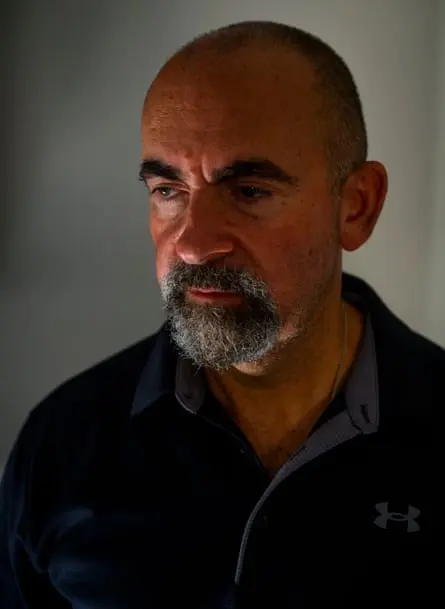
Shortly after 1am one night in April 2019, a CIA officer on a work trip to London was jolted awake in his hotel room by the most intense head pain he had ever experienced. His body was soaked with sweat, and he felt as though his eyes were spinning violently in their sockets. He manoeuvred his way out of bed, hoping to make it to the bathroom to vomit, but found that his sense of balance had completely deserted him. Eventually, he collapsed back into a fitful, shallow sleep.
The next day, arriving at the professional meeting he had travelled across the Atlantic to attend, the officer found he could not remember the names of colleagues sitting right in front of him—people he knew well and worked with daily. As the meeting got under way, he could barely follow the discussion. Initially, he chalked it up to a terrible, if rather odd, case of food poisoning. But over subsequent weeks, deeply worrying symptoms persisted: debilitating brain fog, a permanent loss of balance, and increasingly harsh, unyielding tinnitus ringing in his ears.
By September, he had started to feel marginally better and was deployed on another international work trip, this time to Poland. Asleep in his Warsaw hotel room, he was once again woken by terrifying head pain, significantly worse than the episode in London. He later described the sensation as feeling like “someone standing over me with a baseball bat and just repeatedly hitting me on the head.” It registered as a nine or ten out of ten on the pain scale, surpassing anything he had ever endured.
Two hours later, the exact same feeling returned, prompting him to suspect that what was happening to him might not be an internal physiological process at all, but rather some form of external attack. He dragged himself off the bed and curled up tightly on the floor, where the intense pain subsided somewhat. That harrowing night marked the last time he experienced the acute "attack" sensation, but he went on to suffer chronic nerve pain, profound fatigue, and a host of other severe health problems for years afterward.
Sources described the man in question as a senior CIA officer who had recently been assigned a high-stakes portfolio relating to worldwide operations against Russia. At the time of the London incident, he was only vaguely aware of the bizarre stories that had emerged from Cuba two years previously, concerning US diplomats who believed they might have been targeted with a secret sonic weapon.
These unsettling incidents, in which personnel reported feeling a variety of unusual sounds, intense pressure, and searing pain—followed by residual, debilitating symptoms that could last for years—quickly acquired the colloquial name "Havana syndrome." The moniker stuck after the Cuban capital, where mass reports of the strange phenomenon first surfaced among staff at the newly reopened US embassy.

In the years that followed, dozens of CIA officers and government employees around the world reported similar Havana syndrome episodes. In official government documents, these occurrences were formally classified as anomalous health incidents, or AHIs. Many victims and intelligence insiders firmly believed that AHIs were the result of a targeted Russian intelligence operation designed to wound, disable, or intimidate covert US operatives using a previously unknown weapon capable of delivering focused sonic or pulsed microwave energy.
Yet, this theory faced sustained and aggressive pushback from various quarters. A number of scientists insisted that the very idea of a portable weapon capable of inflicting such specialized injuries belonged strictly in the realm of science fiction. They argued that a broad range of mundane medical conditions could account for chronic pain, dizziness, and cognitive dysfunction.
Various independent experts suggested that AHIs could be attributed to environmental factors, ambient toxins, or even the persistent sound of chirping crickets. One prominent psychological explanation posited that the symptoms were psychogenic—the result of "mass hysteria" born from high-stress work environments. Meanwhile, some skeptical individuals inside the CIA even accused affected personnel of faking their injuries in the hope of securing a medical payout. These bitter disagreements over what was causing Havana syndrome led to acrimonious workplace arguments and fractured friendships within the spy agency.
The debate shifted in 2022, when a panel of scientific experts convened by the US government concluded that the signs and symptoms of AHIs were genuine, compelling, and could indeed be due to external stimuli.
However, the following year delivered a starkly contrasting official assessment from the broader US intelligence community. An unclassified summary of a long-awaited report stated that available intelligence consistently pointed against the involvement of US adversaries in causing the reported incidents. It concluded that it was "very unlikely" that a sinister Russian campaign was behind the phenomenon.
Yet the mystery of Havana syndrome has stubbornly refused to fade away. The "very unlikely" assessment from 2023 was ultimately rescinded by the outgoing director of national intelligence under Donald Trump, who claimed the earlier conclusion had been built upon flawed analysis.
Now, a decade after the first reports emerged from Cuba, two veteran CBS journalists who have covered the story from its inception are releasing a comprehensive book that lays out the definitive case for Russia being behind at least some of the episodes. It also levels serious accusations against parts of the US government and intelligence community, alleging a systematic cover-up of crucial evidence.

This narrative is built on early access to their findings, alongside the Guardian’s own extensive interviews with intelligence sources, AHI patients, and independent scientists.
David Relman, the Stanford professor who led the official government scientific panel on Havana syndrome in 2022, told the Guardian he believes there is a distinct subset of AHI cases that are most plausibly explained by targeted exposure to pulsed microwave energy. His panel had unprecedented access to patient medical records and more than 1,000 classified documents on the topic. To any reasonable person examining the totality of the evidence he was permitted to review, Relman said, the conclusion of a potential cover-up is nearly inescapable.
Michael Rey and Oriana Zill de Granados are longstanding producers for the prominent CBS news programme 60 Minutes. Sitting down for an interview at the programme’s studios in midtown Manhattan, the pair recounted how they first stumbled across the story a decade ago.
Having closely covered the Obama administration’s policy of re-establishing diplomatic relations with Cuba in 2015, they were immediately alert when reports surfaced the following year of a mysterious new medical condition afflicting employees at the newly reopened embassy in Havana. They contacted a senior US diplomat who had been stationed there, expecting a complete dismissal of the rumors. Instead, the diplomat confirmed the reality of the situation and offered to connect them with multiple victims who had been hit.
The journalists ultimately spoke to more than a dozen affected individuals off the record. By the time they prepared to break the story, fresh reports began trickling in regarding similar, inexplicable cases occurring among US diplomats stationed in China, followed by hushed whispers of incidents popping up in other strategic global locations.
Once the initial 60 Minutes segments aired, victims began reaching out directly to the producers to share their own harrowing accounts. Many of these new sources were or had been undercover operatives for the CIA, meaning they could not speak publicly because the vast majority of their operational details remained strictly classified. Yet, despite being stationed in disparate parts of the globe and having no prior contact with one another, these individuals recounted remarkably similar experiences.
A clear pattern began to link several of the key cases: the alleged victims were working, or had previously worked, on sensitive assignments where their duties brought them into direct conflict with Russian interests.

In some instances, the geographic location of the supposed attacks was notable in itself—countries allied with Moscow where factions of the local elite were attempting to improve diplomatic relations with the West. This dynamics played out in Cuba, where the original cluster of cases occurred during the Obama-era diplomatic thaw, infuriating hardliners within the Cuban regime and their powerful backers in Moscow.
Similar geopolitical friction points marked cases in Georgia, Kyrgyzstan, Serbia, and Vietnam. Furthermore, several CIA officers who had been stationed in Kyiv around the time of the 2014 Maidan revolution in Ukraine—an uprising vehemently denounced by Russian President Vladimir Putin as a US-backed coup—subsequently suffered AHIs in various international locations.
Zill admitted that she went through years of personal doubt regarding the veracity of the story and the extraordinary claims they were encountering. However, the more source meetings she and Rey conducted, the more convinced they became that a substantive reality underpinned the chaos. They were meeting highly effective, level-headed intelligence officers who were all independently relating variations of the exact same core narrative.
The historical roots of Havana syndrome extend well beyond the events in Cuba. A cornerstone case in the broader timeline is that of Mike Beck, a counter-intelligence officer at the National Security Agency who fell severely ill while on a temporary assignment to an undisclosed foreign location in the 1990s to sweep a US diplomatic facility for electronic bugs.
Beck subsequently developed a rare and aggressive form of Parkinson’s disease at the young age of 45, ultimately passing away. A declassified NSA statement, submitted as part of his 2014 workplace compensation claim, explicitly noted that intelligence information from 2012 associated the hostile country Beck visited in the late 1990s with a high-powered microwave weapon system possessing the capability to weaken, intimidate, or kill an enemy over time without leaving forensic evidence. Sources confirmed that the unnamed hostile nation was Russia.
The first contemporary cluster of AHIs occurred in late 2014, when several US government employees stationed at the consulate in Frankfurt, Germany, suddenly fell ill. According to reporting by Rey and Zill, one employee was discovered unconscious in a consulate stairwell after experiencing sudden, intense pressure on her chest accompanied by a piercing, high-pitched squeal.
The following year, a researcher at a US defence institute—who requested anonymity—was touring the Balkans, attending high-level meetings with military officers from host nations alongside US defence attaches. Her itinerary included Montenegro, which was actively pursuing NATO membership, and Serbia, a staunch Russian ally still harboring deep resentment toward the United States over the 1999 NATO bombing of Yugoslavia.
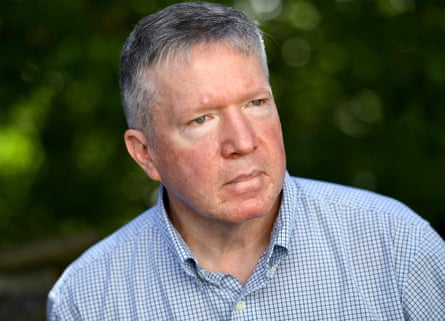
On her final evening in Belgrade, while walking through busy pedestrian streets back to her hotel, the researcher grew certain she was being followed. As she approached her hotel room, she experienced a profound physical sensation akin to descending rapidly in a failing elevator.
Inside her room, the bizarre sensations intensified. She experienced a persistent falling sensation, an abnormal gravitational pull drawing her downward, and acute nausea. When she booted up her government-issued laptop, she watched in shock as the screen flickered violently with blue static. The computer never functioned again.
Though she managed to complete her trip, the ensuing weeks brought debilitating weakness, impaired speech, and a sharp, blinding pain behind her eye that felt like a physical drill boring into her skull. She could no longer maintain focus at work. She exhausted her vacation time, her sick leave, and eventually relied on donated leave from compassionate colleagues before ultimately being forced to resign from her job. It was only much later, as public reports multiplied, that she connected her catastrophic medical decline to the emerging narrative of Havana syndrome.
Subsequent cohorts of AHI patients included personnel positioned at the forefront of a shifting CIA strategy regarding Russia. Following Donald Trump’s inauguration in 2017, the agency launched a concerted pushback against the increasingly brazen global intelligence operations executed by Moscow.
Marc Polymeropoulos, appointed deputy chief of operations for Europe and Eurasia in 2017, noted that leadership wanted operatives to bring the aggressive tactics and spirit of the global war on terror directly to bear against Russian intelligence networks. Despite public denials by Trump regarding Russian interference in the 2016 election, the agency laid quiet plans to aggressively counter Russian hostile activities abroad. While lethal operations were off the table, the agency utilized friendly foreign intelligence services and exposed covert Russian operations in unprecedented ways.
In December 2017, Polymeropoulos and another senior CIA executive traveled to Moscow for liaison meetings with their counterparts in Russia’s SVR and FSB intelligence services. The official sessions were tense, cold, and entirely unproductive. Late one night in his hotel room, Polymeropoulos woke up abruptly. Stricken with violent vertigo and a splitting headache, he initially suspected severe food poisoning before realizing the room was spinning uncontrollably and his ears were ringing with a deafening sound.
Upon returning to Washington, Polymeropoulos battled an unrelenting migraine that refused to clear, alongside institutional superiors who insisted his symptoms bore no relation to other reported AHIs. Because his work was highly classified, he sought private medical evaluations on his own time without being able to explain his whereabouts when the illness struck.
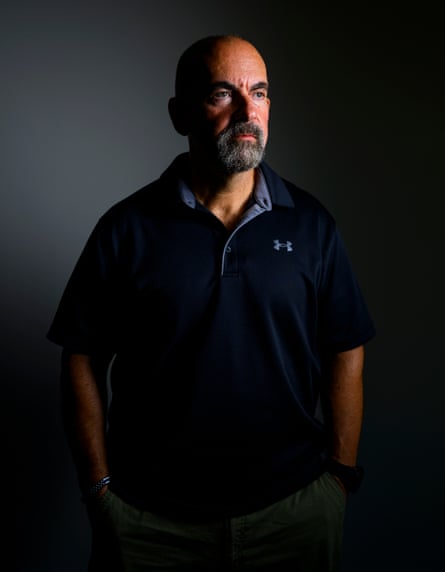
He retired from the CIA in 2019. Frustrated by bureaucratic stonewalling regarding his requests for proper medical assessment, he became the first intelligence officer to publicly break rank and discuss a Havana syndrome incident under his real name, detailing the Moscow attack to journalist Julia Ioffe.
The resulting publicity finally compelled the CIA to send him to the Walter Reed military medical centre, where doctors diagnosed him with a mild traumatic brain injury. In 2023, he was ruled eligible for financial compensation under the Havana Act, a legislative measure authorizing payments to personnel who suffer brain injuries from hostile acts while on assignment. Though the payout was modest, Polymeropoulos viewed it as a vital moral victory following years of fighting for official recognition.
Various alternative theories have attempted to explain away the phenomenon. One early hypothesis suggested that AHIs were simply the unintended byproduct of intelligence data-collection attempts gone wrong—surveillance hardware designed to pull classified files from operatives’ personal devices accidentally causing collateral neurological damage when power levels were dialed too high. While some maintain this remains a theoretical possibility, experts note that the damaging health consequences would have quickly alerted the operators.
Other critics went further, insisting the entire concept of Havana syndrome was a fabricated social construct. Sociologist Robert Bartholomew and neurologist Robert Baloh co-authored a book dismissing the phenomenon as a textbook case of mass psychogenic illness fueled by stressful work environments and sensationalist media reporting. Douglas Fields, a cellular neuroscientist, published journal articles arguing that studies claiming to show cognitive damage used unsound methodologies and that energy weapon theories defied the fundamental laws of physics, comparing the reports to sightings of the Loch Ness monster.
Conversely, other scientific experts who reviewed actual patient medical records strongly defended the validity of the conditions. James Giordano, professor emeritus of neurology at Georgetown University Medical Center and a forensic neuroscientist who evaluated the initial cohort of cases in Havana, argued that while initial skepticism was understandable, the mounting clinical evidence could not be faked.
Giordano pointed to objective physical signs presenting in a distinct, recurring pattern, characterized by a profound tumbling sensation, internal pressure in the head, chest, and throat, and measurable cognitive deficits. While toxic exposures could theoretically cause similar symptoms, comprehensive blood work ruled them out, leaving the sudden onset and distinct localization of the attacks as defining markers.
When the Biden administration took office in 2021, incoming CIA Director Bill Burns and Director of National Intelligence Avril Haines vowed to investigate the matter thoroughly. Burns met personally with many affected AHI patients, including Polymeropoulos, listening closely to their accounts and promising a comprehensive, unvarnished inquiry.
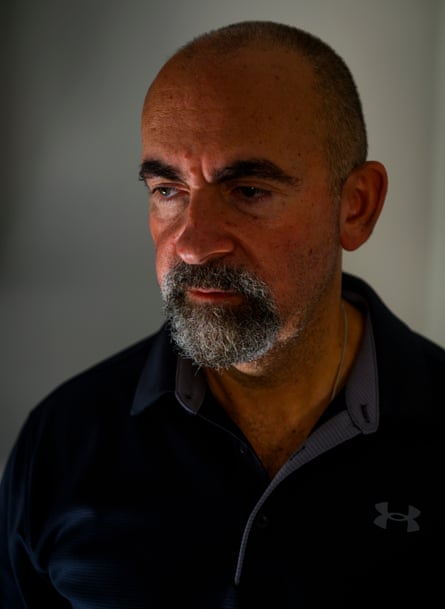
Burns also dismissed the CIA’s chief medical officer, who had alienated victims by dismissing their conditions as fabrications. That same year, over 100 operatives and government officials reported AHIs worldwide. In Vienna, a sudden wave of incidents effectively paralyzed the local CIA station, prompting the recall of the station chief. Reports even surfaced on US soil, including claims from personnel targeted on the grounds of the White House.
The dual investigations launched by Burns and Haines sought to re-examine foreign adversary intelligence links and determine the scientific feasibility of an energy-based weapon. David Relman reaffirmed that classified studies on pulsed radio frequency energy supported the plausibility of such a device, noting that decades of historical research conducted in the Soviet Union and Russia laid the technical groundwork for this technology.
Relman conceded that the majority of broad AHI claims could likely be attributed to alternative environmental factors, but emphasized that a distinct core of dozens of cases defied explanation by any known medical conditions.
Determining culpability fell to a separate intelligence panel, which concluded in 2023 that foreign adversary involvement was very unlikely, devastating patients seeking formal accountability. Subsequent internal reviews showed minor shifts, with one intelligence agency concluding there was a roughly even chance that a foreign actor had deployed a novel weapon or prototype device.
These intelligence community assessments were ultimately rescinded by Director of National Intelligence Tulsi Gabbard in a memo issued just before the transition of power, citing selective evidence exclusion and source mischaracterization, though no new evidence was publicly released.
Legal representation for multiple AHI patients welcomed the reversal as a necessary step toward dismantling an institutional cover-up designed to protect the agency’s public reputation. While Bill Burns maintained that a cover-up never occurred, independent investigators like Rey and Zill suggest the obstruction was a cumulative result of bureaucratic dysfunction, careerism, and institutional reluctance to deliver uncomfortable truths to the White House.
Investigative leads continue to emerge. Journalist Christo Grozev uncovered leaked travel data pointing to potential overlaps between suspected AHI incidents and travel by officers from Unit 29155 of Russia’s GRU military intelligence, a unit linked to assassinations and sabotage campaigns across Europe. Furthermore, independent reporting revealed that US authorities successfully acquired and brought a suspected "Havana syndrome-style device" into the country for testing after it was purchased from a dark-web seller.
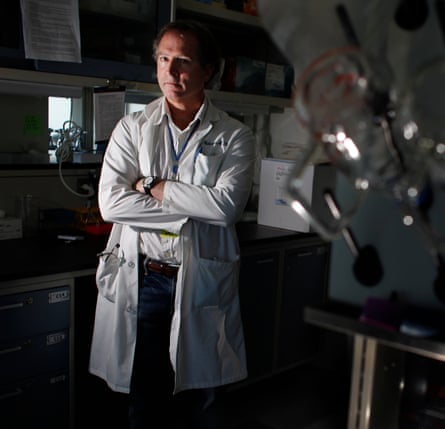
While animal testing on the captured man-portable device—which fires non-thermal pulsed microwaves—demonstrated the ability to induce symptoms mirroring AHIs, it remains unconfirmed whether an identical unit was used in actual attacks.
For the victims who have lived with chronic neurological damage for years, these developments offer a fragile glimmer of hope that official acknowledgment and accountability may eventually materialize, even as the debate over the future of directed-energy warfare continues to unfold.