



According to culinary professionals, achieving the pinnacle of potato texture—a remarkably crisp, savory skin contrasted with a light, cloud-like interior—requires abandoning the foil entirely and embracing high-heat oven physics. To secure the most satisfying crunch, scrubbed russet potatoes should be baked directly on the oven grate at a remarkably high temperature. For those chasing an even more decadent experience that mimics the savory satisfaction of a potato chip, the preparation can be enhanced by rubbing the clean, dry skins generously with vegetable oil and coating them with a heavy hand of coarse salt before they enter the heat.
Counterintuitively, baking potatoes unwrapped at high temperatures does nothing to compromise the fluffy texture of the flesh inside. The secret to achieving that coveted light and airy interior does not rely on trapped steam from foil wrapping, but rather on internal temperature. Culinary testing shows that the magic threshold is reached when the internal temperature of the potato hits at least 212 degrees Fahrenheit. While it may initially feel unorthodox or even amusing to take a potato’s temperature with a digital meat thermometer, culinary experts maintain that this scientific approach is the ultimate fail-safe route to guaranteeing the most enjoyable dining experience possible.
The refinement of the baked potato does not stop when the timer goes off and the spud emerges from the oven; the method by which the potato is opened has also become a subject of intense culinary debate. Authorities on the subject, including representatives from the Idaho Potato Commission, have long argued that the manner in which a baked potato is split open profoundly affects its final texture. Rather than immediately reaching for a knife, purists often advocate for using a fork to gently poke a neat plus sign into the surface of the potato, allowing steam to escape without aggressively mashing the delicate starches beneath.
Other prominent food figures approach the opening ritual with a vastly different philosophy. Renowned food writer Nigel Slater famously prefers a much more aggressive approach, treating the opening of the potato almost as if it were a moment in a martial arts competition. Describing the technique in a piece for The Guardian, Slater advises cooks to bring their hand down fast and sharp, mimicking a karate chop, but applying only enough force to crack open the potato skin without destroying the structure of the tuber itself. Whether a home cook wishes to attempt this dramatic feat remains entirely in their own hands, though culinary investigations into the matter have found that a single, clean fork-pricked line drawn down the length of the spud is ultimately the most efficient and effective method for releasing steam while preserving the integrity of the potato.
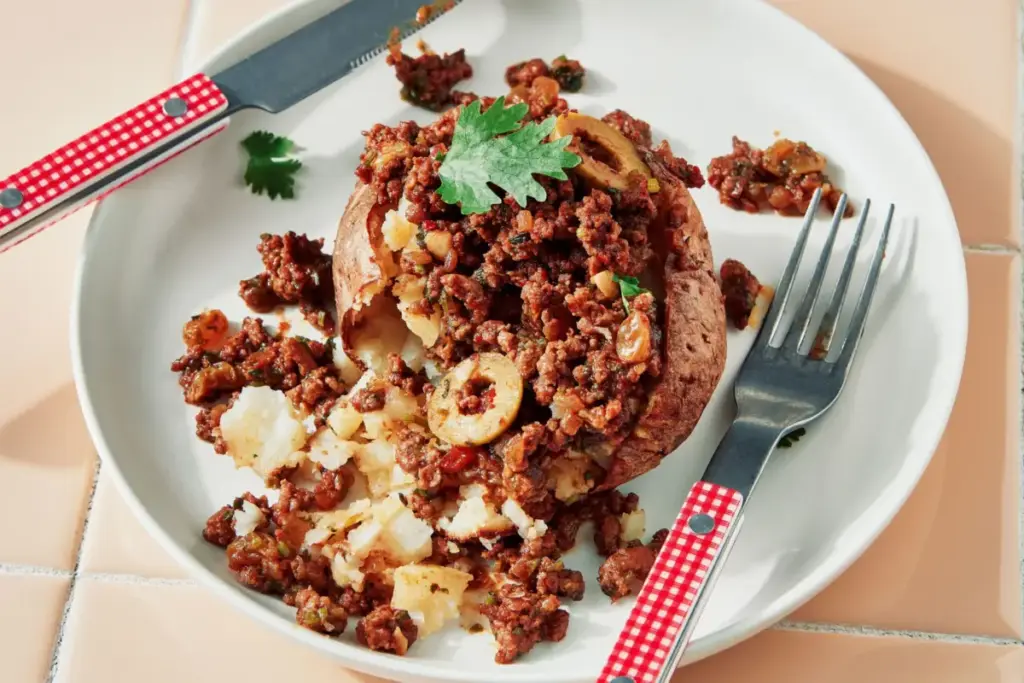
Once the potato has been properly baked, measured, and opened, it transforms into a versatile canvas capable of accommodating an almost endless array of fillings and toppings, stretching far beyond the traditional butter, sour cream, and chives. Culinary experimenters have filled split potatoes with everything from vibrant tuna salad to cheesy, savory baked beans. In recent recipe developments from test kitchens, the spud serves as the foundation for a picadillo-inspired mixture centered around ground beef. This hearty topping is celebrated not only for its rich flavor profile but also for its nutritional density, packing substantial amounts of protein, iron, and creatine, though kitchen tests confirm that ground turkey or chicken serve as equally delightful alternatives for those seeking a different protein source.
To elevate the beef mixture further, the preparation incorporates traditional picadillo elements such as sweet golden raisins and briny stuffed olives, creating a complex interplay of savory, sweet, and salty notes. When crowned with this robust filling, the potato is smothered in a spicy tomato sauce that slowly and continuously soaks into the surrounding potato flesh, seasoning it more deeply with every passing minute it rests on the plate. Kitchen experts emphasize that achieving the ideal depth of flavor in the sauce requires careful ingredient selection, specifically advising home cooks to utilize a chili powder that consists of a balanced blend of spices—such as ground chiles, cumin, oregano, and garlic—rather than relying solely on plain dried ground chiles, which lack the nuanced complexity required to carry the dish.
This refined approach to a classic comfort food aligns with a broader culinary philosophy championed by food editors and test kitchen professionals who believe that healthy, satisfying cooking does not need to be overly complicated. In fact, culinary history repeatedly demonstrates that the simpler a dish is, the better it tends to taste when executed with proper technique and attention to detail. Through dedicated recipe development series focusing on feel-good meals for any day of the week, culinary experts continue to challenge outdated nutritional myths, such as the persistent misconception that white potatoes represent empty calories. On the contrary, nutrition science highlights that white potatoes are remarkably nutrient-dense, offering substantial health benefits when prepared thoughtfully and enjoyed as part of a balanced diet.