



Financial markets have a persistent habit of surprising investors, shifting effortlessly from sudden crashes that trigger anxiety over shrinking retirement portfolios to record-breaking valuations that provoke an entirely different kind of dread. The reigning concern in contemporary financial circles is built on the back of the artificial intelligence boom, a frenzy that has driven markets to unprecedented heights and left many wondering if an even larger version of the dot-com crash is right around the corner. For seasoned figures who navigated the turn-of-the-century internet boom—an era that initially launched early careers and then threatened livelihoods and immigration statuses when the bubble burst—these cycles feel remarkably familiar.

Addressing these pervasive concerns has become a central focus for financial commentators, including recent presentations at events like Camp FI Midwest and upcoming discussions at the Bogleheads conference. Reflecting on more than two decades of retirement, the core question often posed by anxious observers remains consistent across generations: how can anyone remain comfortable and sleep soundly given the state of the world?

Examining Two Decades of Market Worries and Realities
When friends or observers ask how a retiree can maintain peace of mind amid global turmoil, the list of anxieties usually reflects the headlines of the day. In the current climate, news feeds are dominated by concerns over volatile political leadership, persistent inflation, the looming AI stock market bubble, towering national debt, and international conflicts threatening broader stability.

However, identical questions posed over twenty years ago in 2006 reveal a striking parallel. Back then, society wrestled with different political figures, a major war in Iraq, national debt, inflation, and a wildly overvalued housing market that ultimately precipitated the Great Financial Crisis. Instead of artificial intelligence taking white-collar jobs, the prevailing anxiety centered on outsourcing to emerging markets like India and China. There was even widespread panic over "Peak Oil," a theory predicting that fossil fuel scarcity would inevitably doom global growth—an outcome entirely inverted by subsequent technological and extraction advancements.

Despite the severe economic contraction of the Great Financial Crisis—the deepest market downturn since the Great Depression—historical charts show that a $100,000 investment in the broader market would still have ballooned significantly over the subsequent two decades. Even intermediate shocks, such as the pandemic-induced crash of 2020, proved to be temporary disruptions within a much larger upward trajectory of global development.

Simultaneously, broader global indicators over the last twenty years reflect monumental improvements in human well-being. The proportion of the global population living in extreme poverty dropped dramatically, infant mortality rates were cut in half, and clean energy adoption surged as solar panel costs plummeted. Solar generation now constitutes the vast majority of new energy capacity added globally, while electric vehicle sales have grown from negligible figures to significant market share worldwide.

Productivity, Prosperity, and the Nature of Fear
Financial media frequently amplifies scary narratives about market overvaluation and impending systemic collapses, often overlooking a fundamental economic principle: true prosperity originates from productivity, not from the financial system or stock market figures, which ultimately represent numerical abstractions tracked on computers.

Economic history demonstrates that capitalist systems are inherently choppy and prone to wild sentiment swings. Beneath these surface-level market fluctuations, however, real people perform real work and develop genuine innovations. Economies and financial systems are human-constructed frameworks; if a system experiences a severe failure due to confidence loss, societies have historically reset the parameters and resumed productive labor, as occurred following the 2008 financial crisis and prior historical panics. Standard of living, economic growth, and the viability of early retirement derive fundamentally from sustained productivity enhancements rather than short-term market valuations.

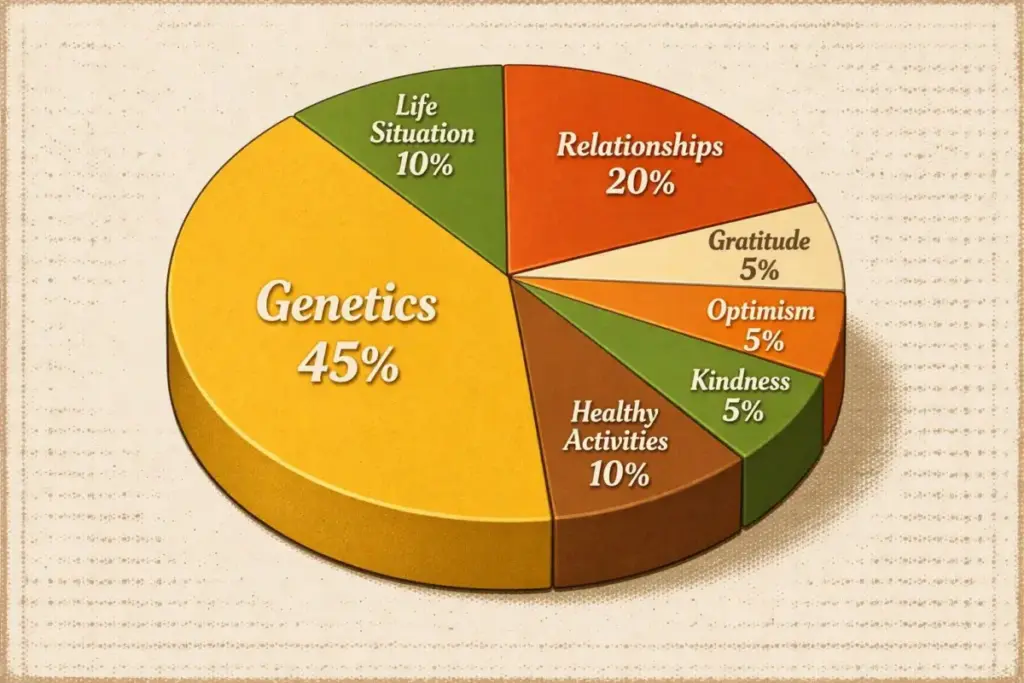
Furthermore, once societies achieve a certain baseline standard of living—a threshold surpassed decades ago in developed nations—human happiness ceases to scale directly with increased wealth. Psychological and sociological frameworks suggest that overall life satisfaction is driven more significantly by non-financial factors, including genetics, close interpersonal relationships, lifelong optimism, and healthy physical routines.
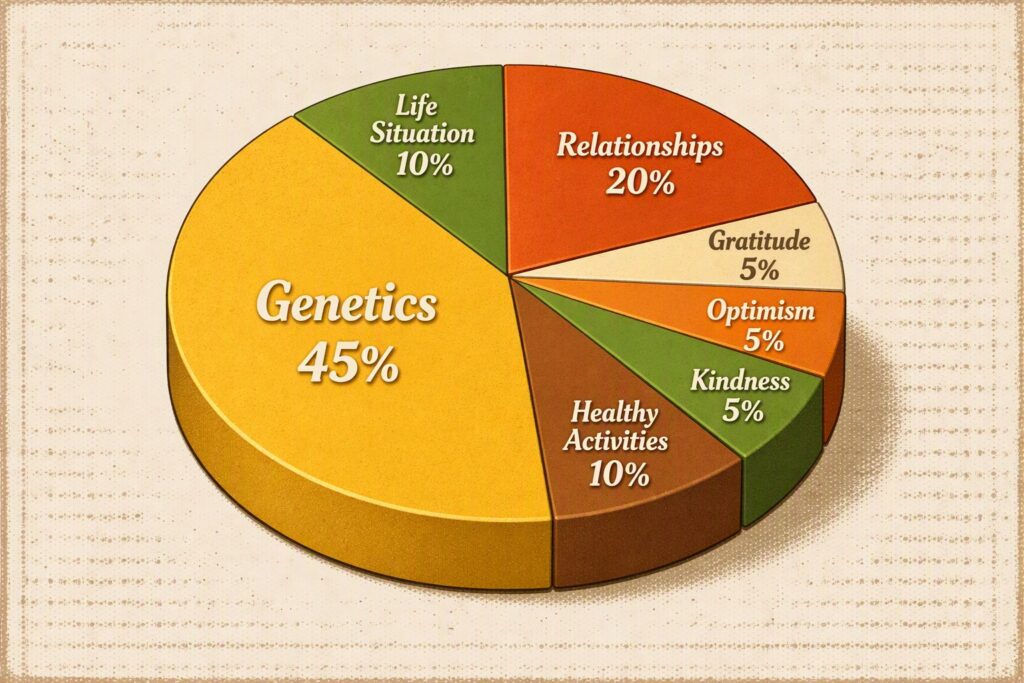
Yet, financial anxiety persists even among individuals who have achieved long-term financial security. This phenomenon is deeply rooted in human biology. Humans evolved primarily as danger-detection machines, utilizing background fear as an evolutionary survival mechanism to protect against predators, disease, and scarcity. When modern society successfully mitigates these fundamental threats, the human brain often continues the pattern by seeking out new concerns, shifting goalposts from survival to social status, community compliance, tax optimization strategies, and complex estate management.

Reframing the Artificial Intelligence Boom
Combatting pervasive financial fear requires self-awareness, an understanding of personal history, and a rational examination of historical triggers. Background anxieties frequently stem from childhood environments or past trauma rather than an objective assessment of present circumstances. Identifying specific worst-case scenarios often reveals that perceived financial catastrophes are vastly exaggerated.
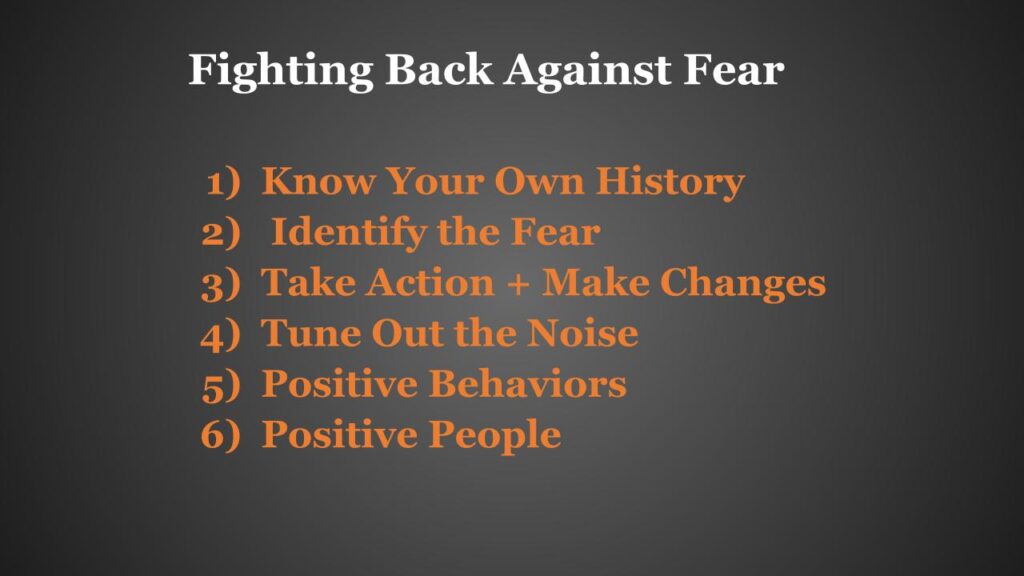
Action remains an effective antidote to fear, transforming the unfamiliar into the manageable and building resilience. Reducing exposure to daily news cycles—which routinely prioritize sensationalized and alarming stories—allows individuals to focus on positive behaviors, physical health, and direct problem-solving rather than abstract macroeconomic threats. Surrounding oneself with optimistic, productive peers further reinforces a balanced perspective.

Applying an experimental mindset to major life transitions—whether changing careers, adjusting living arrangements, or stepping into early retirement—helps reframe uncertainty from a source of dread into an opportunity for exploration. This principle applies directly to the current artificial intelligence wave, which many view not as an existential threat, but as a fascinating technological evolution.

Rather than succumbing to doom-scrolling, analyzing the underlying mechanics of AI reveals that it functions essentially as a cognitive tool designed to enhance efficiency and productivity. Like previous technological revolutions—ranging from industrial machinery to the internet and mobile computing—artificial intelligence will inevitably displace certain entry-level administrative and driving roles while simultaneously lowering service costs and catalyzing entirely new industries.
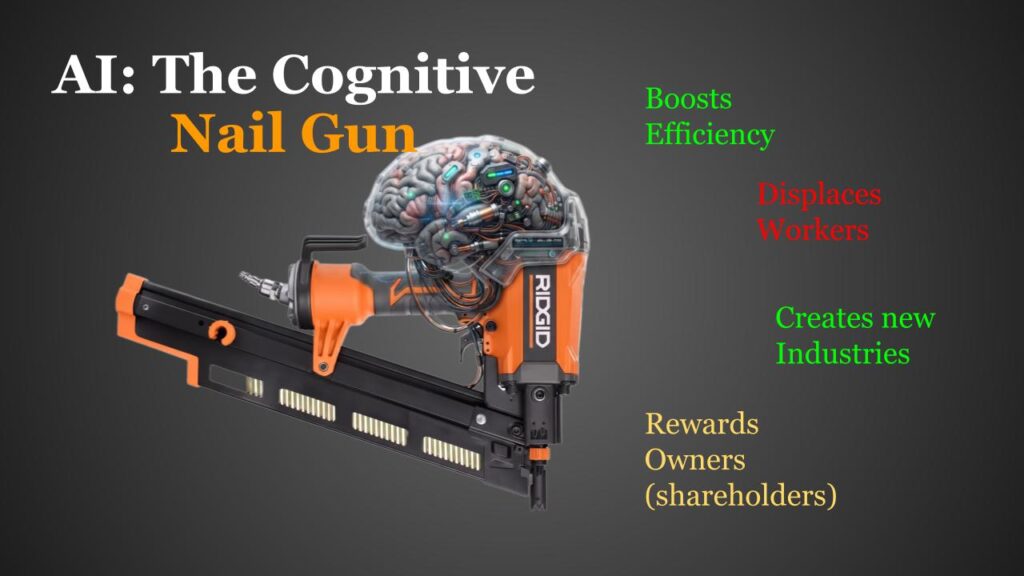
While productivity technologies historically concentrate financial rewards among asset owners and shareholders, they ultimately expand aggregate economic output and open new avenues for human ingenuity. Artificial intelligence, much like any other major societal shift, presents individuals with choices regarding how to interpret and respond to change. Approaching such developments through a lens of continuous learning and proactive engagement offers a path forward, reminding observers that the experiences and achievements they seek in life lie just beyond the horizon of fear.