


Coming out of an initial 45-minute hands-on preview earlier this year, the sentiment surrounding Stranger Than Heaven was one of cautious hesitation. While the atmospheric ambition and broad strokes of Ryu Ga Gotoku (RGG) Studio’s latest project showed promise, its combat system felt sluggish, clunky, and detached, leaving open questions about whether the team behind the Yakuza and Like a Dragon franchises could successfully execute a completely new kind of action experience. That initial demo threw players straight into the heat of battle without context or setup. However, a sweeping new three-hour hands-on session has fundamentally altered that perspective, offering a comprehensive look at the game from its very opening moments, its decade-spanning narrative sweep, and the vibrant, activity-filled streets that define its historical settings.
Playing through the game’s proper introduction, witnessing the complex emotional beats of its multi-decade story, and grappling with a deeply re-tuned combat system resulted in a complete 180-degree turn. The latest project from the celebrated Yakuza team is no longer just an intriguing curio; it has firmly established itself as one of the most anticipated releases on the horizon, signaling that RGG Studio’s signature dramatic flair and environmental storytelling remain entirely intact despite the historical shift.
The Life of a Yakuza and an Outsider’s Struggle
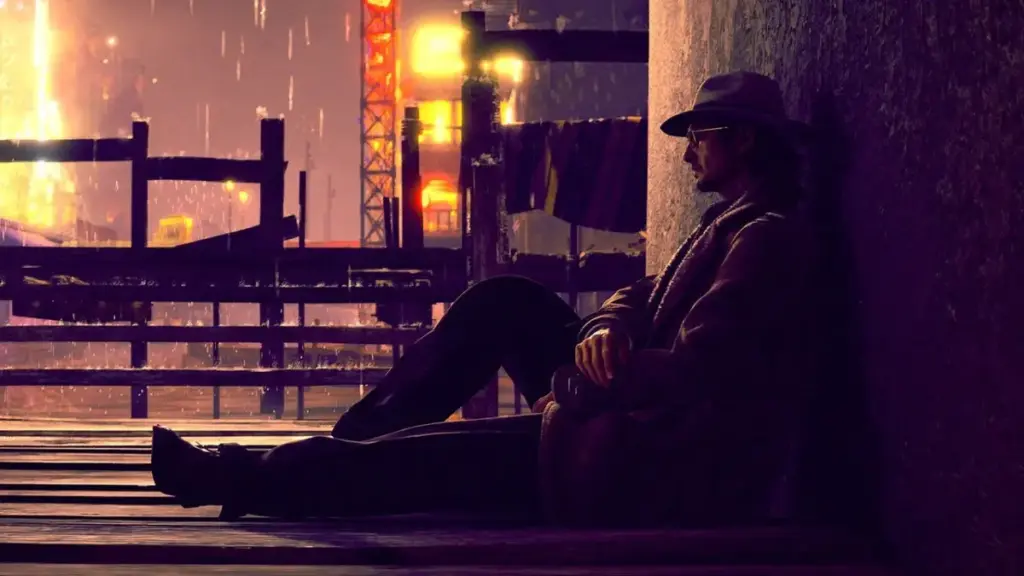
From its initial announcement, the core premise of Stranger Than Heaven commanded attention. The narrative focuses on a protagonist of mixed ethnicity navigating a turbulent historical landscape bridging Japan and the United States. Spanning multiple decades, the story ultimately builds toward the foundational roots of the Tojo Clan within the neon-tinted, gritty alleyways of 1960s Kamurocho. For longtime veterans of the Yakuza and Like a Dragon series, the setup hits with a distinct, heavy emotional resonance. The core themes touch on the complicated dynamics of being of mixed heritage and the universal struggle to find a sense of belonging in a rigid society—territory that few video game narratives dare to explore with such directness.
The journey begins in San Francisco in 1915, where lead character Makoto Daito is desperately looking for a way out of the city while fleeing the scene of a crime he did not commit. Predictably, the pursuing authorities show no interest in justice or due diligence, eager instead to pin the transgression on a foreign scapegoat and close the case. The narrative immediately establishes a raw, unapologetic tone regarding the intense racial discrimination faced by Asian immigrants during the era, pulling no punches with period-appropriate hostility.
This tense opening doubles as a sprawling tutorial for the game’s intricate combat mechanics, allowing players to fight their way to freedom. Makoto ultimately escapes as a stowaway on the final outbound ship leaving the Bay. Following a physical confrontation with the vessel’s crew, he crosses paths with a character named Orpheus, portrayed by iconic artist Snoop Dogg, before eventually arriving in the small Japanese coastal town of Kokura.
The inclusion of Snoop Dogg initially reads like an eccentric stunt casting choice, yet within the context of the game’s thematic framework, the role surprisingly functions. The narrative heavily explores how societal outcasts discover community and solace through music. Director Mikinobu Abe has noted that Stranger Than Heaven is not striving for strict historical accuracy. While anachronistic elements risk testing the believability of the setting, the execution possesses a peculiar charm that invites curiosity. The game leans into the persona of its guest star, even featuring a sequence where Orpheus teaches Makoto how to roll loose cigarettes—a detail that ties directly into a gameplay crafting mechanic for producing temporary stat-boosting smokes.
Despite these eccentricities, Stranger Than Heaven maintains a firmly serious dramatic tone. The narrative sequence set in Kokura portrays Makoto as an intensely timid outsider. His striking blue eyes instantly betray his foreign heritage, subjecting him to systemic discrimination in a country that should theoretically feel like home. Tasked with helping take down a local crime boss, Makoto approaches a restaurant hostess named Tae under false pretenses. The cutscenes expertly project his deep-seated social awkwardness and the underlying shame he harbors regarding his identity. Overwhelmed by his natural compulsion for honesty, Makoto eventually reaches a breaking point, leading to a raw moment where both characters lay their true motives bare.
Spanning over 15 minutes of uninterrupted cutscenes, the sequence succeeds in keeping players entirely engrossed. RGG Studio has long maintained a reputation for industry-leading cinematics, exceptional actor performances, and deeply human character writing. Stranger Than Heaven proves that the development team has lost none of its mastery, allowing subtle, intimate details to speak volumes and establishing a credible, emotionally charged dynamic between the cast.
Catching Hands and Mastering Re-Tuned Combat
Fast-forwarding to a subsequent section of the demo, Makoto finds himself in the middle of a high-stakes raid on a factory in Kokura, where Tae has been taken captive by the aforementioned crime boss. Entering this sequence without full narrative context immediately thrusts the focus onto the newly adjusted combat mechanics. While the action still retains a degree of deliberate weight and can occasionally feel chaotic when managing larger crowds of adversaries, the underlying tactical depth shines through clearly.
The control scheme maps light attacks to the bumper buttons, while heavy attacks are assigned to the triggers—an intuitive layout on paper. Once players acclimate to the directional parry system, the flow of combat transforms dramatically. Holding down the guard button requires timing a left or right light attack to successfully stagger an oncoming foe. Success demands meticulous attention to enemy attack animations, not merely for timing the defense, but for correctly identifying the incoming angle of the strike. While action games with parry mechanics are plentiful, this granular directional requirement introduces an engaging layer of tactical consideration.
Furthermore, offensive capabilities shift significantly depending on the weapon equipped. While a massive ōdachi sword offers devastating power, it is rarely the optimal choice for every scenario. Heavy hammers excel at breaking enemy guards and delivering brutal finishing blows, but they severely compromise overall mobility. Consequently, players naturally gravitate toward more agile setups, such as a one-handed knife paired with a wooden club, which preserves the necessary movement speed required to execute precise directional parries.

Fighting through successive waves of enemies within the factory environment provides a steady learning curve, ultimately preparing players for the climactic boss encounter at the end of the chapter. Rather than inspiring intimidation, the encounter tests whether the lessons learned during the stage have truly taken root. Surviving demands a sophisticated understanding of parry windows, executing calculated dodges around the boss rather than simply retreating, and resisting the temptation to press offensive advantages too greedily. It is a demanding, rigorous system that rewards patience and mastery.
Director Abe confirmed that RGG Studio substantially reworked the combat mechanics in response to community feedback following earlier public demonstrations. While minor quirks remain, the improvements are stark. When the story transitions to the snowy town of Kure in 1929, players are introduced to a underground fight club side activity, where brawling in a pit for cash reframes the experience through the lens of a boxing game. With a wide array of weapon types available for upgrades and unlocking new techniques, the long-term evolution of the combat system across a full playthrough holds considerable promise.
A Night Out on the Town and the Showbiz System
True to the lineage of the Yakuza franchise, the virtual settlements within Stranger Than Heaven are densely populated with an array of absorbing side activities and distractions. The final portion of the preview transported players to 1943 Osaka, specifically the bustling district of Sotenbori—modeled after the real-life Dotonbori—which will be instantly familiar to veterans of the series. Here, RGG Studio appears to have delivered some of its finest optional content to date.
The streets are packed with classic diversions, including beigoma, a competitive spinning top game focused on weight distribution and rotational speed, where players time power and accuracy on a golf-style meter. There is also menko, a traditional card-slamming playground game reminiscent of classic physical collectibles, requiring strategic throwing angles to knock opposing cards off a table. Familiar staples like mahjong make a return, offering countless hours of tangential gameplay completely independent of the main narrative storyline. Quicker, bite-sized distractions, including shooting galleries, five-finger fillet, and arm wrestling, round out the urban environment.
The standout addition, however, is Showbiz, a robust side activity that successfully merges club and business management mechanics with rhythm-based karaoke gameplay. Serving as a thematic anchor that ties directly into the narrative’s exploration of music, Showbiz mirrors Makoto’s evolution as a character. Players must hire musicians, arrange stage props, establish ticket pricing, and curate setlists to attract crowds and generate revenue. This transitions into an accessible rhythm game interface, requiring players to time stage lighting and visual effects with musical performances to maintain audience engagement.
Serving as a consistent throughline as the narrative shifts across decades, Showbiz acts as a cultural lens through which to observe the shifting tides of Japanese fashion, nightlife, and musical tastes. This system also incorporates the character Keiko, voiced by acclaimed J-pop artist Ado. Hearing Ado voice a major character and perform original, era-appropriate in-game tracks represents a seamless integration of celebrity talent that genuinely enriches the world.
Beyond standard management, players can customize the individual instrumental tracks of available songs. By altering the instruments, mood, or tonality of lead, rhythm, bass, and drum tracks, users can radically transform a song’s genre on the fly. This level of granular audio customization permits wonderfully anachronistic experimentation, allowing players to reshape historical arrangements into contemporary punk-inspired anthems or melancholic brass arrangements.
Navigating a Changing World
Conversations with the creative team further illuminate the ambitions behind the project. Yu Shirota, who portrays protagonist Makoto Daito, noted that the role offered a unique opportunity to merge his professional backgrounds in music and acting while drawing directly from his personal identity as a half-Japanese individual who grew up primarily speaking Japanese and navigating the complexities of cultural displacement. Set against a turbulent historical backdrop defined by the shadow of Imperial Japan, the onset of World War II, and the heavy influx of Western cultural influence, director Abe emphasizes that the narrative ultimately centers on how an ordinary individual manages to endure and navigate a world undergoing constant, radical transformation.
At the same time, certain creative choices continue to provoke debate. The inclusion of digital necromancy to feature the likeness of Tupac Shakur remains a point of contention. RGG Studio head Masayoshi Yokoyama previously defended the decision, noting that extensive consultations were held with Tupac’s estate and family to secure approval, even as the conceptual approach draws skepticism. Combined with high-profile casting choices like Snoop Dogg, the project occasionally flirts with provocative stunt-casting.
Yet, despite occasional reservations regarding its more eccentric elements, the core components of Stranger Than Heaven are coalescing into a compelling package. As gameplay systems sharpen and the narrative scope comes into clear focus, the desire to see how Makoto’s journey ultimately concludes becomes increasingly difficult to ignore. The answers are not far off, as Stranger Than Heaven is scheduled to launch as one of the major tentpole releases of the year on January 15, 2027, arriving simultaneously on PlayStation 5, Xbox Series X|S, and PC.