

When signing up for a new home internet plan, subscribers are almost universally met with an inevitable question from their internet service provider: would you like to add a company-issued gateway to the package? Traditionally packaged as a convenient modem and router combination, these devices have long been pushed by ISPs as the seamless, turn-key solution for getting online. However, this convenience historically comes with a recurring monthly rental fee, typically ranging anywhere from $10 to $20 added directly on top of the base subscription price.
Internet providers naturally position the rental model as the path of least resistance, highlighting the technical support and built-in benefits of their proprietary hardware. Yet, consumers are increasingly faced with a choice. Depending on the provider, subscribers may be permitted to purchase the ISP’s gateway outright or bypass company equipment entirely by bringing their own hardware. Determining the right path ultimately depends on what a household demands from its network infrastructure, alongside personal preferences regarding immediate expenditures versus long-term savings.
The Pros and Cons of Renting a Router
Renting network hardware from an internet service provider remains the most frictionless method for establishing a home connection. For households that prefer to fold the cost of their modem and router neatly into their monthly utility bill while sidestepping the hefty upfront capital required to purchase retail equipment, renting eliminates a significant logistical hurdle. This arrangement proves particularly advantageous in shared living situations, such as apartments with roommates, where dividing home expenses needs to be as straightforward as possible.
Furthermore, renting offers robust logistical support. If an ISP dispatches a technician to establish a new network connection, that technician will invariably hook up the provided gateway, verify the signal strength, and ensure that devices can successfully access the internet before leaving the premises. Many major providers also maintain policies that automatically upgrade rented gateways to newer iterations every few years, ensuring that long-term subscribers eventually transition to more modern hardware without needing to monitor technological shifts themselves.
Opting for a rental also insulates the consumer from compatibility guesswork. While some internet providers publish explicit lists of approved third-party modems, others provide sparse guidance, leaving subscribers vulnerable to purchasing retail hardware that fails to interface properly with the local network infrastructure. Renting also guarantees an all-in-one footprint, preserving physical space by combining the modem and router into a single enclosure—a considerable benefit for consumers living in compact environments.
Despite these conveniences, the most apparent drawback to renting is the cumulative, ongoing financial burden. That persistent monthly fee of $10 to $20 represents an inescapable expenditure for the duration of the subscription, subject to arbitrary rate hikes whenever the provider decides to adjust its equipment fees. Moreover, if a subscriber eventually decides to cancel their service and switch to a competing provider, they are left with no hardware to transition to the new network.
Another significant constraint is the standardized, one-size-fits-all nature of ISP-issued equipment. While these manufacturer-customized boxes are fully sufficient for basic web browsing, streaming, and light usage, they rarely support the bleeding edge of home networking technology. Renters often find themselves locked out of the latest Wi-Fi standards, grappling with limited signal range, and stuck with restrictive proprietary firmware that prevents deep customization or optimization.
The Financial and Functional Reality of Buying Your Router
When an internet service provider refuses to support third-party hardware and forces a choice between buying its proprietary gateway or renting it, the decision reduces to a straightforward calculation of upfront costs versus long-term economy. A standard ISP gateway might carry a retail purchase price of $200—a steep initial investment for an appliance that simply bridges a digital connection. However, running basic math reveals the break-even timeline. For a $200 modem paired with a $20 monthly rental fee, purchasing the equipment outright eclipses the rental cost after just ten months. Given that promotional ISP contract periods typically run for at least twelve months, buying out the equipment is almost universally the more economical choice over the lifespan of the service.
The decision grows more nuanced when subscribers possess the freedom to curate their own independent modems and routers from retail channels. Premium standalone modems and high-performance routers can easily command $200 each, extending the timeline required to recoup the initial investment through avoided rental charges. Beyond simple arithmetic, however, owning network equipment introduces a vast array of distinct functional advantages.
Purchasing a retail router grants consumers absolute autonomy to select equipment tailored precisely to their household demands. Users can opt for an entry-level device or invest in advanced hardware featuring updated wireless specifications, comprehensive traffic management tools, and robust parental controls. Households struggling with physical reach or architectural interference can bypass single-router limitations entirely by deploying a multi-node mesh network to blanket every corner of the residence in reliable Wi-Fi.
Ownership also ensures continuity when switching providers. If a household chooses to migrate to a different ISP down the road, compatible retail equipment can simply travel with them. Should an individual eventually decide to upgrade their primary network gear, older routers do not need to be discarded; instead, they can be repurposed in numerous ways to extend network coverage or serve secondary functions around the home.
Retail equipment ownership also liberates users from arbitrary upgrade cycles dictated by corporate boardrooms rather than personal need. Owners possess complete administrative control over network security protocols and performance tuning. Advanced users even gain the ability to flash custom firmware onto compatible routers, unlocking advanced capabilities that are strictly prohibited on stock ISP gateways.
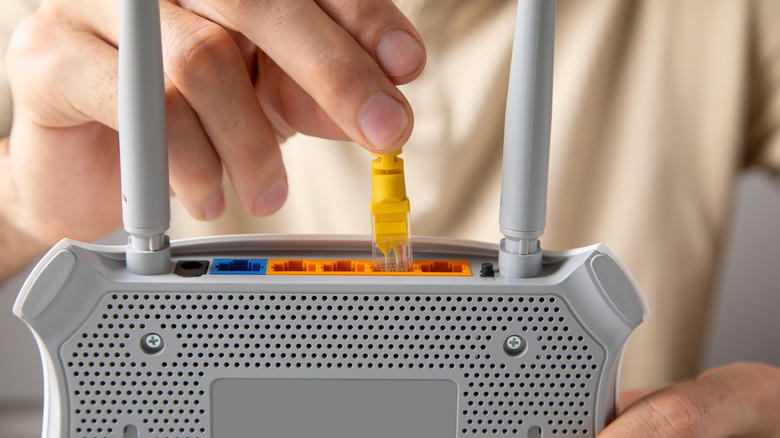
Network privacy represents another critical differentiator. Company-issued gateways are deliberately configured to allow remote access by ISP technicians, enabling corporate support teams to alter settings, monitor device inventories, and diagnose local issues remotely. Standard ISP firmware often restricts users from changing Domain Name System servers away from corporate defaults or integrating a virtual private network at the router level. Furthermore, certain large cable providers routinely configure rented gateways to broadcast public, secondary Wi-Fi hotspots, such as community-accessible networks that allow passing subscribers to log in using their own credentials. While providers maintain that these secondary broadcast signals operate on segregated bandwidth and pose no security risks to the primary household, many consumers express discomfort at the prospect of their personal home hardware being utilized to service external traffic.
Navigating Included Equipment and Market Pricing
Fortunately, many modern consumers are finding that the traditional dilemma of choosing whether to buy or rent is increasingly being bypassed by market shifts, as numerous providers have begun bundling gateways directly into the baseline cost of their internet plans. Network evaluations of major urban fiber providers, for instance, frequently reveal checkout pages where the home router is listed as explicitly included alongside a permanent monthly service discount. While these units remain company property and must be promptly returned upon cancellation—typically incurring fees only if physical damage occurs—the baseline operational cost to the subscriber is zero. Under such conditions, purchasing high-end retail hardware can appear redundant unless specific, advanced networking features are required.
Major cable and fiber conglomerates alike have mirrored this approach, including standard gateways even within their most affordable, entry-level broadband tiers, while still maintaining dedicated online support pages listing approved third-party modems for users who prefer a strictly independent setup.
For households whose available internet options involve providers that continue to bill separately for equipment rentals, evaluating the total cost requires balancing anticipated subscription duration against the prevailing market prices for quality retail hardware. Entry-level cable modems available through major online retailers typically start around $55, though these budget units are generally restricted to supporting download speeds up to 400 megabits per second. Consumers requiring gigabit speeds generally need to budget between $100 and $150 for a capable modem, while multi-gigabit connections demand hardware scaling from $175 to $300.

Similarly, ultra-budget standalone routers can be acquired for around $50, though such hardware often struggles under heavy household demand. Next-generation Wi-Fi 7 routers generally command starting prices near $100, with comprehensive whole-home mesh systems requiring a substantially higher capital commitment.
Assuming a balanced middle-ground expenditure of roughly $125 for a retail modem and $150 for a quality router, a combined investment of $275 would take approximately eighteen months to break even against a standard $15 monthly rental fee. For households intending to maintain their broadband subscription for at least that duration, purchasing retail equipment represents a prudent financial maneuver. Beyond escaping the perpetuity of recurring monthly fees, ownership dismantles corporate oversight of the home network, returning complete operational control to the end user.