



Last week at Qualcomm’s annual Snapdragon Summit in Hawaii, instead of soaking up the warm sun or digging bare toes into the golden sand, I was greeted by an unrelenting chorus: agentic AI. Everywhere I turned during the multi-day industry gathering, the concept of the “AI agent” followed me like my own shadow, dominating keynotes, panel discussions, and hands-on hardware demonstrations. At first, I was deeply skeptical. Sitting in the auditorium listening to executives pitch the future, I still am. Yet, looking back on the experience, I find myself quietly contemplating the possibilities. Could an agentic AI actually make my day-to-day life better, or is it merely the latest evolution of corporate tech buzzwords?
During the very first keynote of the Snapdragon Summit, a sense of saturation quickly set in as I was bombarded by relentless mentions of agentic AI. Over and over, the presentation relied on the same polished marketing phrases. We were told that agentic AI is deeply “personal to you,” that it “knows everything” about your habits, and that it miraculously manages to remain entirely “private and secure.” Speakers promised that it would fundamentally “change my life,” ensuring I would never have to “waste my time” on routine chores again. While these exact quotes may not be verbatim, I heard these exact sentiments repeated what felt like twenty-five times in less than two hours.
While taking notes in the dark auditorium, I was actively messaging our editor-in-chief, Jaron Schneider, lamenting the emergence of a world where an algorithm intimately understands my personal beliefs, routines, and ideals. The industry was pitching an AI agent designed to possess comprehensive knowledge about me and every facet of my daily existence.
“Why would I want that?” I asked him, not posing a purely hypothetical question. At that precise moment during the presentation, I definitely did not want it, and as I reflect on the trajectory of consumer technology, I am fairly certain I still don’t.
Yet, over the course of three full days immersed in the Snapdragon Summit, my perspective shifted just enough to see the appeal. That allure became apparent primarily when looking at more limited, carefully deployed agentic AI technologies and various hardware solutions that could, conceivably, streamline friction points in my routine and genuinely make life easier.
I appreciate that as the Senior News Editor for Technology here at PetaPixel, I am ostensibly supposed to be perpetually obsessed with technology. I am certainly “in the know” about the latest silicon, software, and industry trends, but the relentless onset of the current AI era has genuinely beaten down my once-strong, unyielding love for all things tech.
I still genuinely enjoy learning about new developments, and I like writing about the nuances of the industry. However, my consumer habits have shifted drastically; I buy significantly less of the newest hardware than I used to. In fact, underlining this detachment, I just purchased my very first standalone camera since 2017 only last month. More broadly, I undoubtedly harbor significantly less optimism about the overall state of technology and the direction we are headed compared to a decade ago. My eyes have rolled into the back of my head during ongoing AI pitches so many times I am genuinely surprised they haven’t gotten permanently stuck back there.
A major driver of this fatigue is my growing sense that most new consumer technology is not actually solving problems I experience in real life. This sentiment is especially acute in the generative and agentic AI space, where I now weigh nearly every newly unveiled technology against its broader environmental impacts, the ever-widening income gap, and the obscene power and control afforded to massive tech conglomerates and their extraordinarily wealthy executives. These days, I weigh real-world ethical costs and systemic impacts, whereas years ago, I would simply salivate over the coolest new gadgets.
Very rarely does artificial intelligence come out on top in my personal ethical arithmetic. I appreciate that tools like Generative Remove make editing photos easier without taking away anything I genuinely value in the creative process. I like that I can use machine learning to automatically keyword my photo libraries, and I am certain there is plenty of underlying algorithmic logic powering various random utilities I rely on in my day-to-day workflow. I tend to appreciate AI when its implementation feels akin to using an older, manual tool—just a bit faster and slightly less cumbersome.

Putting those deep-seated qualms aside temporarily, as I watched the hardware presentations and tried out live demos on the summit floor, I began to think, “Hey, that actually could save me time and make my life easier.” I saw the light, at least to the limited extent that my deeply ingrained cynicism allows.
I know I am far from alone in my AI skepticism, because Qualcomm leadership explicitly acknowledged as much during their presentations. The technology sector is waking up to the reality that artificial intelligence’s single biggest hurdle may not be technical capability or compute power at all, but rather public perception and trust. I firmly belong to that relatively large demographic of consumers who remain, at best, deeply apprehensive about the push toward pervasive intelligence.
When industry figures discuss agentic AI, they are fundamentally talking about an intelligent system that resides directly on your personal devices and exercises a degree of command over multiple applications simultaneously. A broadly effective, autonomous agent requires access to your private email, calendar, photo libraries, messaging apps, and potentially even sensitive financial data like credit card records or banking information.
Looking at it through that lens, it is easy to understand why many regular people are not on board. As someone who values personal privacy even more than most, my hesitation runs exceptionally deep.
And yet, my mind begins to wander when considering the sheer volume of tedious, repetitive tasks I execute every day that I would gladly surrender to automation. To solve those specific bottlenecks, an AI would necessarily need robust, system-wide control over my computer environment.

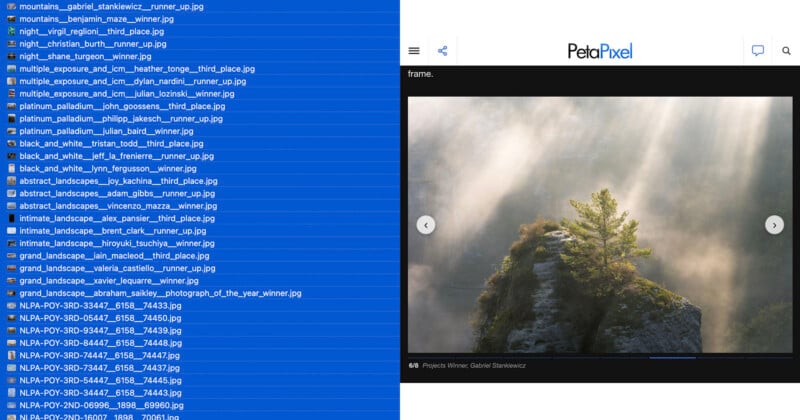
Consider how much time I could save if an agentic AI could instantly locate precisely which files I am searching for, open them automatically in Photoshop, batch-resize them to exact specifications, rename them logically based on their visual content, generate accurate caption data using information from a separate document, and finally upload the entire package.
That workflow describes the routine process required to prepare images for a story about a photography contest. Absolutely nothing about prepping those image files and copying and pasting metadata supplied by a contest organizer requires unique human creativity or emotional energy. It simply consumes hours of time. And letting me be entirely frank, it takes a massive amount of time to perform all that mind-numbing clicking and dragging. That labor is objectively better spent actually looking at extraordinary photographs and writing thoughtfully about the wonderful ways photographers captured their subjects.
In general, managing and organizing a chaotic digital library takes forever and does not leverage any genuine human creativity. Sometimes, there are no interesting or fulfilling ways to accomplish a chore, so the logical question follows: why should a human have to do it at all?
Beyond software agents, there is a substantial wave of AI-infused hardware arriving on the market, most notably smart glasses. I wear standard, traditional glasses—the kind that merely help my aging eyes see the physical world more clearly. Decidedly antiquated technology by modern Silicon Valley standards.
I am certainly not about to run out and purchase a pair of smart glasses for myself, but watching the demos allowed me to envision some potentially interesting ways such form factors might eventually assist working photographers.

Imagine walking through an unfamiliar city wearing connected smart glasses, knowing that the underlying system understands your context: it knows you are a professional photographer, that you love capturing travel landscapes, that your camera bag is zipped and ready on your shoulder, and that you are currently visiting a specific geographic location. What if an agentic AI could synthesize all of that data to offer real-time photographic recommendations for nearby areas tailored specifically to your artistic style, current weather patterns, and shifting lighting conditions?
An assistant whispering in your ear could suggest a route: “Hey Jeremy, since you have your camera with you right now, I know of a scenic overlook just half a mile away that is exceptionally popular with landscape shooters under these exact weather conditions. Do you want me to navigate you there?”
It could pull up visual aids: “Hey Jeremy, here is a digital preview of what that landscape looks like with a 50mm lens frame overlay to give you a clear idea of what type of compositions you can achieve from the public viewing area.”
It could connect you to peer inspiration: “Hey Jeremy, this photographer you follow on social media has shot from this exact vantage point before. Do you want me to show you what framing they captured?”
Alternatively, imagine being a newer, less experienced photographer looking out at a complex scene through smart glasses, feeling entirely unsure where to start or how to expose the shot. We have already seen that AI can serve as a useful educational resource through utilities like Google’s Camera Coach, but why not take that utility to the next level? Why couldn’t visual intelligence systems draw on your personal experience level to offer real-time compositional guidance and exposure advice?
With twenty years behind the lens, I frequently take my foundational knowledge of photography for granted, forgetting what it felt like to have absolute zero idea how shutter speed, ISO, and aperture interact in the field. I acquired all of that technical understanding through painful, arduous trial and error, much like a caveman fumbling in the dark. Smart glasses powered by contextual AI could theoretically flatten that steep learning curve for beginners out in the world trying to master their gear.
If you do not know how to achieve a specific artistic look, machine learning models might. If you cannot remember how to locate or adjust an obscure menu setting on your specific camera body, an assistant could guide you instantly. If you have attempted a particular shot and failed in the past, an intelligent system could recognize that historical failure based on how you rated or edited previous frames in your library, actively helping you correct those mistakes on your next attempt.
If you had asked me just a few weeks ago whether I would ever welcome that level of integration into my creative process, I would have dismissed it as inherently invasive. To be fair, it still might be. But spending time at the summit made it easier to imagine a mindset I might have held fifteen years ago, back when I still felt unbridled excitement about all things technology: That is genuinely cool.
I do not believe I will ever recapture that youthful, uncritical enthusiasm for consumer electronics, but the Snapdragon Summit brought me slightly closer to that headspace than I was a month ago. Truthfully, I am not entirely sure how I feel about that realization.