


Few phrases carry as much tired familiarity in modern finance as "how about that stock market?" As years pass, the market continues to surprise observers, alternating between dramatic crashes that shrink retirement stashes and record-shattering valuations that trigger a different kind of anxiety. After all, when the market climbs to super-duper-crazy record valuations, conventional wisdom dictates that an even bigger crash must be looming just around the corner. Today, that prevailing anxiety is built squarely on the back of a frenzied Artificial Intelligence boom, leaving many investors wondering whether history is about to repeat itself on an unprecedented scale.
For those who have managed to tune out the daily market drama and focus on living their lives, the current state of affairs can feel overwhelming. Yet the underlying narrative of the AI boom follows a familiar trajectory that veterans of the tech industry have witnessed before. Investors worry that while Artificial Intelligence is undoubtedly a major technological invention, the mania surrounding it is happening too much and too fast. This dynamic leads many to fear that we are hurtling toward a much larger iteration of the early 2000s dot-com crash. For financial commentators who watched their early careers turbocharged by that exact boom—only to see the ensuing collapse threaten their jobs and citizenship applications—the parallels are striking.

Addressing these cyclical anxieties has become a frequent endeavor for long-term financial commentators. Recently, these thoughts were formalized into a presentation delivered at Camp FI Midwest, with an updated version slated for the upcoming Bogleheads conference. Rather than panicking over market tops, financial veterans suggest that examining our collective history offers a much steadier lens through which to view the current artificial intelligence cycle.
Will the AI Bubble Ruin Our Retirement?
Having crossed the milestone of two decades in retirement, the concept has become quite comfortable, yet occasional conversations with anxious peers still highlight how pervasive financial worry remains. When friends ask how someone can stay retired, comfortable, and sleep peacefully given everything happening in the world, the initial reaction is often one of genuine bewilderment.

For the dedicated news watcher and worrier, the list of contemporary crises is long: corrupt or dangerous political leaders menacing the global stage, persistent inflation eroding purchasing power, the looming AI bubble, a towering US national debt, and bubbling geopolitical conflicts threatening to tip nations into open destruction. Yet when a similar question was posed to financial observers over twenty years ago—back in 2006—the anxieties were remarkably similar, even if the specific names and technologies had changed.
Two decades ago, the world worried about dangerous political leaders, Middle Eastern wars, national debt, and inflation. Back then, the overvalued stock market was blamed on a housing bubble rather than an artificial intelligence bubble, and the existential threat to employment was job outsourcing to India and China rather than machine learning algorithms. There was even a fierce global debate over "Peak Oil," centered on the fear that humanity was doomed because fossil fuel usage was continually increasing while global supplies were bound to diminish.

Instead of total destruction, the subsequent twenty years brought the Great Financial Crisis—triggered by irrational exuberance over rising home prices paired with excessive financial leverage. Yet even when viewed against the backdrop of that historic crash and the 2020 pandemic-induced downturn, the long-term trajectory of a standard stock market investment reveals steady, staggering growth. A hypothetical $100,000 investment made during those anxious years would have ballooned significantly over the subsequent two decades.
Simultaneously, the broader world experienced profound improvements that defied the era’s pessimistic forecasts. The proportion of the global population living in extreme poverty dropped dramatically over a twenty-year span, while infant mortality rates were cut in half. Clean energy transformed from an idealistic talking point into an economic reality as solar panels plummeted in cost, allowing solar generation to dominate new energy additions globally. Meanwhile, sales of pure electric vehicles surged from near zero to a substantial fraction of all cars sold worldwide.

This historical contrast raises a fundamental question: should individuals focus their limited energy on worrying about an uncertain future, or on optimism and productivity?
Prosperity Comes from Productivity
Skeptics are quick to ask whether "it is different this time." Perhaps the US national debt has finally reached a threshold where it will destabilize the entire economy, or perhaps the artificial intelligence bubble is so vastly inflated that the markets will never recover from its deflation. Others worry that AI will spin out of control into a superintelligence that renders human labor entirely obsolete.

While the financial media thrives on spinning intricate, scary narratives about these possibilities, fearmongers consistently overlook a foundational economic truth: true prosperity does not originate from the financial system or the stock market, which ultimately function as numbers tracked on computers. Prosperity originates from productivity.
The core lesson of capitalist economies is that while financial markets are inherently choppy and prone to wild psychological swings, real people continue doing real work and inventing genuine solutions beneath the surface waves. The very concept of an "economy" is a human invention. If a financial system experiences a catastrophic correction because market participants dislike the figures on their screens, society simply recalibrates the numbers and returns to labor—a mechanism demonstrated repeatedly, most notably during the 2008 financial crisis.

Humanity retains every tool ever invented to boost productivity, and standard living conditions, economic growth, and the feasibility of early retirement are all direct products of high productivity.
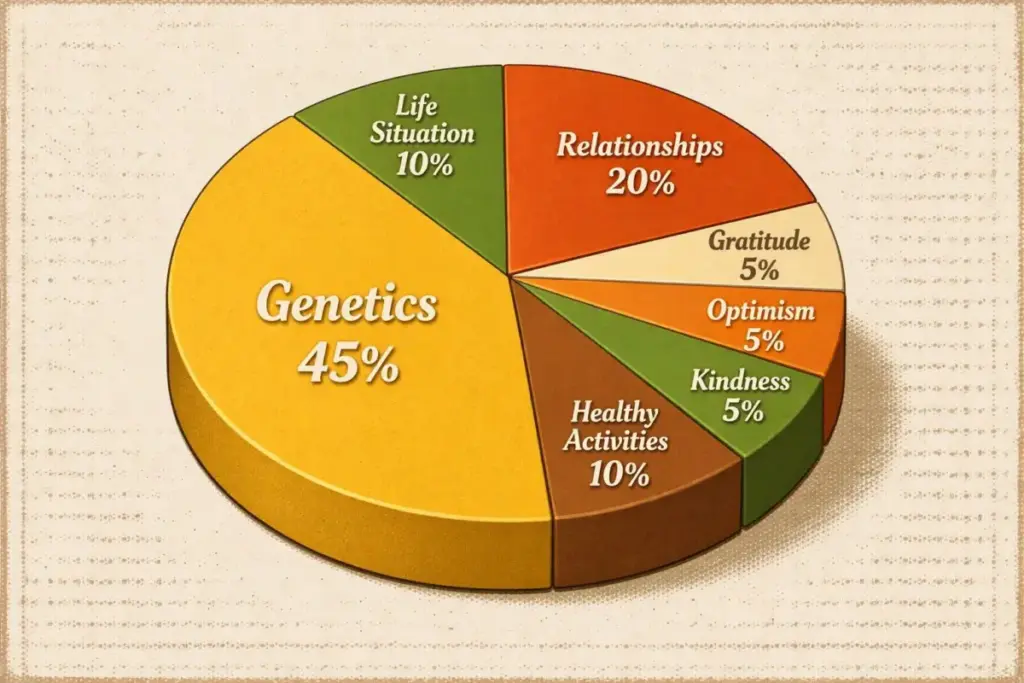
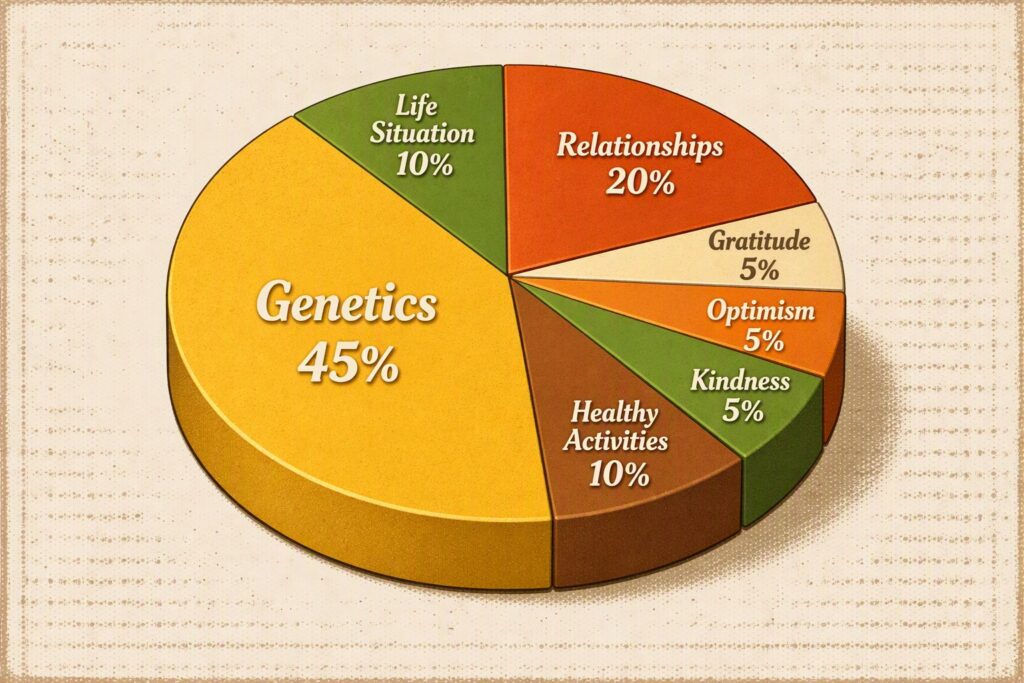
Beyond economics, once societies achieve a certain baseline standard of living, human happiness tends to plateau along that specific financial dimension. First-world populations surpassed those minimum requirements decades ago, shifting their focus toward maximizing overall life satisfaction through non-financial means. Wealth ultimately forms a minor component of an individual’s overall life situation, sitting alongside genetics, strong personal relationships, lifelong optimism, and healthy outdoor activities.

Understanding and Combating Fear
Despite these comforting historical realities, many people remain paralyzed by fear regarding an unknown future. Human beings evolved as sophisticated danger-detection machines, and a pervasive background anxiety served as an evolutionary trait designed to protect early humans from predators and environmental hazards.
The glitch in this machinery is that when immediate physical dangers are resolved, the human brain continues scanning for new threats, effectively shifting the goalposts of anxiety. Once physical survival and food security are locked down, people worry about fitting into their social tribes. Once financial stability is achieved, they worry about tax strategies, estate planning, or minor neighborhood disputes. Some individuals even reach advanced ages with substantial wealth and still find themselves lying awake worrying about Required Minimum Distributions—the government-mandated withdrawals for accounts holding what society deems "too much money."

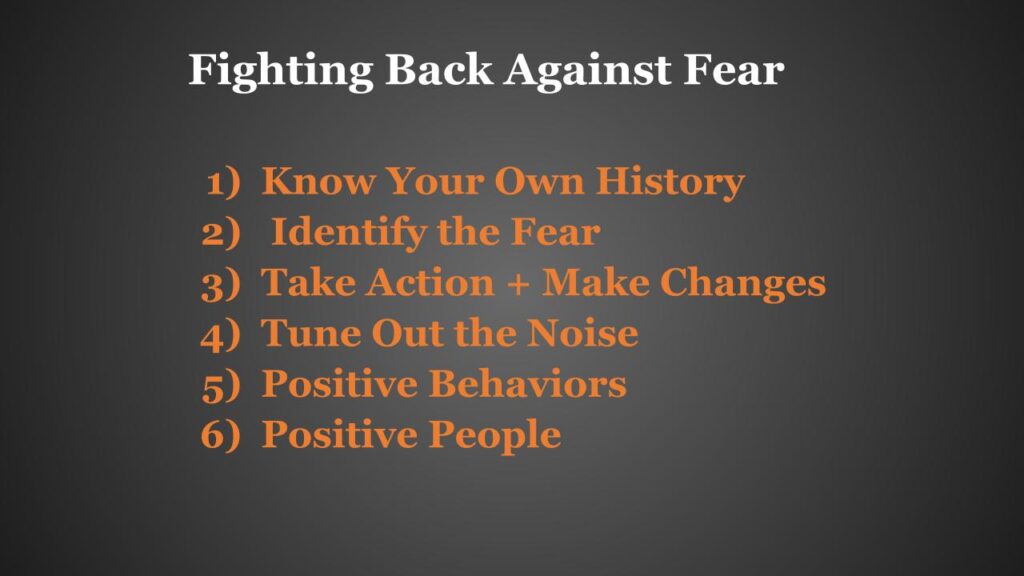
Combating this persistent fear requires conscious self-awareness and rational thinking. The first step involves examining personal and family history. Anxieties regarding scarcity often trace back through generations, handed down from parents and grandparents who lived through historical hardships like the Great Depression. Acknowledging that past trauma or learned scarcity mindsets drive current emotional responses—rather than an objective evaluation of present circumstances—helps ground the individual in reality.
Identifying the specific nature of a fear through direct analysis often reveals that even worst-case scenarios are manageable. Taking concrete action remains one of the most reliable antidotes to anxiety, as active problem-solving transforms the unfamiliar into the familiar and builds genuine resilience.
Furthermore, tuning out the continuous stream of sensationalized daily news helps eliminate unnecessary psychological poisoning. Humans are biologically wired to solve problems physically and mentally in active environments, not to sit indoors consuming a hand-picked selection of the scariest global stories each day. Aligning daily habits with physical movement, continuous learning, and positive social circles naturally diminishes generalized dread.
Everything is an Experiment
Approaching life changes through the mindset that "everything is an experiment" provides a powerful framework for navigating uncertainty. Whether evaluating minor domestic choices or major milestones like career transitions and early retirement, viewing outcomes as experimental data points strips away catastrophic thinking.

Viewed through this experimental lens, the current artificial intelligence era is not a looming disaster, but a fascinating technological evolution. While technological shifts introduce unknown variables that naturally unnerve some observers, understanding why technologists and economists are enthusiastic about AI reveals massive potential upside.
Artificial intelligence functions essentially as a cognitive tool designed to boost human efficiency and productivity, which historically paves the way for broader economic prosperity. Like any major innovation—from the industrial loom to the internet and smartphones—AI will inevitably displace certain entry-level office and administrative roles while simultaneously reducing the cost of services and spawning entirely new industries.
At the same time, the economic rewards of new technologies often concentrate heavily among capital owners and shareholders. For public companies rolling out AI efficiencies, profitability frequently rises, benefiting the broader pool of investors participating in modern retirement portfolios.
Ultimately, artificial intelligence represents another opportunity to make deliberate choices rather than succumbing to doom-scrolling and generalized dread. By recognizing fear as an internal evolutionary mechanism rather than an external prophecy of doom, individuals can approach the future with curiosity, resilience, and a commitment to living fully.