



The stock market has once again proved its capacity to surprise. As valuations reach historic highs driven by the explosive growth of artificial intelligence, investors find themselves caught in a familiar psychological loop. When markets crash, retirement portfolios shrink, triggering immediate anxiety. Yet even when markets surge to record levels, unease persists among investors convinced that an unprecedented correction is inevitable. This modern boom, fueled by the relentless frenzy of the artificial intelligence sector, has many wondering whether history is simply repeating itself on a grander scale.

For market observers who have managed to tune out the daily economic drama, the current narrative centers on a familiar anxiety: that the excitement surrounding artificial intelligence is moving too fast and expanding too rapidly, setting the stage for a repeat of the early-2000s dot-com crash. That particular historical boom shaped the early careers of many long-term investors before the ensuing market correction threatened jobs and economic security. Decades later, as questions mount regarding this latest technological cycle, financial commentators and long-term retirees are once again addressing whether a potential AI bubble poses a genuine threat to retirement security.

Reflecting on decades of market cycles, seasoned financial commentators note that anxiety over economic instability is a perennial fixture of modern life. When comparing contemporary anxieties—such as geopolitical tensions, inflation, national debt, and the AI market bubble—with the worries of twenty years ago, striking parallels emerge. In 2006, investors similarly wrestled with fears surrounding geopolitical instability, ongoing conflicts in the Middle East, rising national debt, and inflation. Back then, the primary market anxiety stemmed from an overvalued housing sector rather than artificial intelligence, while job displacement fears focused on economic outsourcing to overseas markets rather than automated software. There was even widespread panic regarding "Peak Oil," with predictions that rising fossil fuel consumption and dwindling supplies would inevitably doom global civilization.

Instead of economic collapse, the subsequent two decades witnessed the Great Financial Crisis—triggered by housing market exuberance and complex financial leverage—followed years later by the pandemic-induced market drop of 2020. Yet, viewed through the lens of long-term history, these monumental crashes appear as temporary dips in an otherwise upward trajectory. A hypothetical investment of one hundred thousand dollars made during those years of peak anxiety would have experienced substantial growth over the subsequent two decades. Concurrently, global living standards improved dramatically: extreme poverty rates declined significantly, infant mortality rates were halved, and clean energy adoption accelerated as solar power became vastly more affordable. Electric vehicle adoption similarly transitioned from a theoretical concept to a substantial share of the global automotive market.

This historical resilience highlights a fundamental disconnect in financial fear-mongering. At its core, human prosperity does not originate within the abstract numbers of the financial system or the daily fluctuations of the stock market. True economic prosperity stems directly from productivity. Capitalism is inherently volatile, characterized by choppy waters and wild market swings, but beneath the surface turbulence, real people continue to perform real work and develop genuine innovations. The financial system itself is merely a human invention; if a system fails due to unsustainable numerical valuations, society simply restructures the framework and resumes productive labor, as occurred following the 2008 financial crisis and numerous historical downturns prior.

Beyond productivity and economic growth, human well-being ultimately reaches a plateau where additional wealth ceases to meaningfully increase happiness. In developed nations, basic material requirements were surpassed decades ago. Psychological research indicates that overall life satisfaction is largely dictated by factors outside pure wealth accumulation, such as personal genetics, strong interpersonal relationships, the practice of gratitude, and regular physical activity in healthy environments. Despite this, persistent background anxiety regarding the unknown future continues to affect individuals, even those who have successfully achieved financial independence.

This pervasive anxiety is deeply rooted in human evolution. As a biological species, humans function effectively as danger-detection mechanisms. This background fear evolved as a vital trait to protect early humans from environmental threats, predators, and disease. However, a quirk of this evolutionary machinery is that once immediate physical survival threats are successfully mitigated, the brain continues scanning the environment for new sources of worry. When scarcity is conquered, anxiety shifts toward social standing, resource protection, or tribal inclusion. Eventually, in modern affluent societies, these anxieties manifest as concerns over tax strategies, estate planning, or minor neighborhood disputes.

Overcoming this ingrained fear requires self-awareness and rational evaluation. Understanding personal history—such as childhood experiences with economic scarcity or past trauma—often illuminates why certain financial fears persist long after financial security has been achieved. By identifying specific fears and examining their absolute worst-case scenarios, individuals frequently realize that hypothetical financial disasters are vastly exaggerated. Taking concrete action remains one of the most effective methods for neutralizing fear, as active engagement transforms the unfamiliar into the manageable, fostering genuine resilience and adaptability.
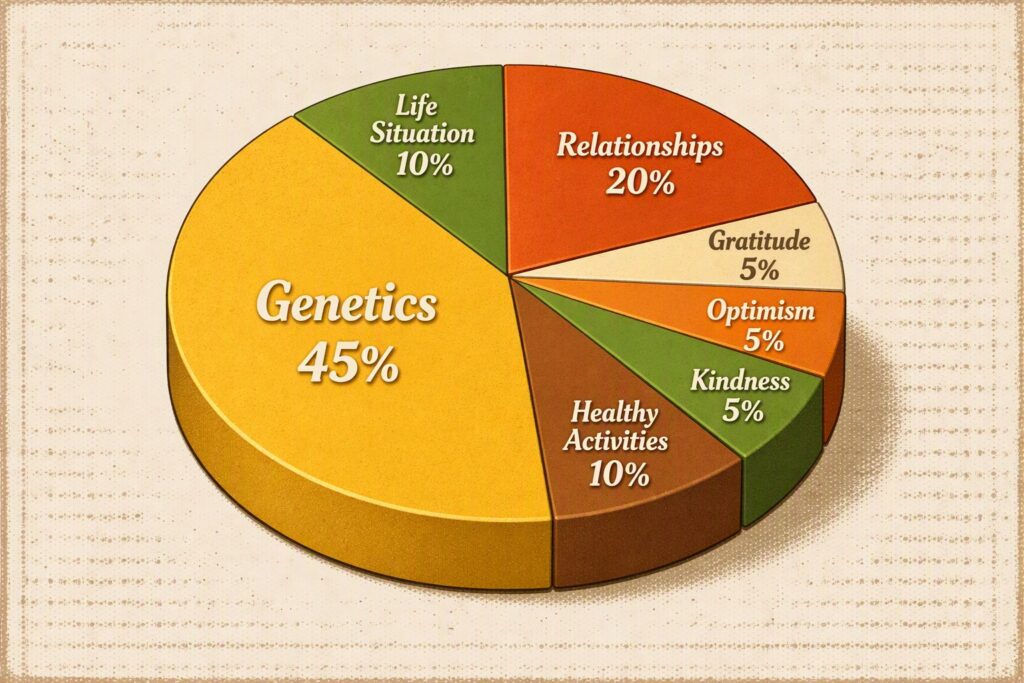
Furthermore, reducing exposure to continuous fear-mongering through the daily news cycle can significantly improve mental well-being. Modern news media thrives on highlighting the most alarming daily stories, which can easily poison an individual’s mental outlook. True progress is driven not by passive consumption of sensational headlines, but by deliberate, positive behaviors, physical movement, continuous learning, and meaningful connection with optimistic, productive peers within supportive communities.

Applying this experimental mindset to modern technological shifts helps reframe contemporary anxieties, including the rapid rise of artificial intelligence. Rather than surrendering to doom-scrolling and catastrophic predictions, examining the underlying technology reveals its immense potential. Artificial intelligence functions essentially as a cognitive tool designed to amplify human efficiency and productivity. While technological revolutions inevitably displace certain types of labor—impacting entry-level office roles, administrative positions, and eventually transportation sectors—they simultaneously reduce service costs and spark the creation of entirely new industries, much like the advent of the internet and mobile computing decades prior.

While technological revolutions tend to concentrate financial rewards among asset owners and shareholders, they ultimately remain another wave of innovation requiring human choice and adaptation. By viewing artificial intelligence as an opportunity for learning and productivity enhancement rather than a source of existential dread, individuals can better navigate changing economic landscapes. Ultimately, mastering personal fear and engaging proactively with the world remain the most effective strategies for securing both financial stability and personal fulfillment in an ever-changing future.