



Nearly two decades into early retirement, financial independence advocate and writer behind the persona "Mr. Money Mustache" has shared a candid self-reflection on the unexpected psychological hurdles of total freedom. While early retirement is frequently romanticized as an endless playground of leisure and self-actualization, prolonged freedom without external obligations can quietly morph into a powerful vehicle for self-sabotage, leading to underachievement and mental stagnation.
The journey of early retirement begins with undeniable upsides. Having the financial runway and time autonomy to raise a child from birth through early adulthood without career compromises is a profound privilege. The lifestyle allows thousands of hours to be dedicated to health, family, friendships, adventurous travel, and creative construction projects. Yet, as the years progress, a subtle flaw emerges within this seemingly perfect setup: the complete absence of mandatory obligations means an individual never has to do anything they do not immediately feel like doing.
To the outside observer, this lack of compulsion sounds like the ultimate dream. However, lifestyle experts and long-term retirees note that absolute freedom and financial security tend to act as a magnifying glass, revealing a person’s underlying strengths and weaknesses. The spectrum ranges drastically from total apathy—such as spending days consuming endless media on the couch—to monumental productivity, such as managing large-scale philanthropic foundations focused on clean energy and medical research.

For the first decade of his early retirement, the author found a natural equilibrium, balancing an intensive parenting role with building and restoring neighborhood houses, traveling, and maintaining a steady output of writing and media. In recent years, however, a noticeable deceleration set in. The challenge shifted from finding time for valuable pursuits to summoning the internal focus and energy required to initiate them. Instead of working on construction projects or writing articles with laser focus, the afternoons increasingly gave way to early retreats to the couch and digital distractions.
Recognizing this drift, the author initially attempted to course-correct by diving into health and wellness literature. Countless hours were spent studying daily habits, the dangers of excessive modern comfort, and biological optimization. While the knowledge gathered was sound and functional, a recurring pattern emerged: effective new habits would be adopted, yield results for a short period, and then gradually fade as the brain invented subtle excuses to abandon them.
The breakthrough came with a sobering realization. The very advantage that early retirement provides—absolute autonomy—had been weaponized as a tool to avoid tasks requiring planning, physical exertion, or deep focus. Freedom loses its value if it merely replaces the grueling commute of a traditional job with hours of idle distraction. Without intentional direction, the freedom to avoid mandatory work easily bleeds into the avoidance of personally meaningful work that sustains a vibrant, healthy life.

This psychological trap was particularly evident in fitness routines. Acknowledging that weight training is arguably the single most efficient use of time for long-term health, a familiar internal dialogue routinely sabotaged consistency. The typical pattern involved waiting for the mythical "golden moment"—anticipating a day with ideal weather, high energy levels, and meticulously prepared gym equipment the night before. When those perfect conditions failed to align, workouts were skipped, resulting in stagnant physical fitness and weeks passing between serious training sessions.
The turning point required a fundamental rewiring of this internal negotiation. Instead of indulging in meandering debates over whether conditions were optimal for a workout, the new strategy transformed the moment of hesitation itself into a direct trigger for action. Recognizing the familiar internal voice arguing against a difficult task ceased to be a cue for negotiation or delay and instead became an immediate signal to put on shoes and head to the gym.
This behavioral pivot proved transformative when applied broadly across daily life, from increasing cardiovascular endurance through frequent running to committing to creative projects and professional writing. Rather than running away from difficult or friction-heavy tasks, leaning directly into the discomfort of hesitation unlocked a sustainable path forward. Rather than being a source of paralysis, moments of reluctance became an unexpected diagnostic tool for personal growth.

The catalyst for this renewed discipline also involved examining extreme examples of human resilience and drive. Listening to extensive interviews and media featuring endurance athlete and former Navy SEAL David Goggins provided a profound perspective shift. Growing up amidst severe adversity and psychological trauma, Goggins developed a philosophy centered on systematically seeking out and overcoming extreme physical and mental hardship. His feats—ranging from enduring brutal selection processes to running hundreds of miles without sleep and setting pull-up world records—illustrate the staggering gap between perceived human limits and actual physical capacity.
While adopting the extreme lifestyle of an ultra-endurance athlete is neither necessary nor desirable for the average person, exposure to such intense dedication helps reframe daily mental barriers. The realization that most obstacles are self-imposed psychological constructs rather than physical limitations opens up a broader horizon of possibility.
Armed with this renewed mindset, simple, blunt reminders—such as a sticky note bearing the phrase "You already fucking know what to do"—were placed in prominent daily spaces. This straightforward reinforcement demolished years of plateaued performance. Within months of adopting the zero-hesitation approach to physical training, significant physical improvements materialized, restoring the strength, joint mobility, and functional fitness levels of decades prior.
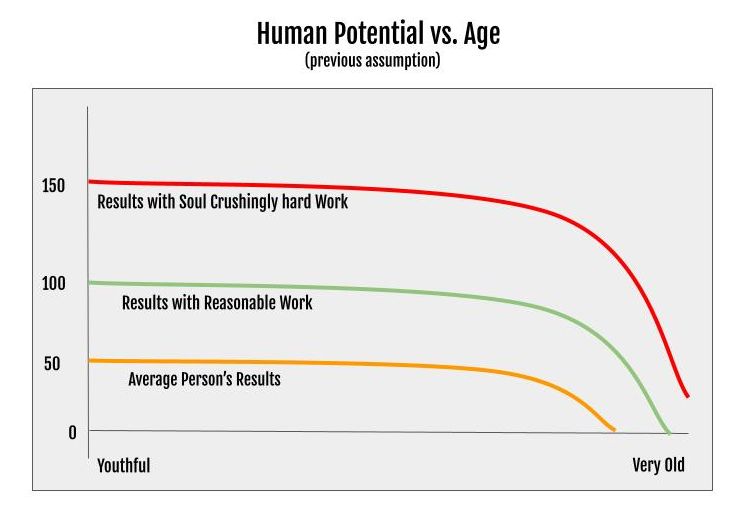
Similar mental frameworks were successfully deployed to increase writing output, social engagement at coworking spaces, and regular endurance running. While maintaining a balanced schedule remains critical to avoid burnout, deliberately tackling tasks that require high focus has proven essential for maintaining a high quality of life during retirement.
To sustain this momentum, the practice of regularly consuming motivational literature and philosophical resources became an ongoing habit. Works exploring physical longevity, extreme ownership, and mental toughness provide a steady well of inspiration. While critics frequently debate the merits or cultural nuances of modern motivational philosophies, the core utility lies in extracting actionable principles that foster productivity, discipline, and personal fulfillment. For those navigating the later chapters of life, cultivating environments and influences that encourage higher standards remains a powerful tool for turning total freedom into a vehicle for lifelong achievement.