



President Donald Trump and Chinese President Xi Jinping brought a close to a high-profile, three-day state visit on Friday, marked by sweeping pageantry, a shared tour of the National Archives, and confirmations of future diplomatic engagements later this year. Following Xi’s departure from Washington, DC, Trump took to social media to announce that the two leaders plan to meet twice more before the year concludes: first in November during the Asia-Pacific Economic Cooperation (APEC) summit in Shenzhen, China, and again in December on the sidelines of the G20 leaders’ summit in Miami.
"The meeting was one of Friendship, Strength, and Success, for both China and the USA," Trump wrote on social media, adding, "Much has been, and will be, accomplished. I look forward to our next meeting!"
The warm tone of the concluding statements served as a friendly coda to Xi’s first official state visit—the most formal designation a diplomatic trip can receive—since the final years of the Obama administration. Breaking with decades of protocol, Trump offered the Chinese leader an uncharacteristically warm reception, beginning with a red carpet greeting on the tarmac at Joint Base Andrews on Wednesday. The visit subsequently included a tour of the White House helipad and Marine One, a lavish state dinner attended by administration officials, business executives, and political allies, and an afternoon tea shared by the two leaders and their respective spouses, First Lady Melania Trump and Peng Liyuan.
Yet, despite the abundance of diplomatic pleasantries, the substantive breakthroughs anticipated by international observers largely failed to materialize, leaving policy analysts to question the concrete outcomes of the high-level talks.

A Summit Defined by Pomp Over Progress
While the White House touted the discussions as productive, foreign policy experts noted that the summit largely favored symbolism and spectacle over actionable policy agreements. Julian Gewirtz, who served as a senior China policy official during the Biden administration, observed that Trump displayed an extraordinary degree of deference to Xi throughout the visit.
Expectations heading into the summit were already subdued, but the actual policy deliverables fell short even of those modest projections. Chief among the points of contention was the ongoing trade dispute between the world’s two largest economies, which together account for roughly 43% of global gross domestic product. Last year, the Trump administration instituted successive rounds of tariffs on Chinese imports, accusing Beijing of unfair trade practices that allegedly contributed to the loss of 3.7 million American jobs and inflated the bilateral trade deficit.
The protectionist measures achieved some of their stated aims: the U.S. trade deficit with China fell to $200 billion in 2025, down from nearly $300 billion the previous year. However, economists have pointed out that a significant portion of this shortfall has been offset by Chinese manufacturing being rerouted through third countries, a trend underscored by China’s overall trade surplus surpassing a record $1 trillion last year.
A temporary trade truce agreed upon in Busan, South Korea, late last year is set to expire in November. Beijing had reportedly pushed during the Washington meetings for an extension of the truce that would last through the remainder of Trump’s presidential term in January 2029. Instead, the high-stakes summit yielded a mere two-month extension, a modest outcome that analysts attribute to a lack of deep preparatory diplomacy prior to the leaders’ meeting.
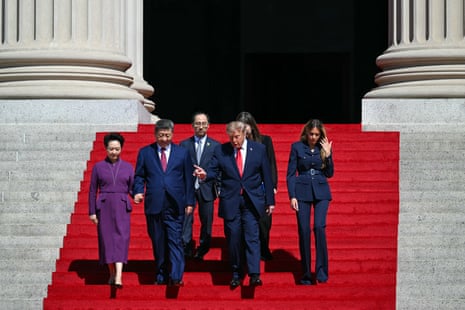
Neil Thomas, a senior fellow at the Asia Society, noted that the visit was an unmitigated win from Beijing’s perspective. "Xi got a huge amount of respect from the American president, the full state visit treatment, and really great images beaming back to China of the Chinese and the American presidents interacting as peers on the global stage, without having to make any meaningful concessions or compromises," Thomas said.
William Yang, a senior analyst at the International Crisis Group, echoed that sentiment, stating that the summit prioritized ritualism over substance and reflected deep, fundamental differences remaining between Washington and Beijing across a broad array of geopolitical issues.
Chief among those unresolved friction points is access to critical minerals. Beijing’s most potent retaliation against U.S. tariffs involved blocking the export of rare earth elements, which are vital components for American manufacturing and military supply chains. That embargo significantly dented Washington’s economic leverage, a move that experts say has visibly altered the Trump administration’s appetite for risk in its dealings with China.
Global Conflicts and Regional Security
Beyond trade, discussions touching upon artificial intelligence, the ongoing conflicts in Ukraine and the Middle East, and the status of Taiwan yielded little measurable progress.
On the issue of Taiwan, which Beijing views as its most sensitive and critical core interest, President Xi reportedly pressed Trump to adopt firmer language weakening U.S. support for the self-governing island. According to the official Chinese readout of the discussions, Xi expressed hope that the U.S. side would explicitly adhere to a position of "opposing Taiwan independence." Adopting the term "oppose" rather than the traditional U.S. stance of "does not support" would represent a significant rhetorical shift welcome to Beijing. While Trump did not immediately comment on whether he agreed to such a change, the administration has shown no closer inclination to approving a stalled $14 billion arms sale package for Taiwan.
Trump did confirm, however, that he and Xi discussed the ongoing war in Iran, as Washington seeks international cooperation—particularly from Beijing—to economically isolate Tehran through secondary sanctions. Speaking to reporters during a joint tour of the National Archives to view the Declaration of Independence, the Constitution, and the Bill of Rights, Trump offered an optimistic assessment of those talks, remarking, "I think we’re gonna do great."
Earlier in the day, U.S. Ambassador to China David Perdue told reporters that Trump had reiterated to Xi during Thursday’s closed-door meetings that any direct or indirect Chinese support for Iran amid the ongoing U.S. military campaign would be entirely "unacceptable."
Domestic Fallout and Institutional Friction
The summit unfolded against a backdrop of intense domestic political friction in Washington. On Capitol Hill, Senate Democrats lambasted the administration for prioritizing pageantry over policy substance, criticizing the lack of concrete agreements on national security and economic stability. Simultaneously, controversies surrounding White House media access and federal judiciary actions captured national attention.
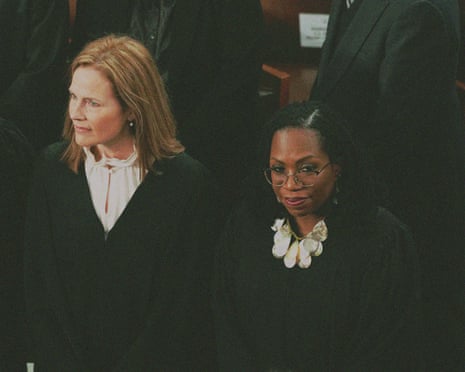
The conclusion of the summit coincided with the resumption of the primary White House television pool after a federal judge ordered the administration to temporarily restore press credentials to outlets including CNN, MS Now, and Politico. The outlets had been barred last week over coverage deemed unfavorable by the president, prompting an unprecedented solidarity blackout by major broadcast networks that left high-profile events, including parts of the Xi visit, without standard television pool coverage.
Further compounding the domestic news cycle, Supreme Court Justice Ketanji Brown Jackson delivered sharp remarks on Thursday at the University of the District of Columbia’s David A. Clarke School of Law, criticizing her colleagues’ heavy reliance on the court’s emergency, or "shadow," docket. Jackson warned that the frequent use of expedited, unreasoned stays to fast-track executive branch priorities—a method heavily utilized by the second Trump administration—threatens to undermine public trust in the judiciary.
As the state visit concluded with Xi’s departure from the capital, both administrations turned their focus toward the upcoming multilateral gatherings in Shenzhen and Miami, where the true test of whether these diplomatic pleasantries can translate into tangible policy agreements will ultimately play out.