

Never has there been a time when the world has been more interconnected than it is today. What happens within the secretive inner councils of Tehran, the rugged mountains of south-west Yemen, the sprawling steppes of the Donbas, the still-bloody wasteland of Gaza, and even the elegant boulevards of Paris and Milan shares a common, unbreakable thread.
It has become impossible to understand one set of conflicts without weaving them into another. This profound interdependence is precisely what makes each global problem so contagious, layered, and exceptionally difficult to resolve, leaving humanity to live as though trapped inside a pressure cooker on the immediate brink of an explosion. Each night, it often feels as though the global community has collectively hit rock bottom, only to wake up the next morning to the unsettling sound of fresh turmoil knocking from below.
In this great age of noncooperation and rising lawlessness, the persistent need for one crisis to be fully resolved before another can even be addressed leads to widespread, collective paralysis. This paralysis is amplified exponentially by the total absence of clear, steady leadership from the world’s leading superpower.
Speaking on these global dynamics, Indian External Affairs Minister Subrahmanyam Jaishankar remarked that the indivisibility of modern existence permeates every aspect of human activity, deepening further as globalization advances. The stark reality of the present era is that war anywhere now threatens peace everywhere.
Tom Barrack, Donald Trump’s special envoy to Turkey and a broader counselor to the president on Middle Eastern affairs, highlighted these interconnected threads during remarks in Doha. He candidly admitted that the military campaign against Iran launched by his administration and Israel in late February had triggered a cascade of unexpected consequences, effectively turning diplomatic campfires into raging forest fires.

Barrack likened the contemporary Middle East to a Rubik’s Cube, where a single, isolated move can inadvertently scramble the entire picture. When you adjust one element within the region, he noted, everything else changes in response. The unintended consequences and the rapid, sequential pace of unfolding events have caught policymakers completely off guard.
Elaborating further, Barrack questioned the trajectory of these interventions. He noted that the initial actions involving allies in Iran quickly spread through Hamas, Hezbollah, six separate Iranian-backed militias, the Houthis, and ultimately reached North Africa. Pondering the limits of these actions, he asked where it all stops and whether U.S. intervention ultimately helps or hurts.
Without formally breaking ranks with President Trump, Barrack answered his own question with striking candor. He pointed out that across the greater Middle East and the Levant, twenty-three separate regime changes had been instituted one way or another by American hands or influence, and not a single one had truly worked. Every time the United States attempts to intervene and alter a person or a regime, it proves to be a mistake, he observed, citing historical examples in Iraq, Libya, and Afghanistan while discreetly omitting the ongoing situation in Iran.
Deep Tectonic Transformations
While it is easy to attribute current global failures simply to excessive interventionism and broken multilateralism, international relations scholars suggest the roots run much deeper. In his recent book, American international relations expert Charles Kupchan argues that the world is experiencing deep tectonic transformations. Power is rapidly diffusing across the international system, decentering global politics and reawakening intense great power competition.
At the same time, Kupchan argues, the relentless advance of the digital era is steadily eroding the social contract of the industrial era. This digital disruption is producing massive socioeconomic upheavals that profoundly affect both political life inside individual nations and diplomatic relations among them. In this view, Donald Trump is not an isolated anomaly, but rather a symptom of a systemic and widespread global trend.
Yet it is equally difficult to ignore the reality that in an interconnected world, the disruptive damage a capricious, vain, and amoral U.S. president can inflict has grown tenfold. What the international community is currently experiencing is the collision of widespread world disorder with severe personality disorder.

The war on Iran remains President Trump’s most consequential and mysterious miscalculation, with repercussions that continue to reverberate across the globe. Any American president would eventually have been forced to address the persistent challenge posed by Iran—itself a product of systemic failure and the inability of multilateral institutions to incorporate or transform the nation. However, the reckless manner in which the Iranian crisis was ultimately addressed rests squarely on Trump and his distinct political psyche.
Reflecting on the decision-making process behind the conflict, Democratic Senate candidate Abdul El-Sayed of Michigan offered a blunt assessment. He noted that nearly everyone recognized the idea was fundamentally flawed, driven largely by a foreign leader with a decades-long agenda who finally found a willing partner in the White House.
Similarly, the foreign minister of Oman, who acted as a key mediator during the February U.S.-Iran talks, reminded an audience in Cambridge that a comprehensive diplomatic agreement addressing the core issue—Iran’s nuclear program—had been well within reach before the first bombs began to fall.
By every measurable standard, the war has proved to be a catastrophic failure whose economic shockwaves continue to spread far beyond the Middle East, pushing global inflation up to 4%. The Strait of Hormuz, a vital commercial waterway open to international shipping for centuries, has been effectively weaponized as an Iranian bargaining chip. Less than a fortnight before the midterm elections, the price of Brent crude oil surged to $117 per barrel, marking a 50% increase compared to pre-war levels.
The economic fallout has hit key regional actors severely. The International Monetary Fund (IMF) now forecasts that the gross domestic product of Saudi Arabia, the economic powerhouse of the Middle East, will contract by 3.3%. This represents a dramatic five-percentage-point downgrade from the 1.7% growth forecast issued as recently as July.
Internal analyses from the House of Saud indicate that the kingdom’s ambitious Vision 2030 economic diversification plan was specifically designed as a hedge against oil price volatility. It relied fundamentally on the assumption of open sea lanes, fully functioning airports, and a steadfast U.S. security umbrella capable of deterring kinetic threats against export infrastructure. Every single one of those foundational assumptions has failed since February. Consequently, the Saudi government felt compelled on September 30 to raise its budget deficit projection for 2026 to $65.3 billion, an alarming 48% higher than its original forecast.
Nor did the military conflict succeed in fostering a more stable or moderate Iran. Ali Larijani, widely regarded as the most strategically astute figure in the Iranian leadership, was killed on the very first day of the war. Hardliners surrounding the new supreme leader, Mojtaba Khamenei, are now more deeply entrenched than ever. Public debate within Iran has shifted noticeably, with prominent voices increasingly advocating for an end to the religious fatwa against the possession of nuclear weapons.
Leaving aside the nuclear file, the Islamic Revolutionary Guards Corps has altered its defense doctrine following two separate military strikes conducted while negotiations were underway. The corps now explicitly accounts for preemptive strikes not just against regional U.S. bases, but on a global scale. British Chief of the Defence Staff Tony Radakin acknowledged this dangerous shift, noting that adversaries can inflict damage from a distance without incurring prohibitive costs.
The broader incoherence of U.S. and Israeli actions in Iran highlights a deep strategic disconnect. Israeli Prime Minister Benjamin Netanyahu, eager to strike Iran for a third time in two years, pushed for the Israel Defense Forces, Mossad, and domestic security services to actively overthrow the regime in Tehran. Meanwhile, the American administration maintained its primary focus on curbing nuclear capabilities.
This unfolding chaos has left President Trump’s domestic political standing in ruins. As Dean Acheson, secretary of state under Harry S. Truman, famously asserted, 80 percent of foreign policy is simply the management of one’s domestic ability to execute that policy. Henry Kissinger similarly observed that the ultimate acid test of any foreign policy is its proven ability to secure domestic support. A viable foreign policy must be constructed to win popular backing, a standard this administration’s strategy utterly failed to meet. As a result, Trump appears increasingly entrapped, cycling through failed solutions and growing ever more irascible and erratic.
Republican pollster Karl Rove noted that Trump’s public posture began to resemble that of an unruly heckler at a martial arts match rather than a reassuring wartime commander-in-chief. The more undisciplined White House messaging became regarding the ongoing wars and the struggling economy, the greater the political peril faced by Republican candidates nationwide.
Faced with plunging poll numbers, deeply incensed by Iran’s refusal to submit, and seemingly incapable of self-reflection, Trump sought to deflect responsibility for surging energy prices by turning his attention toward a second theater of war: Ukraine’s military strikes against Russian oil refineries. In doing so, he unleashed a torrent of pent-up animosity toward Ukrainian President Volodymyr Zelenskyy, echoing frustrations he first voiced in 2025 before European leaders and domestic pressure forced him to scale them back.
Releasing this built-up hostility, Trump publicly demanded that Zelenskyy step down, dismissing him as a major impediment to peace and heralding a potential new era of bilateral U.S.-Russia business cooperation. Yet even in these maneuvers, the signature incompetence of the White House remained on full display.
First, the administration announced a completely fictional 60-day energy truce that neither Zelenskyy nor Russian President Vladimir Putin had actually agreed to. Subsequently, a much-touted deal to release additional Russian diesel supplies turned out to be so negligible that serious economic commentators agreed it would have zero meaningful impact on domestic U.S. fuel prices.
Questions also mounted regarding why Ukrainian forces were suddenly deprived of their previous levels of access to military-grade versions of Elon Musk’s Starlink satellite communication network. The U.S. administration offered conflicting accounts regarding the regulatory rules governing such infrastructure and what had actually transpired.
Even after the decision was reportedly reversed, some officials blamed Musk, implying that a private billionaire could independently dictate the operational capabilities of a vital U.S. ally. Others, including Vice President JD Vance, maintained that contractual obligations required Musk to secure explicit permission from the White House or the military before making such moves. Musk himself asserted that Ukrainian forces had violated the terms of their Starlink contract by using the network to facilitate attacks related to the Iran conflict.
Ukrainian author Illia Ponomarenko captured the widespread dismay over these events, writing that while history has certainly witnessed darker and more terrible eras, there have seemingly never been times so despicable and, above all, so profoundly stupid.
Trump’s turbulent interventionism and his clumsy linkage of the Middle East and Ukraine conflicts have provided Moscow with a strategic opening. Russia has moved to capitalize on the situation by proposing a three-way great power summit involving China, Russia, and the United States, slated to coincide with a pre-scheduled meeting in Shenzhen, China, on November 18.
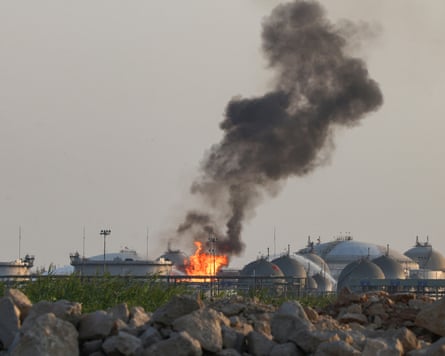
To sweeten the prospect for Washington, Putin dispatched veteran Foreign Minister Sergei Lavrov to Tehran on October 19—marking his first visit since the outbreak of the Iran war—to explore whether the conflict could be brought to a close on terms acceptable to the White House.
Russian affairs analyst Amir Chahaki explained the underlying Kremlin strategy: the more Putin can persuade Tehran to moderate its stance to meet some of Trump’s demands, the more substantial concessions Moscow can extract from Washington regarding Ukraine. The overarching Russian ambition is to leverage Trump’s political vulnerabilities to bring both the Ukraine and Iran wars to a close largely on Russian terms.
To facilitate these overtures, Trump has taken steps to rehabilitate Putin on the international stage, explicitly overruling objections from members of his own party by inviting the Russian leader to attend the upcoming G20 summit, which the United States is hosting at a Trump-owned golf resort just outside Miami.
Just why Trump remains so confident in Putin’s benign intentions is a mystery that foreign policy observers have struggled to unravel. David Frum, a former speechwriter for President George W. Bush, suggests this behavior is symptomatic of Trump’s personal decline. Frum posits that while Trump entered politics a decade ago as a relatively self-aware con man, he now appears genuinely lost—trapped in a world of political illusions where he can no longer distinguish between truth and falsehood.
Waking Up to Trump
The fallout from these compounding crises has prompted a delayed awakening among international partners who are finally recognizing the severe dangers of being excluded, marginalized, or exploited by Washington. Former Canadian Foreign Minister Chrystia Freeland acknowledged that it took many traditional allies far too long to realize the true nature of the dynamic.
For years, she noted, various world leaders operated under the assumption that Trump’s approach could be managed through flattery, believing they could win him over by offering glittering prizes, extravagant praise, or high-value gifts. For instance, Saudi Arabia offered lavish diplomatic gestures to Washington, only to be left largely isolated to fend off relentless Houthi missile and drone attacks that senior UN diplomats insist are orchestrated according to Tehran’s strategic timetable.
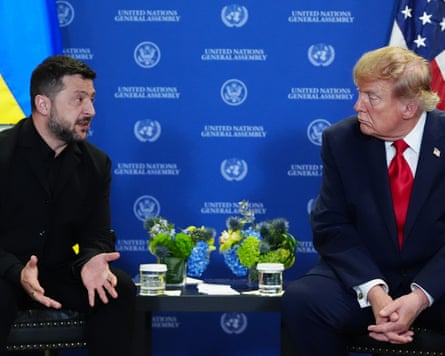
Furthermore, Trump’s clumsy attempts to deflect the blame for his Iranian policy disaster onto Ukraine have produced severe political shockwaves across Europe. European leaders are deeply aghast at the widening chasm between their own security assessments of Russia and those of the White House. Where European capitals perceive an existential security threat, Washington under Trump increasingly sees a transactional business opportunity. Most alarmingly, this pro-Russia rhetoric threatens the political survival of Europe’s mainstream leaders by feeding right-wing populist narratives that blame the high financial cost of supporting Ukraine for destroying domestic living standards.
This relentless torrent of propaganda concerning an easy peace with Russia prompted German Chancellor Friedrich Merz to declare that his primary concern was no longer the state of the economy or relations with the US or China, but rather the corrosive influence of Russian disinformation campaigns on European society.
As a matter of basic political self-preservation, European leaders have been forced to articulate their profound differences with Washington. Consequently, they have openly blamed the Persian Gulf war for the severe squeeze on living standards felt by ordinary citizens, explicitly directing public anger toward the policy decisions originating in Washington rather than domestic governance.
In France, President Emmanuel Macron addressed protesting citizens by validating their legitimate concerns regarding the soaring cost of living and high fuel prices. He noted that both economic pressures were directly driven by the conflict launched in the Persian Gulf—a war in which France took no direct part, but whose painful consequences the nation was nonetheless forced to endure.
In Poland, Prime Minister Donald Tusk addressed parliament by acknowledging that fuel prices had become exceptionally burdensome for ordinary people, adding pointedly that the "Donald" responsible for this economic hardship was not him, but Donald Trump, who remains a hero to the Polish political opposition.
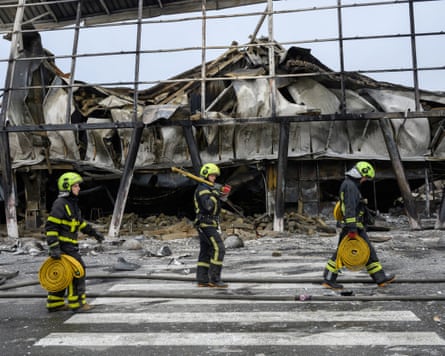
A secondary consequence of this disruption is that Musk’s erratic handling of satellite communication networks has made it starkly apparent to European capitals that the continent must accelerate its pursuit of digital sovereignty. Europe is actively moving to implement regulatory frameworks designed to reduce its future reliance on American-controlled technology infrastructure.
Freeland predicted that allied nations would think very carefully before purchasing advanced military hardware such as the F-35 fighter jet, which relies heavily on Pentagon-controlled software. The core question facing allies is simple: why invest in a defense platform that can be remotely managed or compromised by Washington?
Demonstrating this shift toward technological independence, the European Commission proposed reserving 70 percent of the 2GHz frequency spectrum—vital for connecting standard smartphones directly to satellite networks—exclusively for European enterprises. This policy move effectively restricts access for external providers like Starlink. Major European telecommunications firms including Deutsche Telekom, Orange, Vodafone, and Telefónica are already lining up to compete for the spectrum allocations, drawing immediate diplomatic protests from U.S. officials.
Polish Foreign Minister Radosław Sikorski offered a scathing critique of Musk’s heavy-handed tactics in Europe, questioning why a trillionaire heavily involved with foreign powers and controversies should expect automatic regulatory privileges and frequency permissions within European borders.
Similar realizations are taking root among Middle Eastern powers, who are increasingly wary of a U.S. security architecture that consistently prioritizes Israeli strategic objectives over regional stability. While still in its early stages, a recent proposal by Omani Foreign Minister Badr Albusaidi calling for a comprehensive Gulf security pact that formally includes Iran represents a potential watershed moment for the region. The underlying implication of such diplomatic initiatives is that the United States should no longer be viewed as the default security provider for the Gulf.
Although Iran remains viewed with deep suspicion across the Gulf states, Albusaidi acknowledged that his proposal is undeniably counterintuitive. Yet as his diplomatic team emphasizes, war often happens spontaneously, whereas lasting peace must be deliberately and painstakingly constructed.
At a historical juncture when public faith in the problem-solving capacity of post-war international institutions has reached historic lows, it is critical that those who still believe in the efficacy of collective action and diplomacy demonstrate their commitment through concrete deeds. After years of manufactured havoc and escalating conflict, the international community faces the urgent necessity of reclaiming global leadership and restoring stability from the architects of disorder.