


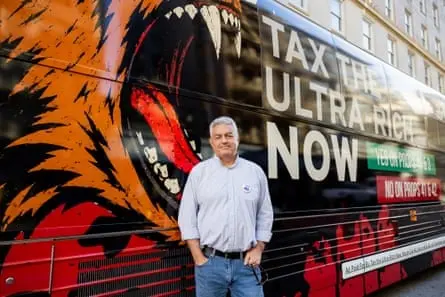
One year ago, the concept of a dedicated billionaire tax in California was little more than a nascent idea—a bold, desperate response to sweeping federal healthcare cuts and an escalating national crisis over wealth inequality. Today, that proposal has morphed into Proposition 40, framing one of the most contentious, high-stakes, and expensive ballot measure battles in political history.
Pitting progressive labor organizers and high-profile Democrats against an unprecedented coalition of Silicon Valley billionaires and moderate politicians, the fight over Proposition 40 has drawn national attention, intense political drama, and hundreds of millions of dollars in spending. With midterms looming in less than a week, California voters stand at the center of a national referendum on economic disparity, healthcare funding, and the political power of the ultra-wealthy.
The Genesis of a High-Stakes Ballot Measure
The origins of Proposition 40 trace back to the legislative fallout of federal policy decisions. Following the signing of the One Big Beautiful Bill Act by Donald Trump, projected federal funding cuts totaling roughly a trillion dollars—impacting Medicaid, the Affordable Care Act, and other vital programs—threatened to upend healthcare stability nationwide over the next decade. When the legislation goes into effect in January, it is projected that more than 3.4 million Californians, including millions of children, could lose their health coverage.

Faced with a looming public health catastrophe, Dave Regan, president of the healthcare union SEIU-United Healthcare Workers West (SEIU-UHW), and his team began organizing a counter-offensive. Recognizing that waiting for legislative action would leave millions vulnerable, Regan’s team assembled a working group of policy experts, economists, lawyers, researchers, and political consultants. Their solution was a bold, one-time 5% levy on billionaires residing in the state as of January 1, 2026, designed to keep hospitals open, preserve critical healthcare programs, and protect union healthcare jobs, alongside funding for education and food assistance.
"That’s why we were willing to do something that lots of people said was crazy," Regan said. "To us, what’s crazy is doing nothing and watching millions of people lose coverage."
Regan is well known for utilizing the ballot measure process as a strategic political instrument to pressure lawmakers and advance SEIU-UHW’s core initiatives. Since 2012, the union has sponsored 48 initiatives, using this mechanism to sharpen the state’s focus on economic inequality.
Silicon Valley Reacts: "If There’s an Impediment, Just Buy It"
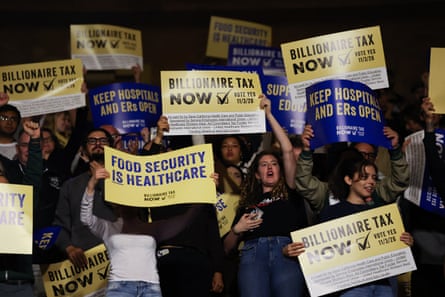
While the initiative quickly drew support from progressive champions like Vermont Senator Bernie Sanders, who headlined raucous rallies across the state, it sparked existential alarm among California’s tech elite. The state’s population of over 200 billionaires quickly organized a counter-offensive, treating the measure as a direct threat to their fortunes and establishing their own sophisticated working networks.
The opposition campaign evolved into a sprawling, messy political brawl. Last December, cryptocurrency mogul Chris Larsen hosted a high-profile holiday gathering in Marin County’s redwood groves. Attended by Governor Gavin Newsom, Google co-founder Sergey Brin, and singer Janelle Monáe, the event served as a backdrop for intense political friction. According to reports, Brin confronted Newsom over the proposed tax, warning that it would force him to leave California.
Behind closed doors, a dozen tech executives and prominent venture capitalists had established an encrypted Signal group chat dedicated entirely to defeating the billionaire tax. Members reportedly included Brin, Larsen, venture capitalist Marc Andreessen, PayPal co-founder Max Levchin, Stripe chief executive Patrick Collison, and investor Ron Conway. Over the following months, the group met regularly via video call to strategize, debate the merits of fleeing the state, and navigate their uneasy relationship with Newsom, who quickly opposed the tax on the grounds that it would trigger a "race to the bottom" and stifle innovation.
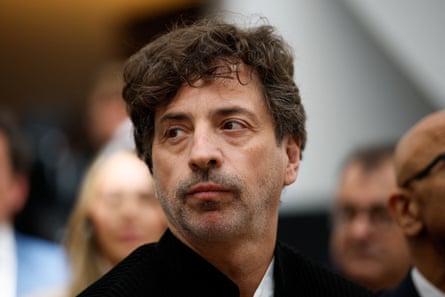
As the political war escalated, the opposition poured staggering sums into independent expenditure political action committees (Super PACs). Major tech figures opened their checkbooks wide: Brin contributed at least $102m through the "Building a Better California" Super PAC, former Google CEO Eric Schmidt gave more than $42m, Larsen donated over $23m, and Peter Thiel provided early backing through the California Business Roundtable Super PAC. Campaign finance filings revealed that donations even included cryptocurrency—requiring tens of thousands of dollars just to process conversion fees—alongside significant blocks of company stock shares from founders like DoorDash’s Tony Xu.
By October, opposition spending had reached historic proportions, surpassing $2.5m per day and funding an army of lobbyists, television and radio ad campaigns, and targeted op-eds across local media outlets. Political scientists, including Sonoma State University professor David McCuan, noted that the extraordinary expenditure was driven not only by opposition to the California tax itself, but by a deeper fear of contagion spreading to other states.
The Battle Over Signatures and "Poison Pills"
Before the measure even reached the ballot, opponents deployed aggressive tactics to block its progression. By introducing multiple competing ballot measures, opponents successfully inflated the cost of signature gathering from $4 a signature to a record-breaking $36.

When the SEIU-UHW relied primarily on volunteers to gather 1.55 million signatures—nearly double the requirement—opposition strategies reportedly shifted toward attempting to purchase the union’s signature-gathering firm to invalidate the petitions. Fred Kimball, president of Kimball Petition Management, confirmed receiving inquiries regarding a potential sale alongside facing denial-of-service cyberattacks that stalled the signature validation process. Rejecting the buyout offers, Kimball allowed the process to proceed, leading the union to celebrate a major preliminary victory in April.
With the initiative successfully qualifying for the ballot, the opposition advanced two counter-measures: Proposition 41, which directly targeted the billionaire tax, and Proposition 42, a broader proposal aimed at permanently banning any state wealth taxation. Supporters of the billionaire tax labeled these measures "poison pills," noting that if either received more "yes" votes than Proposition 40, the billionaire tax would be nullified even if passed by voters.
Shifting Alliances and Deepening Divisions
As the election neared, the political landscape shifted dramatically. Governor Newsom actively worked to sink the proposal, eventually endorsing Proposition 42 and assembling a coalition of traditional Democratic allies, medical associations, and labor organizations to oppose Proposition 40. Prominent Democrats, including former congresswoman Katie Porter and San Francisco Mayor Daniel Lurie, voiced opposition, arguing that the tax failed to address systemic structural issues in healthcare and would ultimately drive vital revenue out of the state.

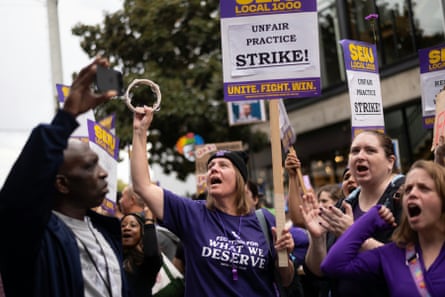
However, the pro-Prop 40 camp secured crucial victories later in the summer. Following an impassoned intervention by Congresswoman Maxine Waters, the California Democratic Party voted to endorse the measure. Major labor organizations, including the California Federation of Labor Unions AFL-CIO, also threw their weight behind Proposition 40, with leaders emphasizing the urgent need to protect hospital funding and healthcare workers in the wake of federal cuts.
Economists also weighed in, including six Nobel prize-winning signatories who published an open letter supporting Proposition 40. They noted that the combined wealth of California’s billionaires had surged past $2.3tn—fueled heavily by the artificial intelligence boom—and argued that the proposed levy was a necessary step toward addressing stark income inequality.
Mudslinging and the Final Stretch
The final weeks of the campaign have been defined by intense mudslinging, negative attack ads, and unprecedented financial outlays. Total spending across the pro- and anti-tax campaigns has exceeded $379.5m, making it the most expensive ballot measure battle in history.
Personal controversies have also surfaced, including scrutiny surrounding union leader Dave Regan following substantiated internal union findings regarding a past workplace dispute—allegations Regan has dismissed as retaliatory political attacks orchestrated by his opponents. Meanwhile, former opponents and newly appointed state officials like Katie Porter have re-entered the public eye to campaign against the measure, while tech executives and billionaire donors continue their aggressive messaging blitz.
Despite an onslaught of advertising, recent polling indicates that a vast majority of registered voters remain unswayed by the messaging, though support for Proposition 40 has narrowed in the final weeks from an early summer lead to a tight margin.
Regardless of the outcome at the ballot box, proponents and observers alike agree that the battle lines drawn in California have permanently altered the national political landscape. As Regan noted, the debate over taxing the ultra-wealthy has firmly established itself at the center of the American political agenda, signaling that the fight over wealth inequality will resonate far beyond the state’s borders for years to come.