

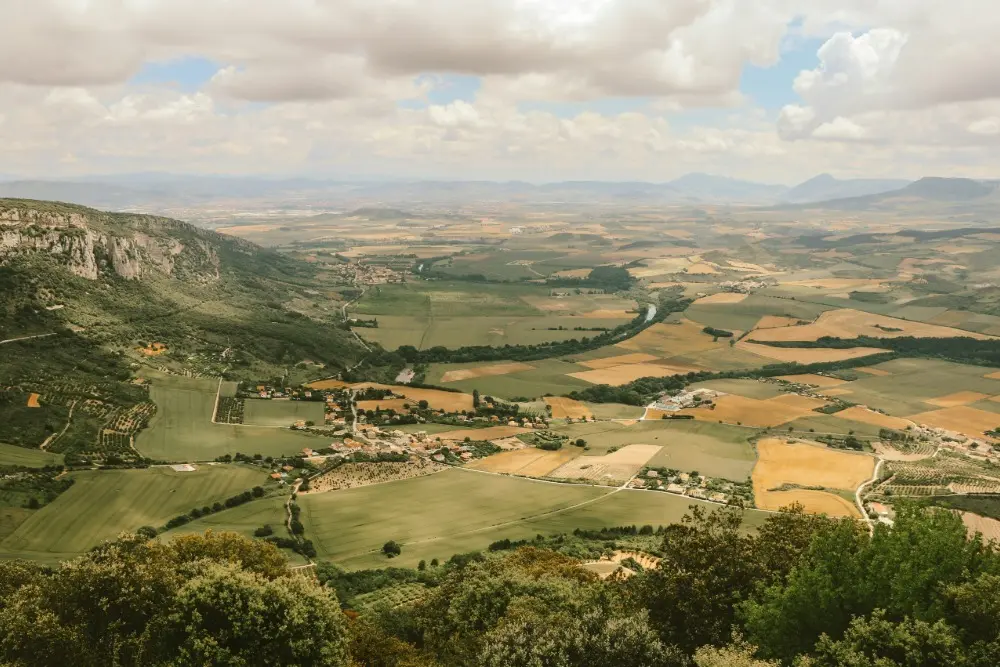
The Basque Country has rapidly transformed into one of Europe’s most dynamic and attractive hubs for film and television production. Driven by competitive incentives, stunning landscapes, and a rapidly expanding infrastructure, the region has seen a surge in audiovisual activity that has fundamentally reshaped its economic and cultural landscape.
In the territory of Bizkaia alone, employment within the audiovisual sector experienced a remarkable growth of 50.5% between 2014 and 2024. During that same decade, the number of registered companies linked to the industry climbed from 284 to 448, reflecting a thriving local ecosystem. The momentum has only accelerated in recent years. In 2025, the Bilbao Bizkaia Film Commission actively supported 219 separate shoots, generating an estimated economic impact of €138.1 million, which translates to roughly $158.45 million.
Yet, this unprecedented boom has inadvertently complicated a deceptively simple question that now faces local policymakers, producers, and creators alike: What, exactly, constitutes a Basque production?
Is it defined by a project physically shooting within the regional territory? Is it determined by whether a local Basque company backs the venture financially? Does it require the work to be performed in Euskara, the traditional Basque language? Or must true classification rest on where creative control, intellectual property ownership, and long-term economic value ultimately reside?
For Xabi Berzosa of the San Sebastian-based production house Irusoin, the answer can initially appear straightforward, particularly when viewed through a purely legal lens.
"From a legal standpoint, if a film is produced by a Basque production company, it’s Basque. That’s simply how it is defined," Berzosa explains.
However, Berzosa is quick to offer the inherent complications of modern international financing. Irusoin serves as a co-producer on acclaimed director Nanni Moretti’s latest feature film, "It Will Happen Tonight," working alongside major international partners such as Fandango and BTeam Prods.
"The film is Basque, as well as Italian and French," Berzosa notes, describing a project shot primarily in Italy and the Basque Country, performed entirely in Italian. "We don’t really feel that’s a portrait of Basque filmmaking nowadays, of course, but legally it’s Basque."
For other industry veterans, legal definitions miss the deeper cultural essence of the art form. Filmmaker Koldo Almandoz, whose Basque-language feature "The Last Goodbye" plays out of competition in the Official Selection at the San Sebastian Film Festival, argues that true regional identity lies far beyond paperwork. For Almandoz, it involves "the soul," encompassing "the culture, the language, the crews and the intention of the films."
Almandoz adopts a far blunter perspective regarding productions that arrive in the region primarily to exploit tax incentives and financial rebates. "You can call it co-production, but we all know that it’s like they are working as commission agents," he says, explicitly distancing himself from such ventures. "I don’t consider those Basque productions."
This industrial tension is shared by Iker Ganuza, president of the regional producers’ association EPE-IBAIA and a producer at Lamia Producciones. Approaching the dilemma from a structural standpoint, Ganuza insists that a Basque production is far more than just a project filmed against local backdrops. For Ganuza, the critical diagnostic points are centered on where critical artistic decisions are made, where intellectual property rights remain anchored, how much local talent and business are actively involved, and how much enduring value actually stays within the region.
If he had to distill his criteria down to a single essential element, Ganuza points directly toward "deep-rooted business and creative presence, along with decision-making capacity."
That concept of being "deep-rooted," however, sits rather uneasily within an increasingly globalized and mobile contemporary film industry. Berzosa summarizes the transient nature of purely financially driven enterprises with a stark warning: "Productions that come for financial reasons will leave for financial reasons."
Neither producer suggests that welcoming international service shoots is inherently a mistake or a detriment to the territory. On the contrary, both acknowledge the undeniable financial benefits that massive foreign projects bring to local economies.
"Major international productions have obviously a very positive impact," Ganuza acknowledges. "They create jobs, generate economic activity, and boost international visibility."
At the same time, he draws a sharp line regarding the long-term trade-offs. "Once filming wraps up, the intellectual property, business decisions, and much of the future value leave the country," Ganuza explains. "Both activities are important, but they are not the same."
Berzosa draws a similar structural distinction between providing local production services and engaging in genuine co-production. "The obvious solution is to service that shooting," he says. "You are hired, they come and they go."
By contrast, through his involvement as a co-producer on Moretti’s film, Irusoin secured ownership stakes and a far more profound, collaborative involvement in the creative process. Service work, Berzosa observes, "help people to work and to have continuity," but ultimately, "they don’t develop a local established industry for the long term."
Almandoz voices deeper concerns regarding the stability of local infrastructure should broader economic or political conditions shift. He questions the resilience of the smaller ancillary businesses that have recently surfaced to support the influx of large-scale projects.
"If sometime these fiscal advantages disappear, all these little home companies we had, that were working for us, now absorbed by bigger companies, are they gonna stay, or are they gonna go… to Madrid or Barcelona or Paris?" Almandoz asks.
He is quick to clarify that he is not predicting an imminent industrial collapse. On the contrary, he recognizes the current vitality of the workforce. "People are working. There’s an industry. We are growing. We are learning a lot," he says. Even so, he sounds a note of caution regarding the breakneck pace of expansion: "We want to pass from zero to 100 in three years, and I don’t think it’s the way."
Language introduces yet another layer of complexity into the identity debate. For Berzosa, a film written, shot, and commercially released in Euskara represents a clear benchmark of profound cultural weight, though he maintains it should not serve as an absolute prerequisite for regional classification. Ganuza shares this nuanced perspective, arguing that while the Basque language requires dedicated protection and promotion, it should not be treated as the sole metric for measuring cinematic authenticity.
"We can tell Basque stories to the world and also produce universal stories from the Basque Country," Ganuza notes. Consequently, the broader challenge facing the community is not merely how to attract a higher volume of film shoots, but rather what sustainable assets remain after the cameras stop rolling and the visiting crews depart.
According to Ganuza, the next strategic phase for the region must focus intently on ensuring that international investment serves to strengthen indigenous companies rather than marginalizing or displacing them.
"The main problem is not a lack of opportunities," Ganuza concludes. "It is precisely the opposite: there is a huge opportunity, and we must ensure that growth does not leave behind the companies that have built this sector right here."
For the Basque audiovisual community, this foundational question may ultimately provide a valuable template for success, offering lessons that resonate far beyond the borders of northern Spain.
"We have to start talking about where we want the Basque film industry to be in 2030," Ganuza says, "not just how many film shoots we’ll have next year."