


A probiotic powder can fit naturally and seamlessly into a dog’s daily mealtime routine. For many pet owners, the process is straightforward: measure the recommended serving, mix it thoroughly with the dog’s regular food, and observe to ensure the supplemented portion is entirely consumed. While this simplicity is highly appealing, commercial probiotic powders differ significantly in their formulations, active ingredients, and primary purposes. Some products are strictly designed for targeted digestive support, whereas others integrate probiotics into a broader, multifunctional daily wellness supplement.
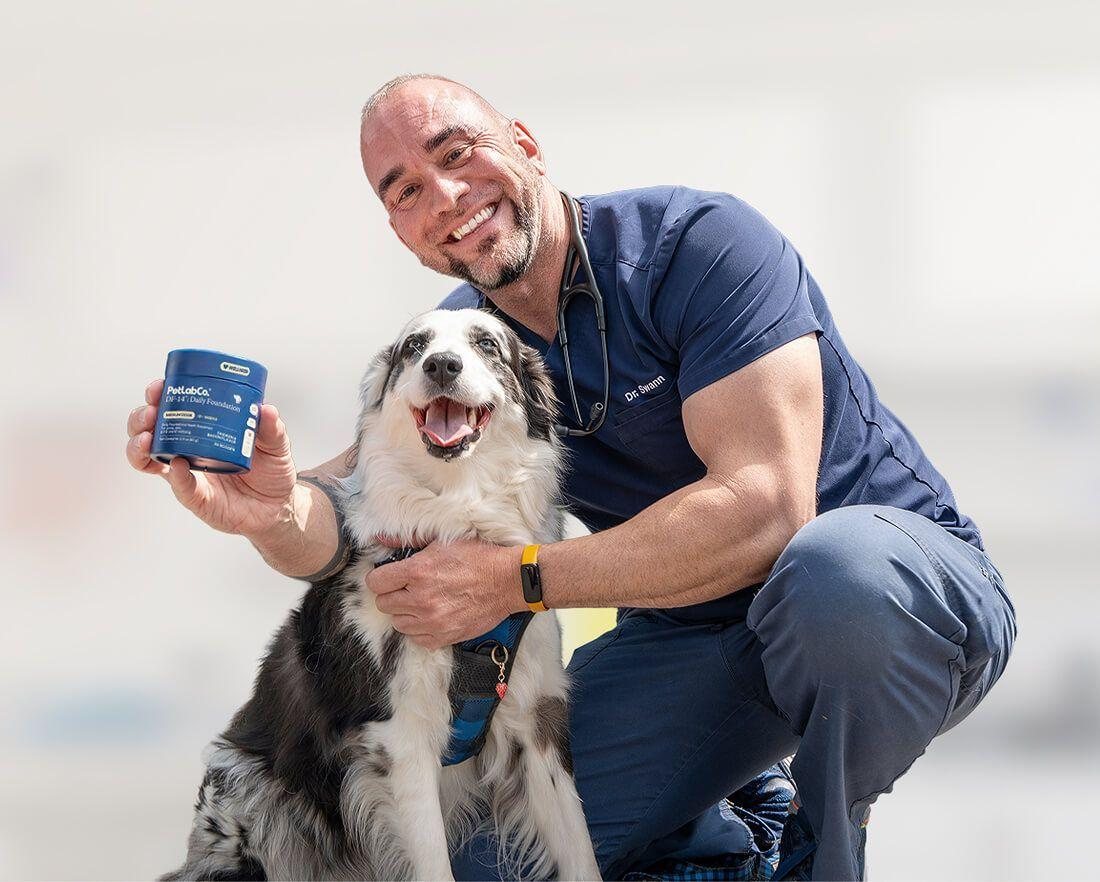
Among the options available to pet owners is PetLabCo.® DF-14 Daily Foundation, a multifunctional powder that represents the latter category. Rather than focusing solely on gastrointestinal health, this formula provides a wide array of nutritional support, utilizing a probiotic blend as one component of a much larger ingredient profile. Understanding how to compare these diverse powder formulas, identifying when a powder may be preferable to a soft chew, and knowing what parameters to evaluate before introducing a new supplement to a dog’s bowl are essential steps for any pet owner looking to optimize their dog’s nutrition.
Comparing Probiotic Powders and Their Targeted Formulations
When evaluating the market for canine probiotic powders, pet owners generally encounter two distinct types of products: multifunctional wellness powders and gut-only digestive supplements. To understand how these products compare, it is necessary to examine their active ingredients, colony-forming unit (CFU) counts, specific microbial strains, age restrictions, and weight-based dosing systems.
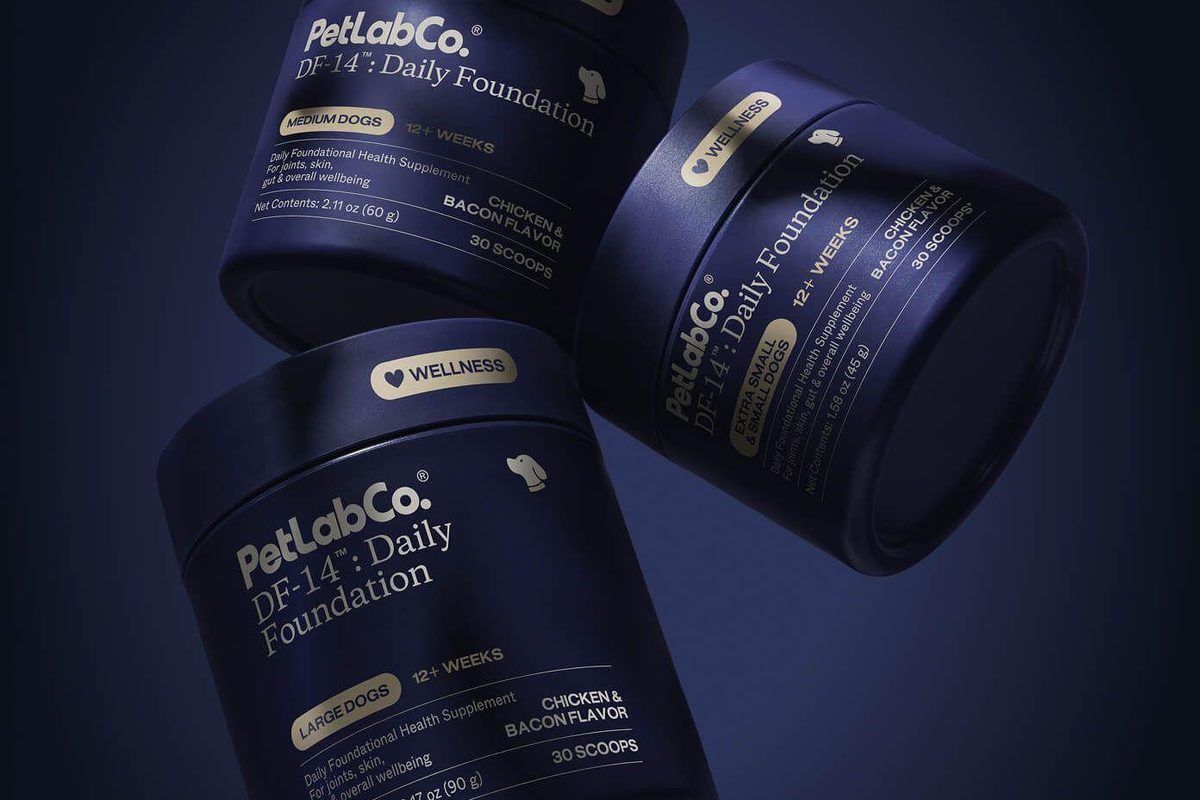
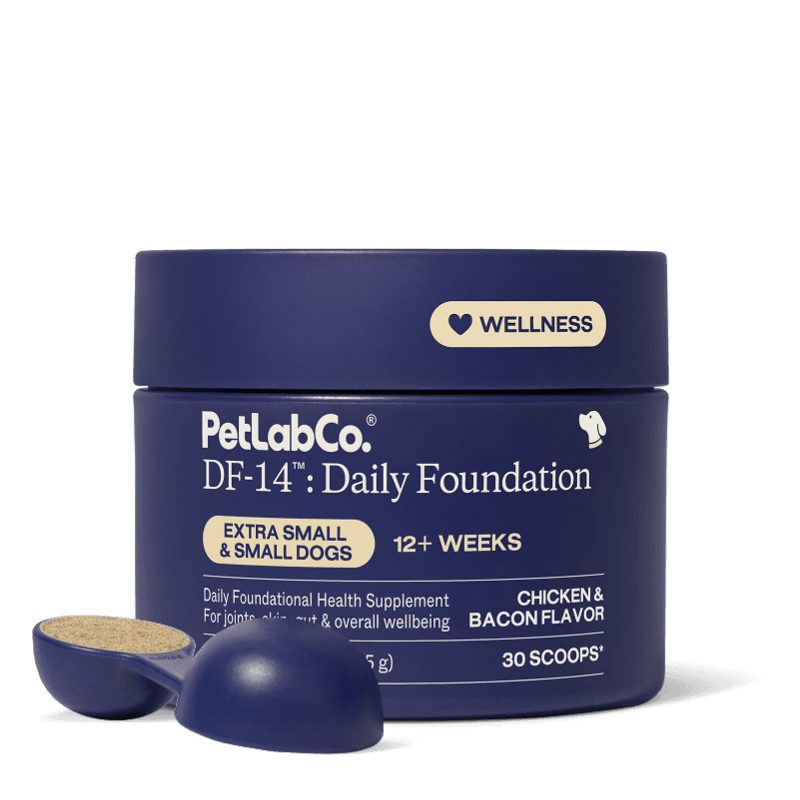
The PetLabCo.® DF-14 Daily Foundation is designed as a multifunctional daily powder targeting fourteen distinct areas of canine health. Rather than isolating the digestive system, it combines a probiotic blend with joint, cardiac, skin, and immune support. The probiotic component of DF-14 consists of three specific organisms: Bacillus subtilis, Bifidobacterium animalis subsp. lactis, and the beneficial yeast Saccharomyces boulardii. Depending on the size of the tub and the scoop used, the formula delivers between 14.5 million and 100 million CFUs per serving.
What sets DF-14 apart from simple gut supplements is its extensive list of eleven other active ingredients. These include krill, crawfish-derived glucosamine, bovine-derived chondroitin, taurine, L-carnitine, astragalus, sodium hexametaphosphate, a postbiotic yeast blend, fructooligosaccharides (FOS), cranberry, lactoferrin, and essential vitamins such as vitamin C, vitamin E, and beta-carotene. Formulated for dogs twelve weeks of age and older, its serving sizes are strictly categorized by weight bands, utilizing size-specific scoops provided in small, medium, and large tubs to ensure accurate dosing.
In contrast, products like Native Pet Probiotic are formulated strictly for gastrointestinal health. This gut-only powder features a significantly higher probiotic concentration, delivering 6 billion CFUs per scoop. Its microbial profile lists four bacterial strains: Bacillus coagulans, Enterococcus faecium, Bifidobacterium animalis, and Bifidobacterium bifidum. Rather than a broad array of systemic vitamins and joint compounds, Native Pet includes prebiotic fibers like organic inulin derived from Jerusalem artichoke and organic pumpkin seed, all suspended in a dehydrated beef broth base. This formula is suitable for dogs over three months of age, with a dosing recommendation of one four-gram scoop per fifty pounds of body weight daily.
Another widely recognized gut-focused option is Zesty Paws Probiotic Powder for Dogs. This product is packaged in single-serve, pre-measured sachets, making it highly convenient for travel or quick meal preparation. It provides 800 million CFUs per serving, utilizing Bacillus subtilis DE111 and Saccharomyces boulardii. The active blend is rounded out with inulin, flaxseed, pumpkin powder, and a natural pumpkin flavor. Marketed primarily for adult and senior dogs, Zesty Paws offers a simplified approach to digestive and immune support. However, its product documentation does not specify a precise minimum age or detailed weight-based serving sizes on its main product page, meaning owners of very small or giant breeds must rely on a single sachet format regardless of the dog’s size.
How to Compare Probiotic Powders for Dogs
The process of choosing a supplement should always begin with a clear definition of the job you want the product to perform. A veterinarian may recommend a highly specific, gut-focused formulation to address a temporary digestive upset or to support a dog recovering from antibiotic therapy. On the other hand, an owner may want to introduce a comprehensive daily supplement that supports joints, teeth, and skin while simultaneously offering a moderate level of daily probiotic maintenance.
It is important to recognize that there is no single "best" probiotic product that suits every dog. A meaningful comparison must connect the specific ingredients of a formula to the unique health profile of the individual dog, rather than simply selecting the product with the highest CFU count or the longest list of ingredients. The term CFU, or colony-forming units, represents the number of viable, active microorganisms in a serving. While a high CFU count is standard for targeted gut-only products, a lower CFU count may be entirely appropriate when integrated into a broad, multifunctional daily powder.
Beyond the ingredient list, pet owners must evaluate the practical aspects of daily administration. A powder is only effective if the dog actually consumes it. This requires owners to distinguish between a measured serving and complete meal consumption. While a scoop of powder can be easily measured and mixed into a bowl, any food left behind at the end of a meal creates immediate uncertainty about how much of the supplement the dog actually ingested. If a dog is an unpredictable eater or frequently leaves kibble behind, a powder may lead to inconsistent dosing.
Furthermore, pet owners must look closely at the scientific details of the formulation rather than relying solely on the product format. The fact that a supplement is delivered as a powder does not make its live cultures inherently more stable or effective than those found in a soft chew, capsule, or tablet. According to resources like the Cornell Riney Canine Health Center, the efficacy of a probiotic depends heavily on the specific strains used, their viability at the time of consumption, and how well they survive the acidic environment of the dog’s stomach to reach the intestines.
When reviewing scientific literature, it is also crucial to distinguish between general ingredient research and product-specific proof. For example, the beneficial yeast Saccharomyces boulardii, which is included in DF-14, was evaluated in a small canine study published in 2018 as an adjunctive treatment for dogs diagnosed with chronic enteropathy. While this study provides valuable context regarding the potential benefits of the yeast organism, it was not a clinical trial of the DF-14 commercial product itself. Owners should avoid assuming that clinical trials of individual strains guarantee identical therapeutic results for every commercial mixture containing those species.
Integrating Multifunctional Powders into the Daily Routine
For pet owners who decide that a multifunctional approach is the best fit for their dog, understanding how to read and apply the manufacturer’s dosing instructions is critical. Because PetLabCo.® DF-14 Daily Foundation contains multiple active ingredients that target different body systems, its serving sizes are precisely calibrated to the dog’s body weight to prevent over-supplementation of vitamins or minerals.
Dosing with DF-14 is structured around the dog’s weight using specific tub sizes and corresponding scoops. For toy breeds and very small dogs weighing under four pounds, the manufacturer directs owners to use the small tub’s miniature scoop, which delivers a 0.75-gram serving containing 14.5 million CFUs of the probiotic blend. Dogs weighing between 4 and 24.9 pounds require the larger scoop from the small tub, delivering a 1.5-gram serving with 29 million CFUs. Medium-sized dogs, spanning 25 to 75 pounds, transition to the medium tub and its designated scoop, which provides a 2-gram serving containing 66 million CFUs. Finally, large and giant breeds weighing over 75 pounds use the large tub’s scoop, delivering a 3-gram serving containing 100 million CFUs.
This structured system highlights why owners must keep the original scoop with its corresponding tub, particularly in multi-dog households where pets fall into different weight brackets. Estimating serving sizes with standard household spoons can lead to significant dosing inaccuracies.
Because DF-14 contains several animal-derived ingredients to enhance its chicken-and-bacon flavor profile—including krill, crawfish-derived glucosamine, bovine chondroitin, and hydrolyzed chicken liver—it is highly palatable to most dogs. However, these specific protein sources mean that owners of dogs on strict hypoallergenic diets or elimination food trials must consult their veterinarians before introducing the supplement. Additionally, because the formula includes joint-supporting compounds and vitamins, it should be carefully reviewed alongside any other multivitamins or joint chews the dog is already taking to avoid accidental nutrient duplication.
Practical Best Practices for Mealtime Administration
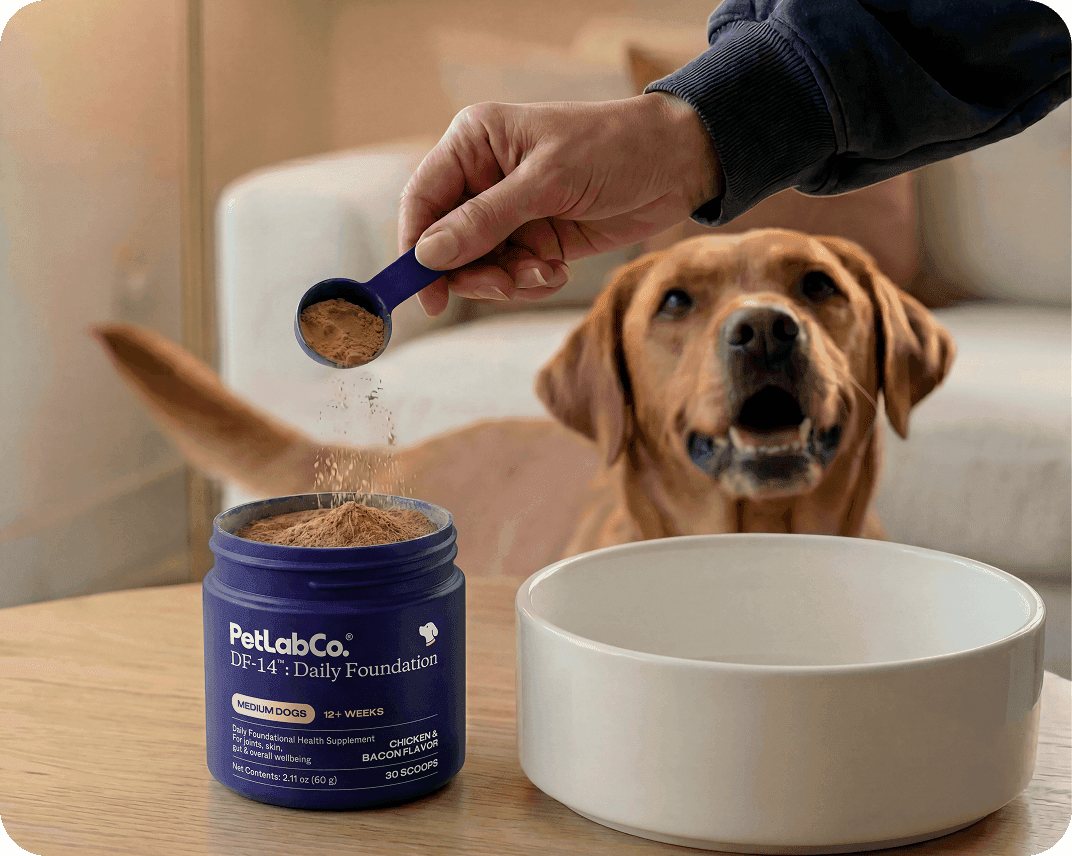
Establishing a consistent and repeatable mealtime routine is the most effective way to ensure a probiotic powder delivers its intended benefits. Manufacturers typically recommend mixing the designated serving of powder with wet food or slightly moistened kibble once daily at mealtime. The moisture is necessary because it helps the powder adhere to the food, preventing the dog from inhaling the fine particles or leaving the supplement settled at the bottom of an empty bowl.
When introducing a probiotic powder, it is best to choose a mealtime when a family member is available to supervise the dog. This allows the owner to verify that the dog finishes the entire portion. In homes with multiple pets, supervision is especially important to prevent bowl-swapping. If a dog regularly leaves meals unfinished, owners should consult their veterinarian or the supplement manufacturer for advice on alternative administration methods, rather than guessing how much powder was left behind and adding a second scoop to the next meal.
Furthermore, pet owners should avoid introducing multiple dietary changes simultaneously. If a dog’s food, treats, medication, and supplements are all altered at the exact same time, identifying the cause of any subsequent changes in appetite, digestion, or stool quality becomes nearly impossible. A more prudent approach is to keep the dog’s baseline diet stable for several weeks while slowly integrating the new supplement. Keeping a simple written log of the start date, the exact serving given, and any observations can be incredibly useful if a veterinary consultation is needed later.
Proper storage of the product is another crucial factor in maintaining the viability of the live microorganisms. Probiotic powders should be kept in a cool, dry place, securely sealed, and protected from direct sunlight. Transferring the powder into unlabeled kitchen canisters is discouraged, as this increases the risk of losing the original dosing instructions, expiration dates, and safety warnings.
Format Decisions: Choosing Between Powders and Soft Chews
Ultimately, the choice between a probiotic powder and a soft chew often comes down to practical household dynamics and individual dog preferences. Neither format is universally superior; instead, each serves different behavioral and operational needs.
A powder is an excellent fit for highly food-motivated dogs that eat their meals quickly and predictably in a single sitting. For these dogs, mixing the supplement directly into their food is highly efficient and eliminates the need to introduce an extra treat to their daily routine. Powders also make it easy to adjust dosages incrementally under veterinary supervision, as the powder can be leveled or slightly reduced in the scoop more easily than a pre-formed chew can be divided.
Conversely, a soft chew may be far more practical for dogs that are "grazers"—those that slowly eat their dry kibble throughout the day. For these pets, a powder mixed into their food bowl may sit at room temperature for hours, risking spoilage if mixed with wet food, or simply resulting in highly irregular consumption of the active cultures. A soft chew can be fed directly from the hand, allowing the owner to immediately confirm that the entire dose was eaten. Chews are also highly convenient for travel, as they do not require measuring scoops, mixing liquids, or cleanup.
When transitioning a dog from one format to another, owners must carefully compare the full ingredient labels. Replacing a multifunctional powder like DF-14 with a basic, gut-only soft chew means the dog will lose the joint, cardiac, and immune-supporting ingredients contained in the powder. If those systemic benefits are still desired, alternative sources for those nutrients must be integrated into the dog’s wellness plan. Consulting with a veterinarian ensures that any format change maintains a balanced, coherent, and safe approach to the dog’s overall health.