

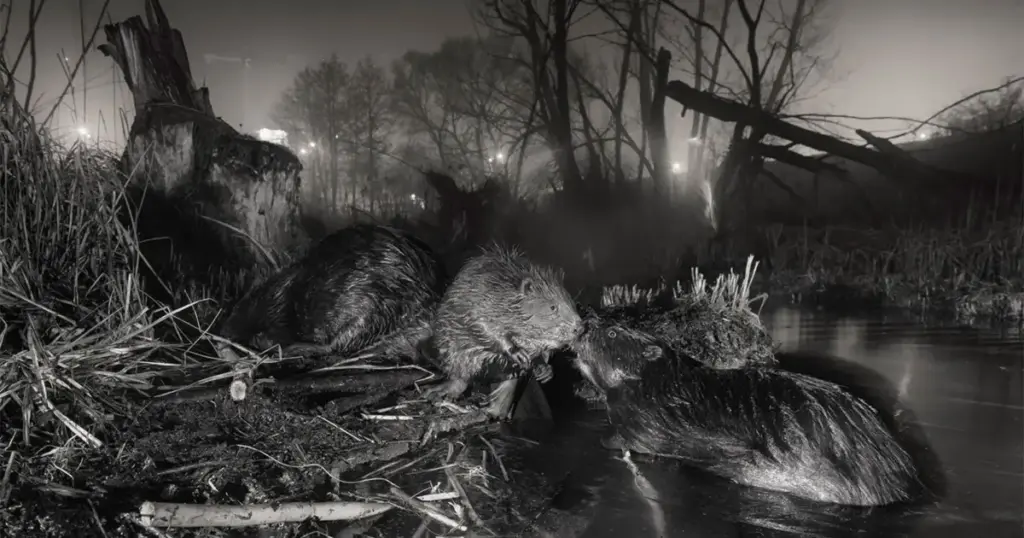
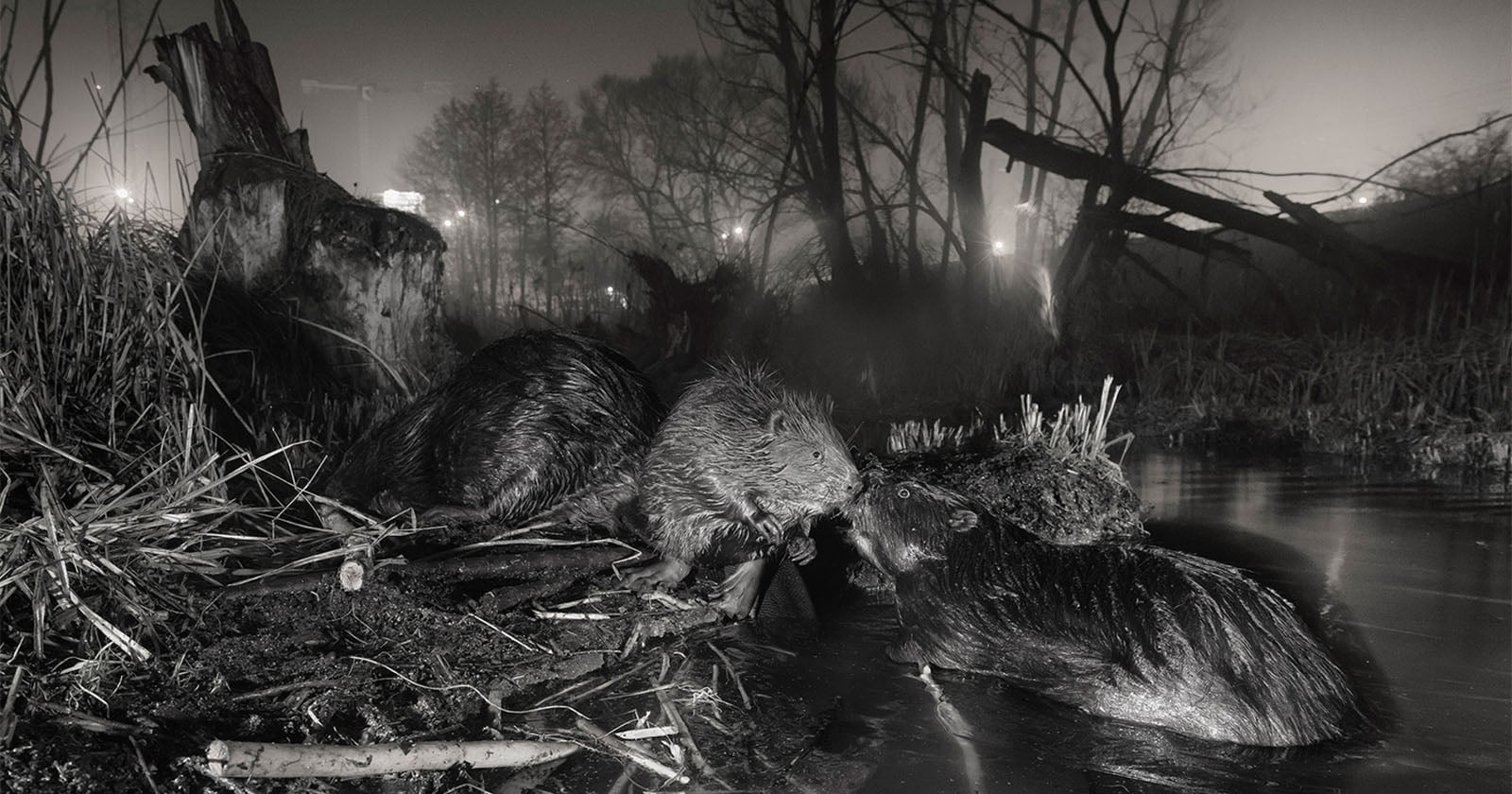
Polish photographer Jan Wieczorek has captured this year’s prestigious Rewilding Europe Award with his striking black-and-white wildlife photograph, titled “Urban Beavers.” The winning image provides a powerful visual testament to the resilience of nature, depicting a family of beavers thriving within the urban environment of Olsztyn, Poland, against a backdrop of modern human development.
The annual Rewilding Europe photography contest is presented by Rewilding Europe in partnership with the German Society for Nature Photography (GDT) and the European Wildlife Photographer of the Year contest. Together, these organizations celebrate imagery captured across the European continent that illustrates what they describe as "rewilding in motion."
Rewilding represents a progressive and increasingly vital approach to environmental conservation. Rather than managing every aspect of an ecosystem, rewilding works to enable nature and natural processes to occur again, actively restoring and repairing the damage caused by centuries of human activities. As Rewilding Europe frequently emphasizes, nature often knows best when it comes to survival, self-governance, and ecological balance.
Contest judge Jon A. Juarez notes that the face of European conservation is remarkably diverse. Rewilding does not have a single, uniform definition or method. In some regions, it can mean successfully bringing back a keystone species that completely disappeared; in others, it involves restoring complex natural water or forest processes, or simply giving nature enough space and physical time to recover on its own. Increasingly, however, rewilding is also about learning how to peacefully share shared landscapes with wild animals.
Rewilding Europe Award Winner Shows a Family of Beavers Thriving In a Polish City
Award-winning photographs like the one captured by Wieczorek document that ongoing rewilding process as it unfolds out in the real world, far from isolated nature reserves. In this instance, a thriving family of beavers living directly inside the Polish city of Olsztyn demonstrates that human populations and native wildlife can successfully coexist.
While the surrounding landscape features modern power lines, busy railways, and expanding residential housing developments, these beavers have found a way to persist. Their survival is aided by the protection and tolerance of local municipal authorities and the human residents who live nearby.
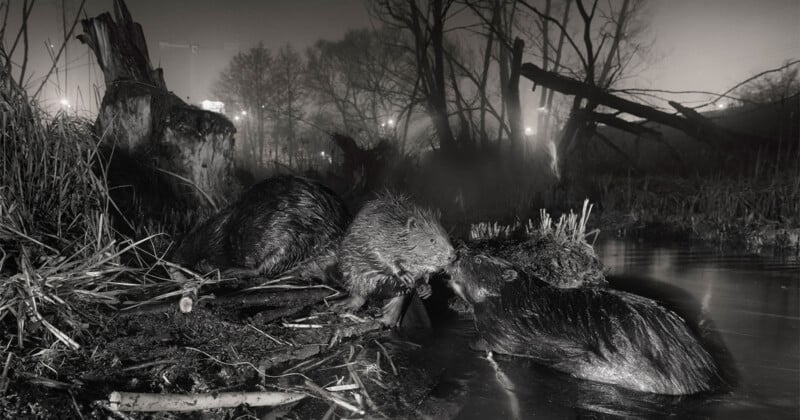
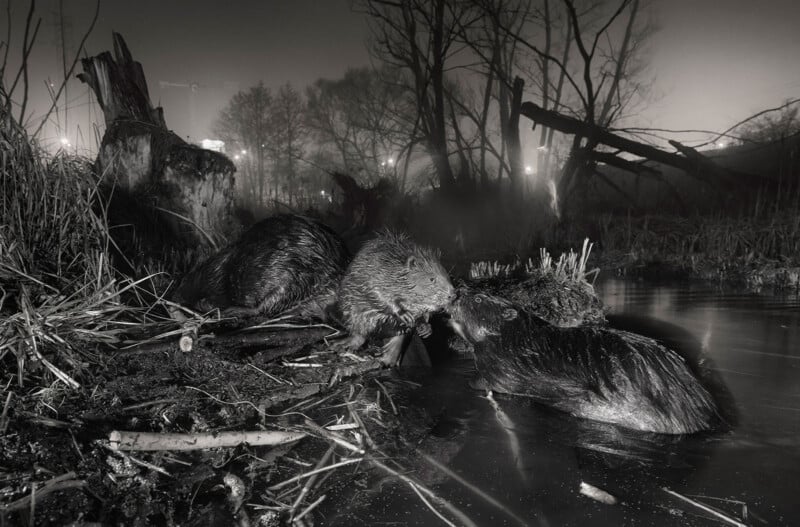
Jan Wieczorek has spent nearly 15 years observing and watching this specific family of beavers. His award-winning photo was carefully composed to highlight the fascinating intersection of two seemingly incompatible worlds. In the foggy, city-lit background of the frame, viewers can spot a construction crane and a nearby road, symbolizing human expansion. In sharp contrast, the foreground features a trio of beavers actively engaged in their daily routines, shaping their wetland habitat.
Reflecting on the image, Wieczorek explains that the story behind the photograph demonstrates how nature does not always exist solely in remote wildernesses far away from civilization. Instead, it can thrive right next to human homes, beneath concrete bridges, and directly within the centers of busy modern cities. By intentionally framing the new housing developments right alongside the wetland habitat created by the beavers, the photographer wanted to show that it is entirely possible for humans and wildlife to share the same physical space.
Competition judge Viktoria Pezzei adds that the winning and commended images capture the very essence of how humans and wildlife can live side by side. According to Pezzei, photography of this caliber helps translate the complex relationships between human society and wild populations, ultimately fostering deeper public understanding and appreciation.
Runner-Up Highlights Managed Recovery for Endangered European Hamsters
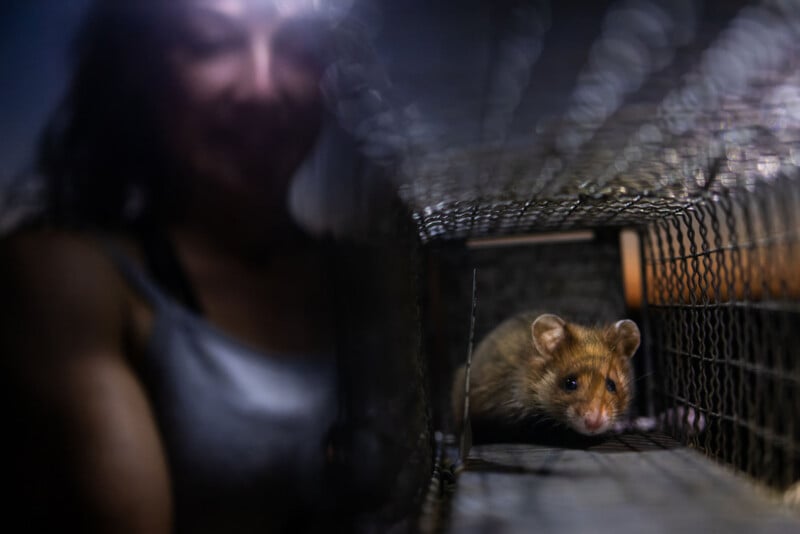
While the grand prize winner showcases nature reclaiming urban spaces with minimal direct intervention, the runner-up highlights a very different sort of recovery story that requires intensive human effort. Christoph Kaula earned high acclaim for a photograph depicting a little European hamster, an animal that is part of a dedicated scientific research project aimed at saving the heavily threatened species from extinction.
European hamsters have suffered drastic population declines across the continent as intensive agricultural operations and farming practices have expanded over the decades. In response to this crisis, researchers are taking a very hands-on approach to ensure the species survives. Captive breeding programs, detailed genetic analysis, and active habitat management are all critical components of this multi-pronged conservation strategy.
The beavers in Poland demonstrate that sometimes simply leaving animals alone and providing basic protection is enough to let nature heal. However, the plight of the European hamster illustrates that certain vulnerable species require aggressive, managed intervention to get population trends moving in the right direction.
Kaula emphasizes that bringing a species back from the brink of extinction is never the work of a single organization or an isolated individual; rather, it requires a collective, societal effort. For Kaula, this also means actively raising public awareness and communicating the vital importance of biodiversity conservation to a much wider audience.
Commended Photos Showcase Bison, Eagles, and Lobsters
In addition to the winner and runner-up, the judging panel bestowed special commendations upon three other compelling photographs, each illustrating a unique facet of European conservation and ecological recovery.
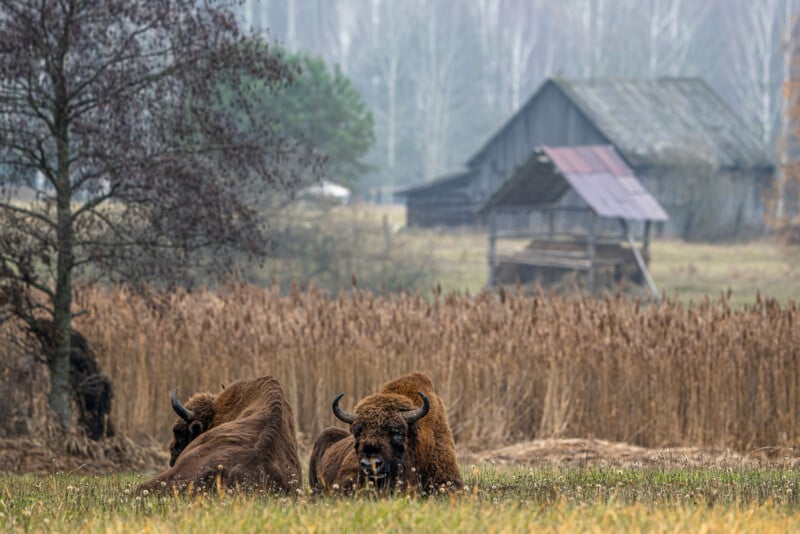
Fabian Thorand’s commended photo, titled "Peaceful European Bison," portrays two massive bison resting quietly in a Polish meadow. These magnificent animals were once entirely extinct in the wild across Europe. Thanks to coordinated reintroduction programs, their numbers have rebounded significantly, with populations now exceeding 10,000 individuals roaming free.
Thorand notes his desire to show how beautiful and peaceful coexistence with animals can be, even when dealing with wildlife of such substantial size. He believes it is crucial to view the environment not merely as a resource for human use, but as an authentic natural habitat for wild animals that are well worth protecting. Bison play a profoundly important ecological role in shaping their environments, but human communities must learn how to live alongside them harmoniously.
Another commended work, Silke Hüttche’s "The Call of the Eagles," captures white-tailed eagles in an unusual and recovering corner of northeastern Germany known as Anklamer Stadtbruch. This expansive 2,000-hectare area transformed into a massive wilderness zone following a severe storm surge in the 1990s that flooded the land into a rich peatland. Today, the recovering ecosystem supports a remarkable diversity of wildlife, and white-tailed eagles now nest in the area in greater densities than anywhere else in Germany. Hüttche explains that witnessing the spontaneous natural processes at work in Anklamer Stadtbruch proved to her how incredibly important the creation of new wilderness areas is for biodiversity.
The final commended photograph, Lewis Jefferies’ "A New Generation," highlights marine conservation by capturing a staff member from the National Lobster Hatchery releasing young European lobsters into a tidal pool in Cornwall, England. The hatchery collaborates closely with marine scientists, local fishermen, and commercial restaurants to breed young lobsters and carefully restock them into the sea. The European lobster holds significant economic and cultural value for coastal communities, both for its culinary demand and its critical role in maintaining healthy marine ecosystems. Jefferies expresses hope that his image will spark broader interest in marine conservation and highlight the dedication required to protect coastal habitats.
Nature Can Survive if Given the Space and Time
Taken together, the entries in this year’s Rewilding Europe Award photography contest demonstrate that whether human societies choose to step back and leave natural processes alone, or step in with thoughtful, science-backed management, nature possesses a remarkable capacity to recover. While the paths to ecological restoration vary widely—from urban beavers and reintroduced bison to managed hamster populations and hatchery-raised lobsters—the overarching message remains consistent: people have the power to make a profoundly positive difference in the preservation of the natural world.