




the Expensive Brazilian Steakhouse and Make Marcus Samuelsson’s Version at Home**
There is something undeniably charming about the atmosphere of a traditional Brazilian steakhouse, characterized by its sizzling morsels of roaming beef, bold and savory seasonings, and a seemingly endless parade of distinctive side dishes. However, enjoying those vibrant, robust flavors does not always require securing a reservation or investing in an expensive night out on the town. In fact, acclaimed celebrity chef Marcus Samuelsson has developed a Brazilian steak variation that home cooks can easily prepare within the comfort of their own kitchens. In an exclusive interview, the renowned culinary figure shares insights regarding this popular Brazilian dish featured in his latest cookbook, alongside its accompanying cassava fries, a vibrant flavor-packed green sauce, and potential cultural twists tailored for adventurous eaters.
The award-winning, world-famous chef, television personality, and restaurateur has long been celebrated for his unique ability to seamlessly blend global culinary traditions with creative, modern cooking techniques. These talents emerge cohesively in his cookbook, "Back to Green: Rediscovering a World of Delicious, Healthy Eating," which was released in late October. The publication explores a thoughtful, plant-forward approach to contemporary cooking that deliberately avoids sacrificing bold flavors or beloved familiar comfort foods. Rather than treating meat as an enemy of healthy eating, Samuelsson presents the non-plant-based Brazilian steak as a harmonious counterpart to the earth-driven ingredients surrounding it in the book.
For Samuelsson, the philosophy behind the cookbook centers heavily on the intersection of health, flavor, and enjoyment. When individuals choose to eat healthfully, he notes, the food must remain genuinely delicious, and the dining experience must generate a profound sense of joy. Those serve as his foundational promises. While the volume is firmly rooted in plant-forward principles, he emphasizes that home cooks can still incorporate traditional favorites like a quality steak and fries into their routines. Throughout our conversation, he elaborated on how those core culinary principles function in harmony, detailing the specific ingredients and preparation processes that bring the recipe to life.

Making Marcus Samuelsson’s Brazilian Steak with Cassava Fries
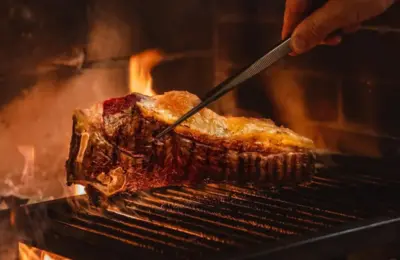
The absolute centerpiece of Samuelsson’s Brazilian steak recipe is, naturally, the meat itself. However, rather than utilizing the massive, continuous cuts traditionally served on oversized skewers by roaming servers in a steakhouse setting, he opts for individual three-ounce portions. Each piece of meat is carefully pounded out to a thickness of roughly one-fourth of an inch. To prepare them, every individual steak is lightly brushed with quality olive oil and seasoned generously with crushed coriander seeds, freshly cracked black peppercorns, and salt. The meat is then grilled over medium-high heat for approximately two minutes per side. By using a tender cut of filet and flattening it significantly, the recipe creates a smaller portion of steak that packs an immense punch of flavor, particularly when paired with the accompanying side dish and signature sauce.
The accompanying fries are crafted from cassava, a nutrient-dense, starchy root vegetable that is also widely known as yuca. According to Samuelsson, home cooks can still enjoy incredible, satisfying fries while choosing a significantly healthier alternative, noting additionally that cassava is naturally gluten-free. The preparation process outlined in the recipe involves soaking and boiling the cassava root, cutting the pieces into traditional fry shapes, subjecting them to a brief freeze, and finally frying them in avocado oil until they achieve a deeply golden and exceptionally crispy exterior. For home cooks who might feel hesitant or unfamiliar when handling fresh cassava root for the first time, Samuelsson offered reassuring, straightforward advice during our discussion, comparing the process to a kitchen staple by asking whether anyone who can cook a standard potato fry could similarly master the cassava fry.
Regarding the availability of fresh cassava root for everyday home cooking, Samuelsson suggests sourcing the ingredient online, pointing to various online retailers, including Amazon sellers. However, he acknowledges that commercially frozen cassava works just as effectively if fresh roots are difficult to locate locally. To tie the entire plate together, the meal features a vibrant, herbaceous green salsa. Samuelsson describes the condiment as containing a wealth of wholesome ingredients, including fresh avocado, spicy chiles, and bright lime juice. Furthermore, he weaves in subtle, spicy inspiration drawn directly from his own personal cultural roots in Ethiopia.
Global Traditions, Ancient Ingredients, and Flavor-Punching Potential

Throughout the ongoing conversation, the enthusiastic chef continually encouraged home cooks to embrace experimentation by making intelligent substitutions rather than completely abandoning their established cooking habits and comfort zones. He noted that encouraging people to cook the way they normally do, while simply swapping out certain components to make meals more delicious and nutritious, stands as a core philosophy of his new cookbook.
Speaking directly to the concept of swapping ingredients, and keeping in mind the cookbook’s heavy emphasis on ancient, earthy ingredients harvested from across the globe, the discussion naturally shifted toward Samuelsson’s own Ethiopian heritage. Drawing from cherished culinary experiences within local Ethiopian communities, the conversation turned to the potential of incorporating the signature Ethiopian berbere spice blend as a creative and flavorful twist on dishes like Brazilian steak and cassava fries. Having previously formulated his own celebrated berbere spice recipe, Samuelsson enthusiastically endorsed its immense culinary potential.
He pointed out that berbere ranks among the finest spice blends in the world, praising its complex flavor profile anchored by ingredients like smoked paprika. He suggested that home cooks can successfully apply berbere to nearly anything, recommending it for fries, fish, or even roasted carrots as a reliable way to instantly elevate a meal. That dedication to core, earthy spices aligns seamlessly with the broader thematic elements woven throughout "Back to Green," which celebrates ancient ingredients such as cassava, the Ethiopian-native teff grain, and numerous others. As highlighted in the book’s descriptive materials, these traditional ingredients serve to bind communities together while simultaneously offering a practical, flavorful pathway toward sustainable, healthy living.