




After nearly a decade and a half of relative stability, the global financial landscape has experienced a dramatic shift. Following more than fourteen years of hovering near zero, interest rates have suddenly climbed to multi-decade highs, leaving consumers, investors, and homeowners questioning whether they need to panic, adapt, or simply stay the course.
While financial news outlets have long offered minute-by-minute coverage of every incremental rate hike by the Federal Reserve, much of the commentary misses the fundamental question on everyday people’s minds: Beyond the macroeconomic headlines, what does this actually mean for personal financial strategy? To understand where the economy stands today and how to navigate it, it helps to examine how the current environment was created, how it impacts the stock market and housing sector, and what experts predict for the future.
Why Is This Happening, and What Got Us Here?
To understand the current environment, economists often use the metaphor of a vehicle. Interest rates act as a giant gas pedal that revs the engine of the national economy, with the Federal Reserve—led by Chairman Jerome H. Powell—firmly at the wheel.

For the better part of two decades, the Federal Reserve kept that pedal pressed firmly to the floor, injecting a steady stream of easy money into the financial system by maintaining near-zero interest rates. This aggressive monetary policy made borrowing exceptionally cheap. Mortgages became remarkably affordable, prompting a massive surge in demand for both existing homes and new construction.
The low-rate environment had a similar catalytic effect on business investment. With venture capital and borrowed funds readily available at minimal cost, entrepreneurs launched countless new startups. These companies subsequently rented commercial office space, built manufacturing plants, and hired millions of employees. Those newly employed workers then entered the consumer market, purchasing houses, automobiles, household appliances, and other staples of modern life.
For a long time, this dynamic fueled a prolonged era of economic prosperity, corporate growth, and technological innovation. However, the prolonged monetary stimulus eventually went too far. Too much money began chasing too few goods—particularly within the housing market. This imbalance triggered a significant wave of unacceptably high inflation.
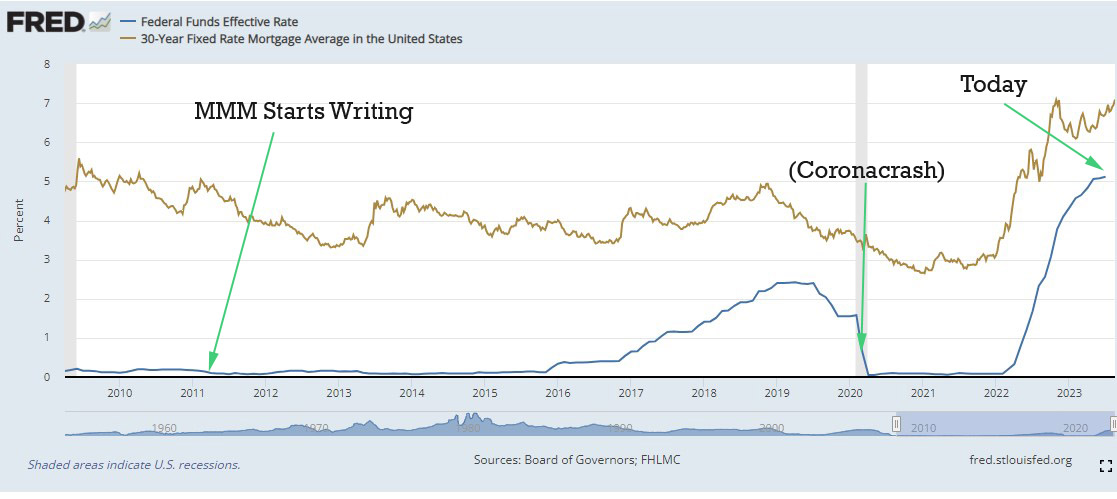
Recognizing the overheating economy, the Federal Reserve began easing its foot off the easy-money gas pedal, raising benchmark interest rates to cool consumer demand and stabilize prices. As interest rates escalated, virtually every sector of the economy began to decelerate.
The effects have been visible across the board. Mortgages became drastically more expensive, causing many prospective homebuyers to postpone their purchasing plans. Corporations faced with higher borrowing costs scaled back plans for new infrastructure and trimmed their payrolls, leading to notable workforce reductions at major technology firms like Meta and Amazon. The financial sector also experienced turbulence, including a miniature banking crisis involving several mid-sized institutions that briefly rattled market confidence.
Public discourse surrounding these shifts has been contentious. Political commentators from various ideological backgrounds routinely point to these adjustments as evidence of economic distress, often declaring that the nation is on the wrong financial path. Yet, paradoxically, these claims contrast sharply with broader economic indicators, such as historically low unemployment rates and resilient overall economic output. In reality, the current cooling period functions much like letting an economy digest a heavy meal—a standard cyclical adjustment that occurs every decade or two to restore long-term stability.

How to Approach the Stock Market Amid Market Fluctuations
A common anxiety among investors during periods of rising interest rates is whether to pull capital out of the stock market to avoid a potential crash. Historical market behavior, however, points to a different conclusion. Over the long term, the stock market has consistently trended upward despite unpredictable short-term volatility. Because market timing remains virtually impossible to execute consistently, attempting to cycle in and out of equities usually yields poor results.
Examining recent market history reveals that from its peak at the beginning of 2022 through mid-2023, the broader US stock market experienced a correction of roughly 10 percent, effectively rendering overall gains flat over a two-year span aside from standard dividend distributions. For long-term investors utilizing dollar-cost averaging through index funds, lower asset prices often represent a more attractive purchasing environment rather than a reason for alarm. Buying equities during a market correction means acquiring shares at a discount compared to previous all-time highs.
At the same time, shifting yields have elevated the appeal of fixed-income options. With high-yield savings accounts and money market funds offering returns around 4.5 percent or higher, savers face a classic financial dilemma: whether to pursue stable, guaranteed yields or continue allocating capital toward equities. While a risk-free return is appealing, the fundamental principle of investing dictates evaluating long-term expected returns. Because historical equity returns—bolstered by market recoveries and underlying dividends—typically outperform cash over extended horizons, maintaining a balanced, long-term strategy remains the cornerstone of sound personal finance.

The Impact on the Housing Market and Affordability
For most households, the most direct and profound impact of higher interest rates is felt within the housing market. Financing a home purchase with a mortgage has become significantly more expensive, rental property investments yield lower margins, and homeowners with locked-in mortgage rates near 3 percent find themselves heavily incentivized to stay put rather than sell.
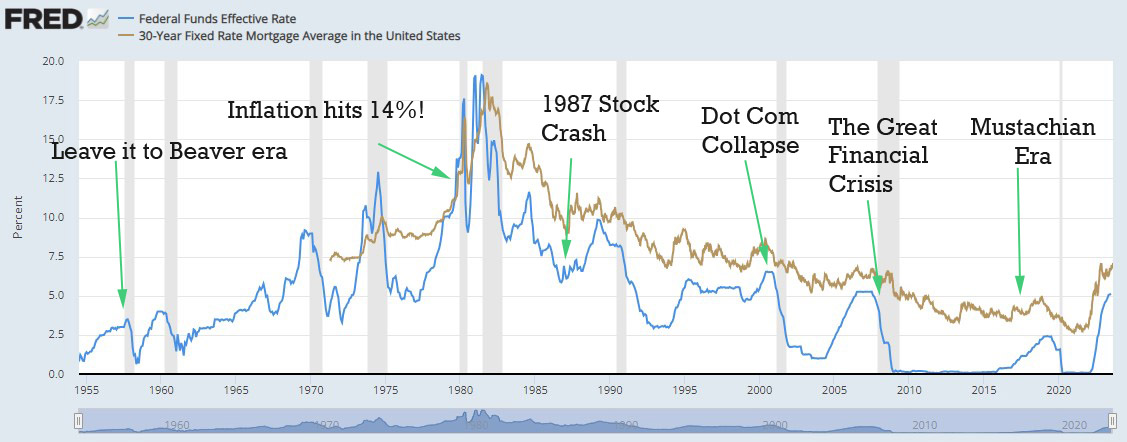
Over a brief two-year span, average mortgage rates climbed from roughly 3 percent to around 7.5 percent. For a homebuyer making a standard 10 percent down payment, this dramatic swing fundamentally alters monthly financing costs and total loan expenses over the life of a 30-year mortgage.
While these higher financing costs present a clear affordability hurdle, they serve the exact economic purpose for which they were designed: cooling runaway demand. The intended transmission mechanism of higher interest rates is designed to curb rampant bidding wars, slow down escalating home valuations, and ultimately stabilize or reduce housing prices across various regional markets.

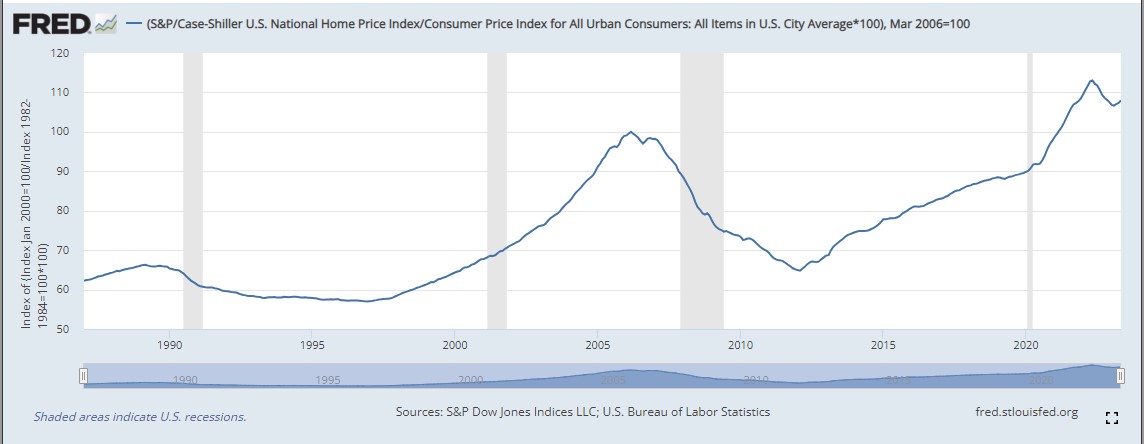
The long-term trajectory of housing prices ultimately hinges on fundamental supply and demand dynamics. On the supply side, housing costs are heavily influenced by construction expenses, labor availability, land pricing, and local regulatory frameworks. While technological advancements, global trade efficiencies, and modern building techniques—such as standardized materials and efficient plumbing systems—help reduce construction costs, regulatory burdens often move in the opposite direction.
In many municipalities, escalating layers of bureaucratic red tape, complex zoning laws, and onerous approval processes have significantly slowed down new construction. This regulatory friction restricts housing supply and sustains upward pressure on prices. Conversely, municipalities that streamline development processes and encourage diverse housing options around transit corridors often experience greater affordability. While inflation-adjusted home prices remain elevated compared to historical norms, experts suggest that prices may experience a period of stagnation or localized downward adjustments relative to future wage growth.
Predictions for Future Interest Rates and Economic Indicators
Despite widespread characterizations of current interest rates as historically high, a broader historical perspective reveals that today’s rates are actually quite normal compared to long-term averages over the past seventy years. The era of near-zero interest rates following the 2008 financial crisis was an anomaly rather than a permanent baseline.
Whether interest rates will decline in the near future depends entirely on macroeconomic conditions. The Federal Reserve is unlikely to lower benchmark rates until inflation is firmly contained and clearer signs of an economic slowdown materialize.
Insight into market expectations can be observed through the US Treasury Yield Curve. Traditionally, the yield curve slopes upward, meaning lenders receive higher compensation for locking up capital over longer periods. However, recent economic conditions produced an inverted yield curve, where short-term yields—such as those on one-year Treasuries—surpass long-term yields on ten-year bonds.
An inverted yield curve reflects the collective anticipation of market participants that the Federal Reserve will eventually be forced to lower interest rates to counteract a slowing economy. Historically, an inverted yield curve has served as a reliable indicator of upcoming economic slowdowns or recessions. While exact timelines remain uncertain, many financial analysts project that interest rates could begin to moderate within an 18-to-24-month window, potentially alongside a broader economic cooling period.
Financial Resilience in a Changing Economy
Ultimately, macroeconomic shifts in interest rates and housing valuations underscore the importance of personal financial resilience. For individuals who maintain low debt, manageable housing costs, and adequate cash savings, external financial volatility poses far less of a threat. Maintaining a lean, adaptable lifestyle and focusing on consistent earning and saving habits allows individuals to navigate economic transitions from a position of strength rather than stress.