


The embers of a Nordic wellness trend are glowing once again, and for those who have spent years tracking the region’s cultural exports, the shift has been visible from miles away. Long before the Swedish ethos of lagom—the concept of optimal balance and moderation—captured the global consciousness, lifestyle storytellers and authors had been unpacking the deeper layers of the Nordic mindset regarding health, sustainability, and daily living. This philosophy eventually crossed borders in various forms, inspiring international bestsellers and shifting how millions approach their personal well-being.
From traditional Swedish massages to the enduring global fascination with Finnish saunas, the Nordic region has long been synonymous with restorative health and connection to nature. While Denmark gifted the world hygge, the art of intentional presence and coziness, Norway popularized friluftsliv, or open-air living. Meanwhile, Finland introduced sisu, a profound sense of inner grit and resilience, and Iceland established the modern template for "Viking wellness" through its historic traditions of thermal hot baths and invigorating cold dips.
Despite these distinct cultural terms, all Nordic societies share a unified set of values underpinning their approaches to life. What makes lifestyle trends from this corner of the globe so enduringly appealing on an international scale is the rock-solid foundation upon which they are built. They are rooted in sustainability-focused mindsets, a deliberate return to simplicity designed to curb undue stress, and a cultural commitment to accessibility. In many Nordic countries, government-sanctioned frameworks like Sweden’s Allemansrätten—the constitutional right of public access to the countryside—foster a deep, symbiotic relationship with the outdoors. Because these nations are deeply egalitarian, their communal goal centers around holistic well-being that can be sustained over the long term by every demographic, from professional athletes in their athletic prime to elders enjoying their later years.

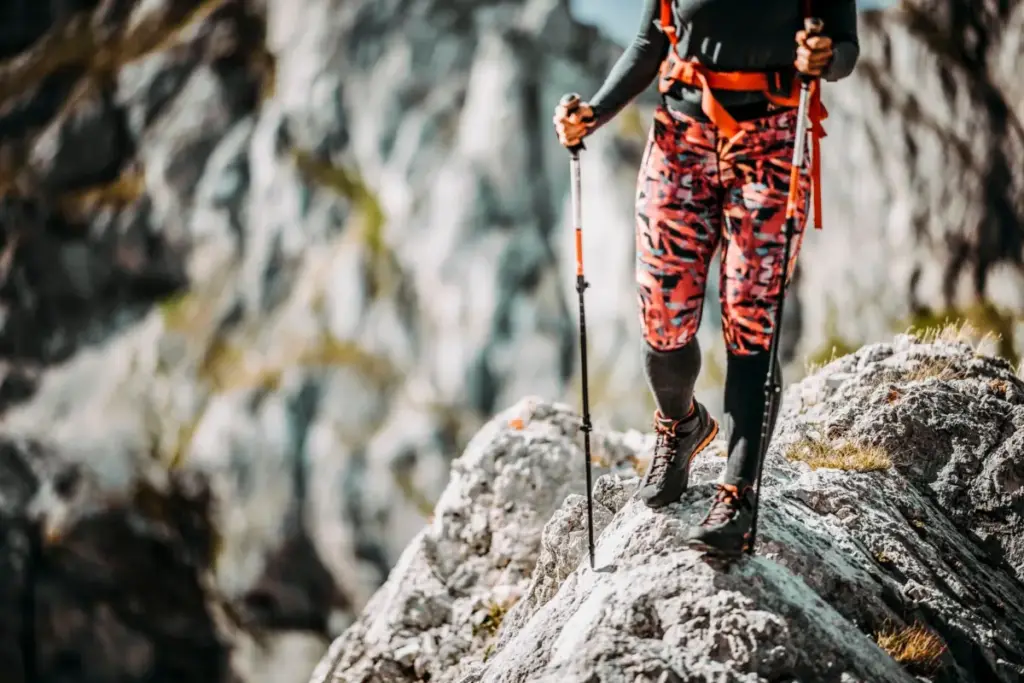
Yet, the latest Nordic wellness phenomenon to catch the global eye has remarkably practical origins, born not from ancient folklore, but from athletic training. The question of how cross-country skiers maintain their peak physical conditioning when the snow melts led directly to the creation of Nordic walking—an activity that is frequently misunderstood, but must not be confused with casual hiking using standard trekking poles.
According to the International Nordic Walking Federation (INWA), the governing body founded in the year 2000, the practice has expanded across more than 40 countries. Today, it is utilized worldwide for health, fitness, recreation, social connection, and even competitive sport. The roots of the discipline stretch back to the 1930s, when competitive cross-country skiers in Scandinavia began using ski poles alongside running shoes to maintain their cardiovascular endurance during the summer months. However, it was not until 1966 that physical education teacher Leena Jääskeläinen brought the concept to the general public, marking the first documented use of ski poles outside elite athletic training.
Aki Karihtala, president of the INWA, recalls adopting the practice decades ago. Having previously headed the sports division at Exel, a Finnish sporting goods company and the world’s largest manufacturer of cross-country ski poles, Karihtala helped shape the modern iteration of the sport. He began Nordic walking in 1998, drawn to it as a fun, social, and efficient form of physical activity that naturally reconnects people with the natural world.
It was Karihtala and his team at Exel who officially coined the term "Nordic walking." Since then, the activity has been widely adopted across diverse populations, transcending age, religion, and culture because it presents virtually no boundaries to entry. In 1997, Exel engineered the first dedicated Nordic Walker poles specifically tailored for the movement. Just a year later, more than 500,000 Finns—out of a total national population of roughly five million at the time—had tried the activity. Experts attribute its widespread appeal to its ability to engage the entire body while significantly reducing pressure on the knees, thanks to ergonomically designed poles that distribute physical effort evenly. To ensure proper technique, the federation eventually developed the progressive INWA 10 Step Method, designed to teach individuals how to use the equipment safely and effectively.

Among the newer converts to the practice is Katja Presnal, a Finnish trend and branding expert who has spent more than two decades analyzing shifts in global culture. Presnal’s personal lifestyle digital platform previously reached over 100,000 monthly readers and millions annually. For her, the irony of Nordic wellness becoming the planet’s hottest lifestyle trend is particularly striking. Having grown up in the Turku archipelago, surrounded by sheltered bays and lush forests, she spent years traveling the globe before deciding to pivot from analyzing cultural movements to living them out directly.
Seeking a slower, more intentional pace of life surrounded by nature, lakes, and walking trails, Presnal purchased a century-old former dairy tucked away in the Finnish countryside. For her, incorporating activities like Nordic walking was about transforming everyday life into a continuous wellness regimen, effectively creating a permanent, year-round retreat reminiscent of the slow-living experiences her family once sought out in places like Tuscany during their travels. In hindsight, she notes, she has simply returned to her Nordic wellness roots, recognizing that the true richness of her childhood lay in the everyday habits she once took for granted.
This low-threshold accessibility—both from a physical and a financial standpoint—is precisely what makes Nordic walking uniquely positioned for contemporary wellness seekers. Unlike expensive gym memberships or specialized fitness classes, the activity requires very little overhead beyond a pair of specialized poles and a willingness to step outside. Furthermore, practitioners frequently highlight the social connectivity the activity fosters, turning what could be a solitary walk into a communal experience.
As more people around the world look to the Nordic region for guidance on how to navigate the pressures of modern life, these deeply ingrained cultural habits are stepping into the global spotlight. For those who grew up with them, the realization that their everyday routines could become an international movement often comes as a surprise. As Presnal observes, when a way of living is simply part of who you are, it is difficult to recognize it as something extraordinary that can be taught, shared, and exported to the rest of the world. Yet, as the popularity of Nordic walking demonstrates, the simplest, most grounded rituals are often the ones that resonate most powerfully across borders.