


By Olivia Rosane and Cristen Hemingway Jaynes
Invisible, odorless, and pervasive, methane has quietly established itself as the second most influential driver of the global climate crisis, trailing only carbon dioxide in its overall warming impact. Found everywhere from natural wetlands and the digestive systems of livestock to residential basement furnaces, methane is the primary component of natural gas, which currently generates roughly a quarter of the world’s electricity. As atmospheric concentrations continue to surge to unprecedented levels, scientists, policymakers, and environmental advocates are increasingly turning their attention to this potent greenhouse gas, recognizing that swift mitigation efforts may offer the single most effective tool for stabilizing global temperatures over the next two decades.

Chemically, methane is a simple hydrocarbon composed of four hydrogen atoms bonded to a single carbon atom. It is abundant across the natural world and forms through both geological and biological processes. Geologically, it develops when heat and pressure act upon decomposing organic matter over millions of years, forming the vast underground reservoirs that supply the global natural gas industry. It can also form deep underground without organic matter through distinct geological pathways. Biologically, methane is generated through a process known as methanogenesis, wherein specialized underwater microorganisms called archaea produce the gas as a byproduct of oxygen-free respiration. This biological mechanism explains methane generation in above-ground environments such as wetlands, as well as within the digestive tracts of animals ranging from termites to cattle.
Measuring these emissions presents a complex scientific challenge, traditionally divided into bottom-up and top-down methodologies. Bottom-up approaches begin on the ground with localized sources, calculating total output either through direct facility measurements or by multiplying standard emission factors by the number of active sources, such as estimating a nation’s agricultural footprint by multiplying average cow emissions by total livestock population. Conversely, top-down approaches start in the sky, utilizing airplanes, high-altitude platforms, and increasingly sophisticated satellites to measure atmospheric concentrations. As satellite technology advances, it has laid bare the limitations of bottom-up accounting by exposing extraordinary "super-emitting" incidents. Studies indicate that the largest five percent of equipment leaks typically account for more than half of all gas-industry leakage volumes, and overall direct measurements of U.S. oil and gas emissions have revealed figures up to 60 percent higher than official Environmental Protection Agency estimates.

Methane’s role in the climate crisis is rooted in its fundamental atmospheric physics. Upon entering the atmosphere, the gas absorbs heat energy radiated from the Earth’s surface and redirects it back toward the ground. While natural sinks—primarily soil and the troposphere, where methane breaks down into carbon dioxide and water vapor—have historically absorbed these emissions, human activities since the industrial revolution have accelerated production far beyond the capacity of natural systems. By 2023, atmospheric methane concentrations soared to 1,934 parts per billion, representing a 265 percent increase over pre-industrial levels. Approximately 60 percent of this total stems from human activities, driving roughly one-third of contemporary global heating.
The urgency surrounding methane stems from a unique dual characteristic: it is vastly more potent than carbon dioxide while possessing a much shorter atmospheric lifespan. Over a 20-year timescale, methane traps 86 times more heat per unit of mass than carbon dioxide, though this potency diminishes to 28 times over a century. Because it breaks down in roughly 12 years—compared to centuries for carbon dioxide—slashing methane emissions delivers an immediate cooling effect. The Global Methane Assessment has concluded that curbing these emissions represents the strategy with the greatest potential to decrease warming over the next twenty years, with the Intergovernmental Panel on Climate Change calculating that emissions must drop by approximately 34 percent by 2030 relative to 2019 levels to keep global heating within the 1.5 degrees Celsius threshold.

Human activities account for roughly 60 percent of atmospheric methane, with more than 90 percent of those anthropogenic emissions originating from three primary sectors: agriculture, fossil fuels, and waste storage. Agriculture alone drives about 40 percent of human-caused emissions, predominantly through livestock production. Ruminant animals like cattle, sheep, and goats produce methane via enteric fermentation, a digestive process where microbes break down nutrients in the gut. Manure storage systems, particularly for cattle and pigs, further compound these agricultural emissions. Rice cultivation represents another significant agricultural source, accounting for about eight percent of human-caused emissions as flooded paddies create ideal anaerobic environments for methanogenic microbes.
The fossil fuel industry contributes roughly 35 percent of human-caused methane emissions, driven primarily by the extraction, processing, and transport of oil and natural gas, which account for 23 percent. Emissions in this sector occur through intentional venting, routine operational losses, and accidental leaks. Coal mining operations and abandoned coal mines contribute another 12 percent, as methane trapped along coal seams escapes during excavation and through mine ventilation systems. Underground mines are particularly emissions-heavy, generating the vast majority of mining-related releases. Furthermore, fossil fuel operations are frequently implicated in massive super-emitter events, with satellite monitoring having identified over a thousand major release incidents globally in a single year.

Waste management and landfills account for approximately 20 percent of human-caused methane emissions. As organic waste decomposes in landfills and wastewater treatment facilities, microbial action generates significant volumes of gas. With global populations and urbanization expanding, waste-related emissions are projected to grow rapidly in the coming decades, compounding the challenge of municipal environmental management.
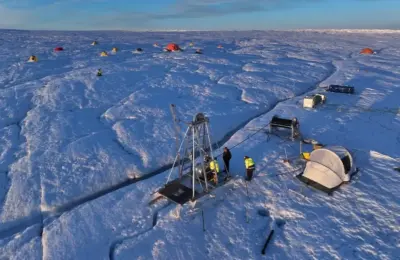
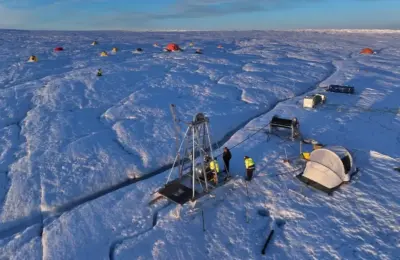
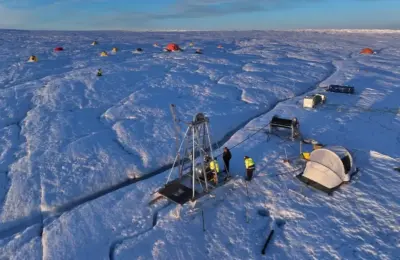
Natural sources make up the remaining 40 percent of atmospheric methane, led by wetlands, which cover roughly six percent of the Earth’s land area and account for about one-third of total global emissions. Waterlogged, oxygen-deprived soils create optimal conditions for archaea, and a warming climate has begun accelerating these natural emissions through positive feedback loops. Oceans, geological seeps, termites, and thawing permafrost contribute the remainder. As Arctic temperatures rise, thawing permafrost and Boreal ecosystems are releasing increasing amounts of stored carbon and methane, threatening to unlock massive ancient reserves.

The expansion of fossil fuel infrastructure, particularly liquefied natural gas exports, continues to complicate global mitigation efforts. Proponents have long framed natural gas as a transition or "bridge" fuel away from coal, citing its lower carbon dioxide emissions during combustion. However, this argument frequently overlooks upstream methane leaks. Studies indicate that if even a fraction of gas escapes during extraction and transport, liquefied natural gas can possess a significantly greater global warming footprint than coal over a twenty-year horizon. Major buildouts of export terminals risk locking in high emissions trajectories and undermining international climate targets.
Beyond climate heating, methane reacts in the atmosphere to form ground-level ozone, a severe environmental and public health hazard that damages human lung tissue and agricultural crops. This secondary pollutant contributes to hundreds of thousands of premature deaths annually, alongside substantial crop losses. Consequently, aggressive methane mitigation delivers immediate co-benefits for human health and global food security alongside its climate stabilizing effects.

Achieving meaningful reductions will require a combination of systemic transformations and technical interventions across the energy, agricultural, and waste sectors. In agriculture, solutions range from dietary shifts and food waste reduction to the implementation of feed additives like certain seaweeds and chemical inhibitors that suppress enteric fermentation in ruminants. For fossil fuels, rapid phase-outs of traditional infrastructure must be paired with rigorous leak detection and repair programs, the installation of zero-emission equipment, and the proper capping of abandoned wells. Waste management strategies emphasize moving toward circular economies, expanding municipal composting, upgrading wastewater treatment facilities, and capturing biogas from landfills.
International recognition of these challenges led to the launch of the Global Methane Pledge at the 2021 United Nations climate conference, where participating nations agreed to cut global emissions by 30 percent below 2020 levels by the end of the decade. Despite these diplomatic commitments, monitoring data indicates that global emissions continue to rise, highlighting a persistent implementation gap between national pledges and operational realities on the ground. As policymakers and communities confront the dual imperatives of climate stabilization and public health protection, addressing the multifaceted drivers of methane emissions remains one of the most critical and urgent challenges of the modern era.