

Organizing an event on the scale of the Maker Faire Bay Area is an undertaking that requires immense dedication, coordination, and creative energy. Comparing the logistical challenge to planning a massive wedding for more than 20,000 guests, organizers noted that even after two decades of producing the iconic festival, the core motivation remains unchanged. That driving force is found directly in the energized faces of attendees and the passionate community of makers who bring the venue to life year after year.
As the milestone 2026 edition opened its gates, the event drew a fantastic turnout. Both veteran participants and first-time makers flooded the venue, generating an atmosphere of enthusiasm that far exceeded standard expectations. Featuring more than 300 distinct exhibits on opening day alone, the festival once again showcased the ingenuity, technical skill, and whimsical artistry that have defined the global maker movement for the last twenty years. Among the vast army of creators driving this year’s event forward, several standout exhibits captured the imagination of the opening-day crowds.
Udder Mayhem
Blending rhythm gaming with an unconventional mechanical interface, "Udder Mayhem" emerged as an immediate crowd favorite on opening day. Designed as an alternative controller rhythm game, the attraction challenges players to step into the shoes of a busy barista preparing café lattes. Rather than traditional buttons or joysticks, players must squeeze four silicone udder teats in precise synchronization with a driving beat.
The exhibit proved so compelling that visitors repeatedly returned throughout the day to defend their high scores and refine their virtual coffee-making technique. Beneath its humorous exterior, the project relies on robust engineering. The game programming was developed using the Unity platform, while the distinctive custom controller was built utilizing a Teensy 4.1 microcontroller, demonstrating the clever integration of software and hardware typical of the maker community.

Tiny Robot Soccer
For attendees looking for fast-paced competitive action, Tiny Robot Soccer offered a high-energy arena where friends could challenge one another using innovative miniature machines. Visitors squared off in teams of two on a specialized miniature soccer field, steering palm-sized robots via classic retro game controllers.
The machines powering the competition are known as Sesame robots. Designed entirely from scratch by creator Dorian Todd, the palm-sized quadruped robots have already achieved significant digital renown, gathering more than 1.1 million combined views across YouTube. At the Maker Faire exhibit, spectators could follow the action via a real-time dynamic camera view projected onto a large overhead screen, complete with live scoring and visual effects.

For those wanting a hands-on experience, a dedicated testing zone allowed visitors to test-drive the Sesame robots directly. In an inclusive touch, participants were also invited to bring their own mini robots to the field, provided they were non-combat units weighing under two pounds, to see how their creations stacked up against the Sesame lineup. While no formal tournaments were scheduled for the opening day, participating builders walked away with custom keychains, alongside plenty of free stickers and festival swag distributed at the booth.
Bay Area Droid Builders
No gathering of technology enthusiasts would be complete without iconic representations of science fiction cinema. The Bay Area Droid Builders returned to the festival with their trademark dedication to crafting beloved robotic characters from the Star Wars universe.

Comprising an eclectic community of passionate builders, the group regularly exchanges technical information, fabrication strategies, and design ideas centered around constructing detailed replicas of droids such as R2-D2 and BB-8. Beyond displaying their intricate creations, the group maintains an active presence in the local community by participating in educational outreach and charitable events. True to form, the droids on display featured ongoing upgrades, incorporating increasingly movie-accurate movements, sounds, and visual details that delighted fans of all ages.
Sculptures and Ships
Art and maritime history occupied a prominent space on opening day, bridging modern engineering aesthetics with classical craftsmanship. Among the visual centerpieces was "Nebula Rider," a larger-than-life, non-mechanical pegasus sculpture created by metal sculptor Adrian Landon. Fabricated primarily from stainless steel—a material chosen by the artist for its infinite possibilities and immediate execution—the sculpture is designed to evoke effortless fluid motion and a sense of pure bliss, elevating viewers to an altered state through monumental form.

Shifting from celestial flight to maritime heritage, visitors could also step aboard the historic sailing vessel C.A. Thayer. Educators from the San Francisco National Maritime Park Association guided attendees back in time, offering a vivid look at the realities of the historic age of sail and life along the Barbary Coast during the height of California’s Gold Rush.
The Cuttlefish Art Car and Flash the Tortoise
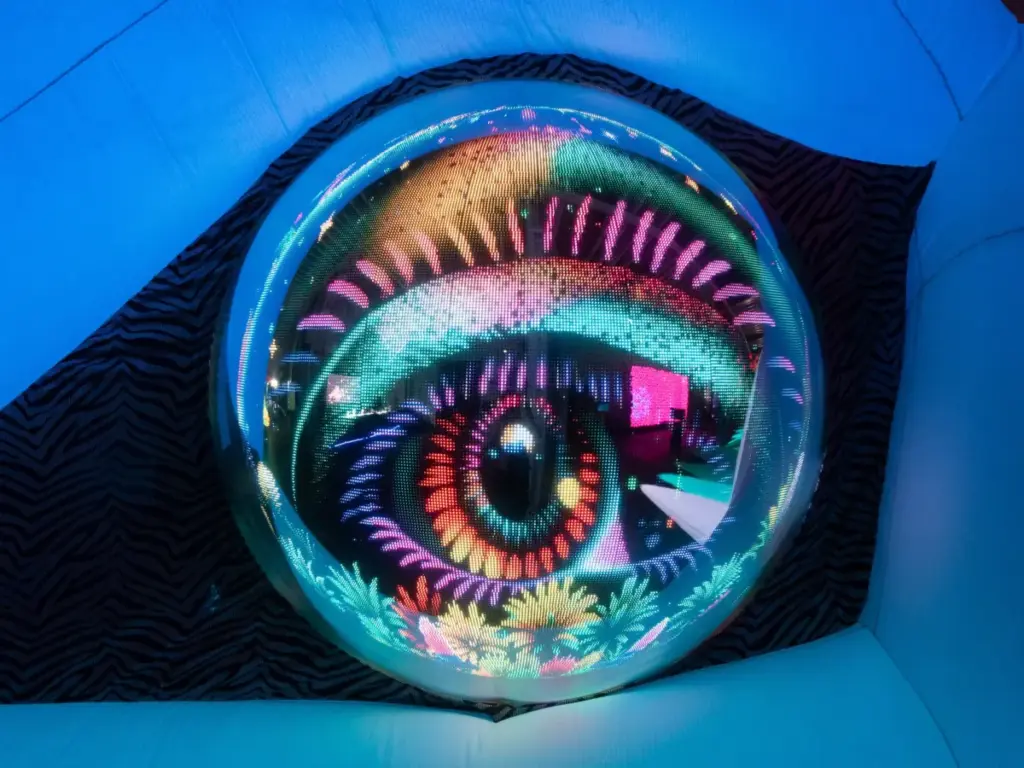
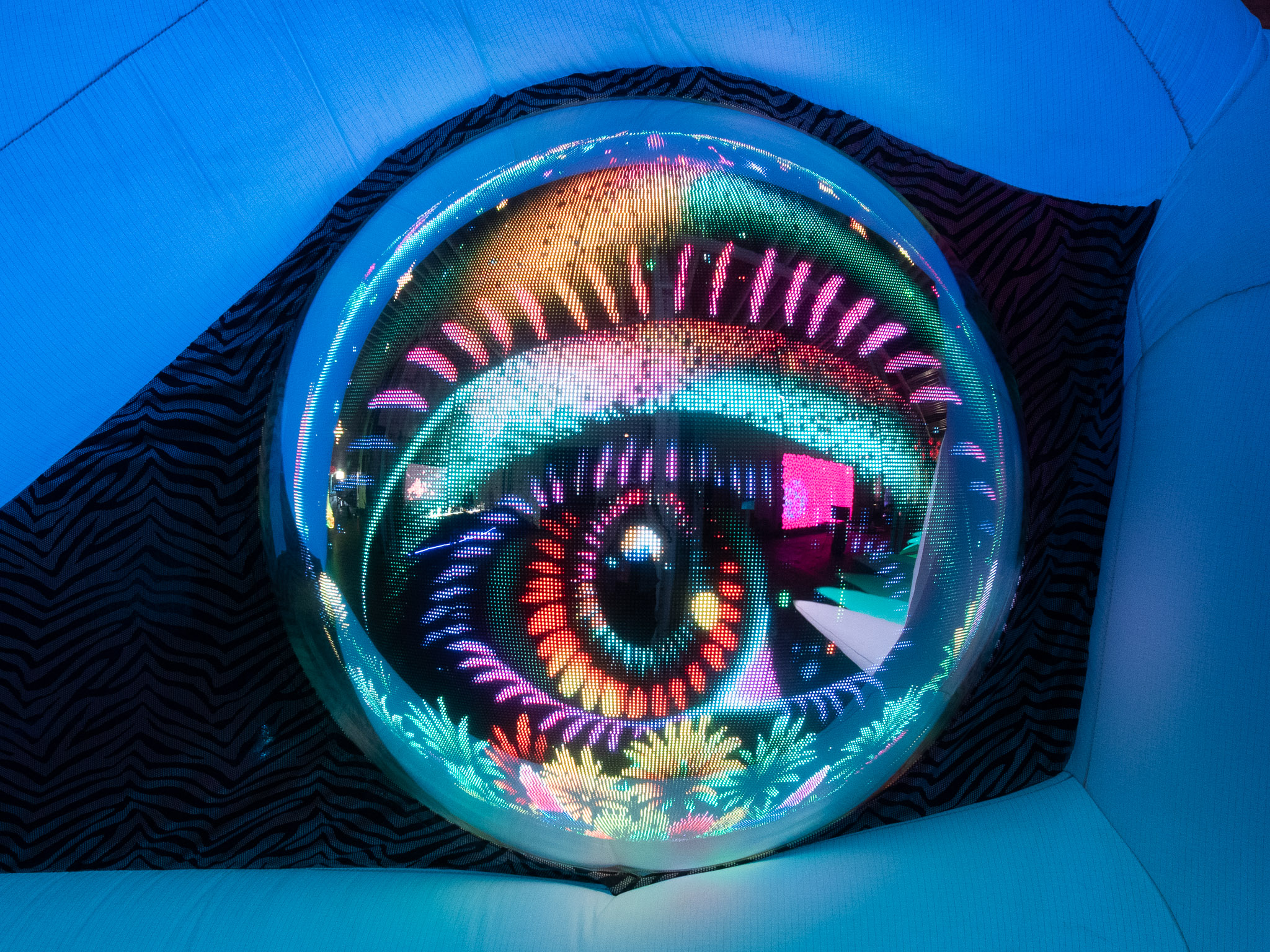
Large-scale kinetic art and interactive installations rounded out the opening day highlights, anchored by an immersive dark room experience. "The Cuttlefish" served as a striking visual landmark: a 35-foot-long animatronic, inflatable, and illuminated cephalopod art car. It was joined by "Flash the Tortoise," a similarly illuminated, mobile tortoise constructed from custom-formed HDPE paneling.

Inside the dark room, visitors were given direct control over the ambient environment. By playing either a piano or a drum set, attendees could dynamically manipulate the lighting systems embedded within the installation, merging musical performance with interactive sculpture to close out a vibrant opening day for the 2026 Maker Faire Bay Area.