Why do some new skills seem to click almost instantly while others remain frustratingly difficult even after repeated practice? For decades, educators, coaches, and neuroscientists alike have grappled with this fundamental question, often attributing the disparity to varying degrees of natural talent, focused effort, or cognitive aptitude. However, emerging research suggests that the secret to mastering a new ability may involve a far more complex biological equation. The difference may depend heavily on whether the brain is in the optimal physiological condition to transform fleeting practice sessions into lasting, durable memory.
In a recent study published in iScience on August 25, 2026, researchers at Tohoku University who specialize in super-network brain physiology have uncovered compelling evidence that learning does not happen independently of the rest of the body. Internal organs are in a state of constant communication with the brain, sending a steady stream of information and physiological cues through the vagus nerve, which serves as one of the nervous system’s major communication pathways. By demonstrating in mice that stimulating this vital nerve immediately after training can significantly strengthen long-term motor learning, the research team has highlighted a previously overlooked role for body-to-brain communication in helping new skills persist over time.
The Vagus Nerve and Learning
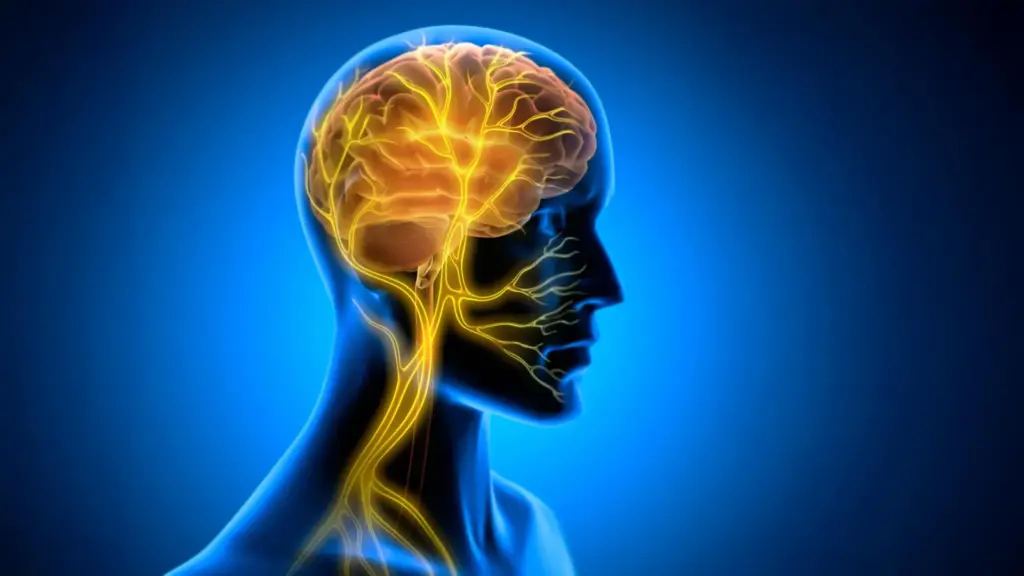
Serving as a major information highway between the brain and the body, the vagus nerve performs a continuous balancing act. It carries sensory signals upward from internal organs to the brain while simultaneously transmitting regulatory instructions downward from the brain back to those same organs. Because of its extensive reach and influence, scientists have long studied ways to intentionally influence this pathway using vagus nerve stimulation, a technique commonly known as VNS. This clinical intervention is already approved for treating several medical disorders, offering a direct window into modulating neural circuitry.
Earlier research into VNS has primarily explored its potential as a form of neuromodulation, focusing on how electrical impulses can alter activity within various neurotransmitter systems in the central nervous system. However, the new findings from Tohoku University suggest that there may be another vital and previously underappreciated mechanism at play: the induction of rhythmic changes in blood vessels located deep inside the brain.
To investigate this physiological possibility with precision, the research team engineered a specialized, small cuff electrode designed to remain securely attached to the left cervical vagus nerve in mice. With this apparatus in place, the scientists tested the effects of VNS during a specific behavioral task known as horizontal optokinetic response (HOKR) learning. This particular task relies heavily on the cerebellum and involves teaching mice to improve their reflexive ability to smoothly track moving visual stripes. The response is remarkably similar to the automatic, stabilizing eye movements a human makes while standing on a platform and watching a commuter train glide past.
The Biggest Effect Appeared After Practice
One of the most intriguing aspects of the study involved the timing of the intervention. Rather than applying VNS while the mice were actively engaged in the learning task, the researchers administered the stimulation exclusively after each training session concluded. Curiously, the stimulation did not produce an immediate, miraculous improvement in performance while the animals were actively working through the training trials. Instead, the true benefits of the intervention remained hidden until later.
On the days following the training sessions, mice that had received the post-training VNS demonstrated markedly stronger long-term learning outcomes compared to control groups. This distinct temporal pattern strongly suggests that the electrical stimulation influences the critical consolidation phase—the period that occurs after practice has ended, during which the brain actively processes and solidifies newly acquired information into more permanent structural and functional memory traces.
"The key point is that VNS was delivered only after training," explains Professor Ko Matsui, highlighting the precise timing that governed the experiment. "Our findings suggest that VNS may open a hidden window of opportunity for enhanced learning by making the brain environment more receptive to long-lasting change."
Rhythmic Changes in Brain Blood Volume
Eager to understand the biological mechanisms driving this delayed enhancement, the research team looked deeper inside the brain to identify physiological changes that might accompany improved learning capabilities. They focused their investigative efforts on measuring blood volume activity in the immediate vicinity of the cerebellar flocculus, a localized region of the brain that plays a critical role in mediating HOKR learning.
Utilizing advanced fiber photometry techniques, the researchers discovered that a single round of vagus nerve stimulation produced a distinct, two-phase vascular response. Initially, local blood volume within the targeted brain region briefly decreased before rising significantly after a short delay. Furthermore, when the team administered repeated rounds of VNS, this pattern evolved, creating distinct rhythmic oscillations in blood volume throughout the area.
Crucially, these vascular rhythms appeared to be directly linked to behavioral success. Mice that exhibited larger and more pronounced blood volume oscillations generally displayed superior learning performance by the fifth day of the experiment. This correlation strongly suggests that alterations in the brain’s local vascular and metabolic environment could be intimately connected to the long-lasting, plastic effects of the nerve stimulation.
"Our brains may be more strongly influenced by the body than we imagine," notes lead author Junyu Chen, reflecting on the broader implications of the data. "By tuning the brain’s metabolic environment, including rhythmic vascular movements, we may eventually unlock capacities that would otherwise remain latent."
Exploring the Brain-Body Connection
As the scientific community continues to digest these insights, researchers are already looking toward the horizon to map out the next phases of investigation. Future research efforts will focus heavily on refining stimulation protocols and determining with greater precision the exact cellular and molecular mechanisms through which communication between the body and the brain supports long-term neuroplasticity.
By studying this intricate, two-way communication pathway in much greater detail, scientists hope to gain a comprehensive understanding of how transient experiences are transformed into permanent knowledge, and how medical science might eventually harness these natural mechanisms to enhance human learning and recovery processes.