

When people think of Pyrex, the image that typically comes to mind is functional, everyday kitchenware: sturdy glass measuring cups, clear mixing bowls, and dependable casserole dishes designed to handle the daily demands of home cooking. If there is one undeniable truth about the brand’s enduring identity, it is that its products somehow found their way into nearly every American household. Even today, a full century after the brand first began cementing its place in kitchens across the country, it feels almost impossible to imagine a domestic space completely devoid of Pyrex.
Long before the modern waves of minimalism took over contemporary home design and kitchenware transitioned toward sleek, sterile aesthetics, domestic spaces were filled with colorful, kitschy items. These midcentury goods were often engineered to last a lifetime, built with durability in mind so they could eventually be passed down from generation to generation like family heirlooms. That shift toward vibrant kitchen design accelerated in 1945, when Pyrex boldly introduced color to its versatile repertoire through the launch of its Opal Ware line. This pivotal collection introduced striking new hues and whimsical patterned pieces that forever changed how people viewed utilitarian kitchen items.
Between the 1950s and the 1970s, a myriad of distinct collections emerged from the brand, capturing the cultural zeitgeist of post-war America. Among the most memorable and enduring was the Gooseberry pattern, which officially debuted in 1957. Characterized by its delicate illustrations of gooseberry vines and leaves, the design quickly became one of the brand’s signature motifs. Alongside other highly sought-after designs like the charming Butterprint pattern, the Gooseberry aesthetic was chosen to adorn the revolutionary Cinderella Bowls. Released as a line of nesting bowls, the Cinderella series combined a convenient handle on one side with a matching pouring spout on the other, making the kitchen vessels exceptionally versatile for mixing, pouring, and serving.
The Gooseberry line was primarily sold in sets featuring alternating pink and white dishes, capturing the pastel-heavy interior design trends of the late 1950s. Although a less common black-and-yellow version was manufactured and sold for a significantly shorter period, it is the pink variation that has truly captured the public imagination. By 1966, the Gooseberry design was discontinued altogether, ending its relatively brief production run. However, its distinctive midcentury aesthetic, limited availability, and direct association with the iconic Cinderella Bowl line ultimately helped cement Pink Gooseberry dishes as some of the most valuable and coveted pieces in the entire vintage Pyrex catalog.
How much is vintage Pyrex worth?
In recent years, a massive cultural resurgence in thrifting and collecting colorful retro cookware has swept across generations, and vintage Pyrex remains extraordinarily high on the list of in-demand items. Much of this modern appeal is deeply rooted in nostalgia. These iconic dishes, which are no longer manufactured in their original formulations, tell the tangible story of a company woven intricately into America’s collective memory. The brand remains deeply beloved by vintage enthusiasts, dedicated interior designers, and passionate collectors, with entire online communities, dedicated websites, and specialized forums devoted entirely to archiving its products and charting its rich corporate history.
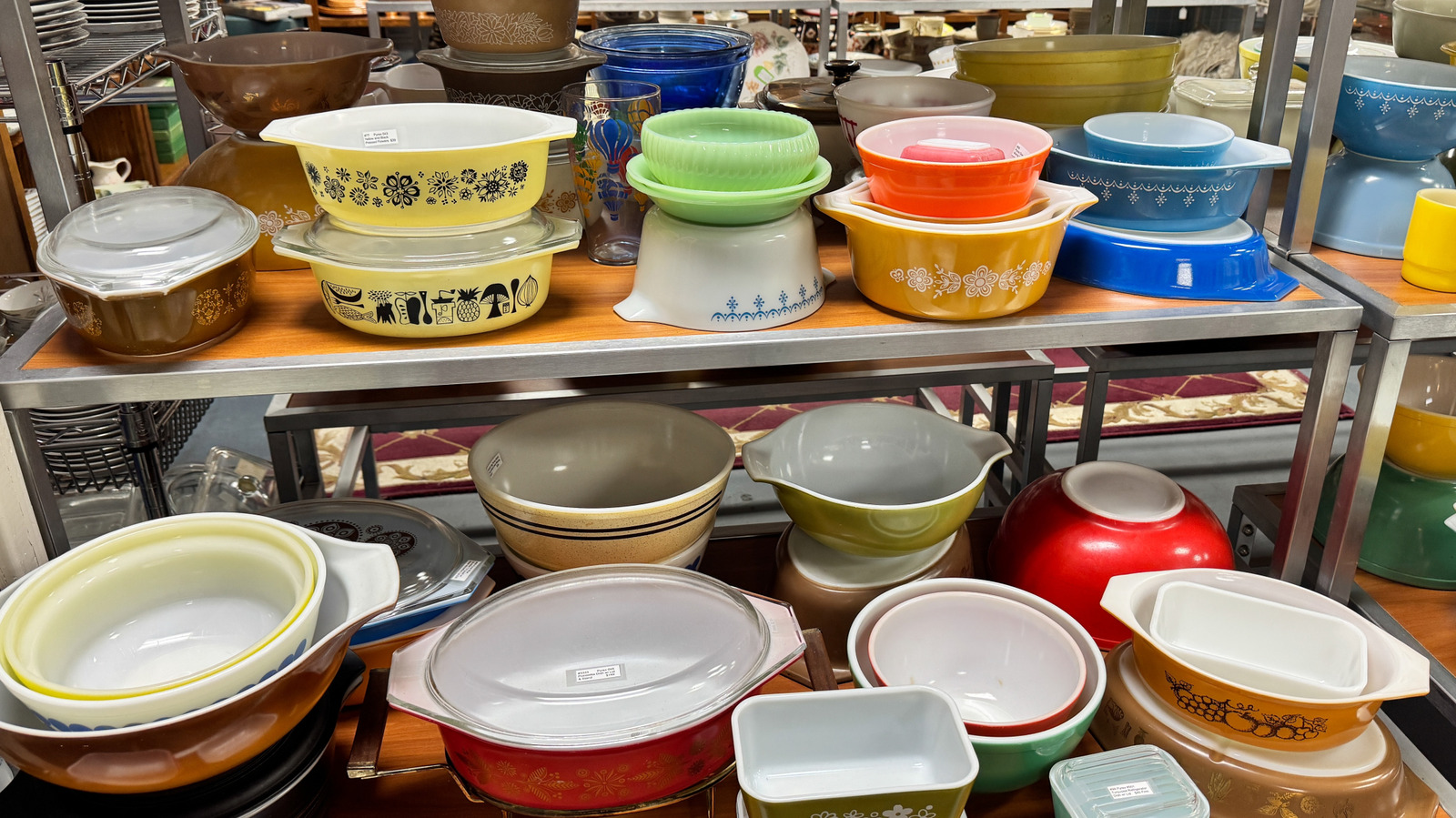
Because many of these colorful sets were originally mass-produced and sold as ordinary, everyday kitchenware rather than high-end collectibles, pieces still occasionally surface unexpectedly at local flea markets, estate sales, and neighborhood thrift stores. However, as public awareness regarding their true financial and historical value has skyrocketed, authentic pieces are increasingly surfacing on online resale platforms like eBay, where they routinely command considerable sums. For modern collectors, managing to find one of these prized pieces out in the wild at a local thrift store remains a genuine stroke of luck.
Today, authentic Pink Gooseberry Cinderella sets can command impressive resale values, often selling anywhere from $200 to an eye-watering $1,000 depending on the completeness and preservation of the collection. Many other rare and valuable vintage Pyrex pieces command similar market prices, remaining intensely prized by dedicated collectors who view them as functional pieces of art. As with any antique or vintage collectible, value is heavily dictated by condition. Complete, unused sets that still possess their original packaging, or individual bowls showing minimal fading, surface scratches, or utensil marks, consistently fetch top dollar among serious buyers.
For those looking to verify their finds, identifying authentic vintage Pyrex bowls manufactured during the 1950s involves a few key tactile and visual checks. Collectors typically start by looking at the bottom of the dish for the characteristic PYREX logo. On genuine vintage pieces, the name should appear entirely in capital letters, which serves as a historical indicator that the item was manufactured using durable borosilicate glass. This contrasts sharply with newer products sold under the modern, lowercase pyrex branding, which are typically manufactured using standard soda-lime glass. Furthermore, on authentic patterned pieces like the Gooseberry line, the delicate vine illustration should appear completely flat and smooth to the touch, rather than embossed or raised against the glass body.
Despite their remarkably humble beginnings as ordinary, workhorse cookware intended for everyday meal preparation, Pink Gooseberry sets have firmly evolved into the ultimate thrifter’s dream. Their undeniable nostalgic charm and enduring midcentury aesthetic have successfully cemented their status as iconic treasures within the broader world of vintage kitchenware and American design history.