


A beloved lunchtime staple is receiving a bold, contemporary overhaul, blending the comforting familiarity of traditional chicken salad with the vibrant, complex flavors of Vietnamese cuisine. By introducing nuoc cham—the quintessential sweet, sour, salty, and spicy dipping sauce—home cooks and culinary enthusiasts are transforming standard pulled chicken into a dish that is simultaneously refreshing, funky, and deeply satisfying. This creative fusion offers an effortless way to elevate a standard weekday meal into something dynamic and memorable, proving that classic comfort foods can successfully adapt to adventurous global flavor profiles.
At the heart of this culinary transformation is the dynamic flavor profile of nuoc cham. Traditionally served as a ubiquitous accompaniment to spring rolls, noodles, and grilled meats in Vietnamese cuisine, nuoc cham relies on a precise balance of fundamental tastes. In this reimagined chicken salad, that traditional balance is achieved through a combination of sharp fresh lime juice, savory fish sauce, finely chopped alliums, and a sharp jolt of heat delivered by thinly sliced bird’s-eye chiles, balanced gently with a touch of granulated sugar. Rather than serving the sauce entirely on the side or as a thin dressing, the recipe introduces a generous dollop of mayonnaise. This addition softens the sharp edges of the pungent fish sauce and bright citrus, creating a just-creamy-enough coating that binds the ingredients together without masking their individual brilliance.
The foundation of the dish remains wonderfully accessible, relying on convenience without sacrificing quality. Culinary experts note that pulling meat from a store-bought rotisserie chicken is the ideal shortcut for busy weeknights, offering tender, pre-cooked poultry that readily absorbs the surrounding flavors. However, for those who prefer a completely scratch-made approach, gently poaching chicken breasts provides an equally viable and tender alternative. Once the chicken is shredded and folded into the creamy, aromatic nuoc cham dressing, the primary components of the dish are complete, offering a remarkably fast route from the refrigerator to the dining table.
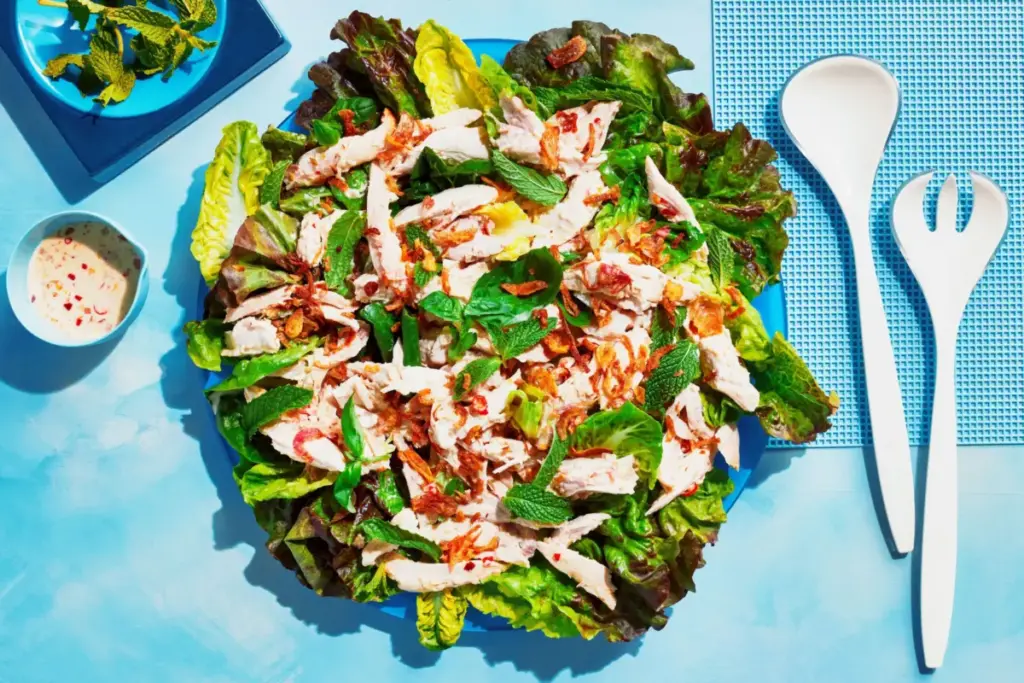
Versatility stands as one of the most compelling attributes of this flavor-forward dish, allowing it to transition seamlessly across a variety of dining contexts. While the chicken salad can be enjoyed on its own as a hearty main course, it lends itself exceptionally well to alternative presentations. Arranging the mixture inside crisp Little Gem or butter lettuce leaves creates a light yet satisfying wrap, especially when garnished with tender herbs like fresh mint and basil, alongside a generous handful of store-bought fried shallots for textural contrast.
Beyond lettuce cups, the culinary applications for this nuoc cham chicken salad stretch far beyond conventional expectations. The mixture can be piled generously onto thick slices of crusty sourdough bread for a substantial sandwich, served alongside cold soba noodles and crunchy fresh vegetables for a cooling noodle bowl, or layered over warm rice accompanied by half a ripe avocado. Because the flavors deepen as they meld together in the refrigerator, preparing an extra batch ensures a vibrant work lunch for the following day, which can be easily scooped up using a favorite brand of crackers.
This innovative take on chicken salad joins a growing catalog of contemporary twists on the classic recipe, reflecting an ongoing culinary movement toward globally inspired comfort foods. Other notable variations gaining popularity among home cooks include iterations that incorporate vibrant green herbs and tangy dairy in summer goddess styles, earthy combinations featuring crunchy cabbage, and fiery adaptations driven by red curry pastes. Yet, this particular Vietnamese-inspired version stands out for its ability to bridge the gap between heavy, comforting American deli salads and the light, herb-forward vitality of Southeast Asian cooking, offering a reliable, highly adaptable meal solution for any day of the week.