


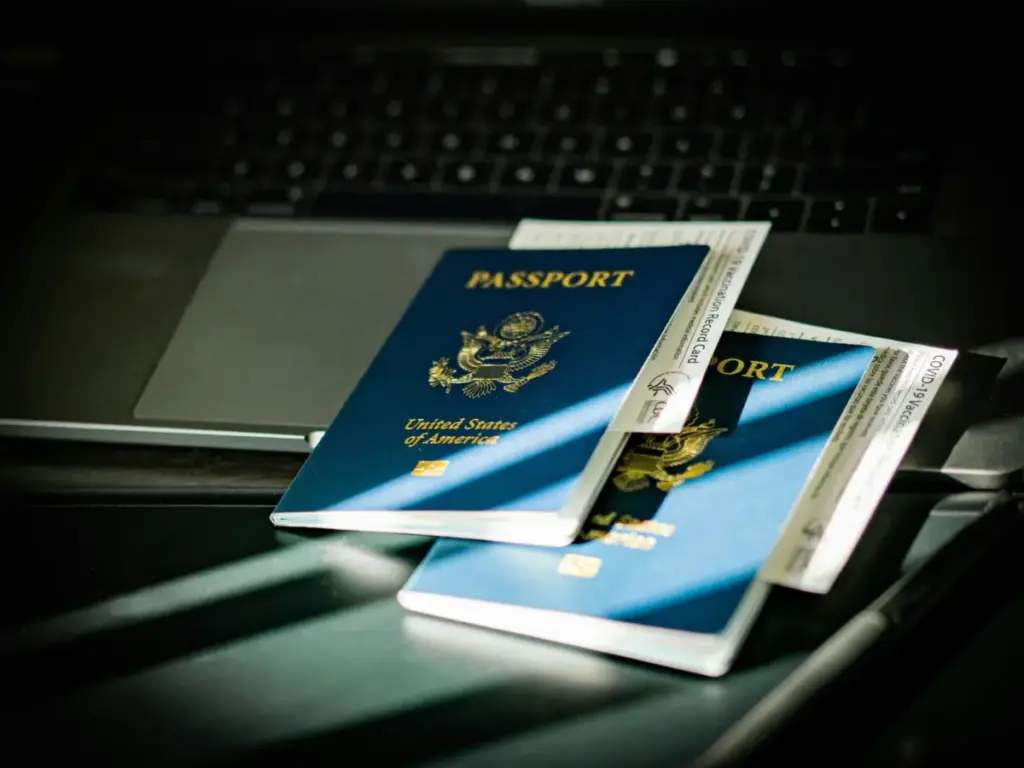
Getting an American passport is about to undergo its most significant modernization in decades, shifting away from fluorescent-lit drugstore booths and crowded post office appointments toward a completely digitized application process.
Under sweeping changes announced by Secretary of State Marco Rubio, Americans will soon be able to apply for their first-ever passport entirely online. The new digital workflow is slated to roll out through a centralized federal hub known as America.gov, aiming to eliminate the traditional administrative friction that has long defined international travel preparation. Summarizing the initiative during a public demonstration, Rubio described the incoming digitized process with absolute clarity: no printing forms, no drugstore hostage photos, no appointments, no lines, and no middlemen.
The upcoming federal portal is engineered to let first-time U.S. passport applicants handle every phase of the process from a computer or mobile device. Users will be able to complete their applications, snap or upload a compliant passport photo from home, pay all required processing fees, and continuously track their documents through to an estimated delivery date.
Yet the bureaucratic overhaul extends far beyond the digital screen. Beginning in 2028, the Department of State plans to introduce a newly redesigned passport book. The updated physical document will feature a larger, more prominent Great Seal on its cover, an internal eagle motif designed to give the illusion of flight as the pages are flipped, and a standardized 38-page format that will permanently replace the current 26-page and 50-page options.
Together, these upcoming adjustments represent a fundamental reshaping of both how millions of citizens acquire travel credentials and what those secure documents physically look like.
First-Time Passport Applications Are Moving Online
While the State Department has permitted eligible adult citizens to renew existing passports online since September 2024, first-time applicants have remained tethered to a traditional, highly manual framework. Historically, anyone seeking their initial passport book or card has been required to complete Form DS-11 and make an in-person appearance at an authorized acceptance facility, such as a local post office, public library, or municipal clerk of court.

The launch of America.gov seeks to migrate the vast majority of that friction-heavy process into a streamlined digital environment. During the September 29 unveiling, federal officials demonstrated how the new system integrates with Login.gov to guide users seamlessly through each checkpoint of the application cycle. Rather than juggling paper documents and scheduling weeks in advance, applicants will be able to input their biographical data, submit digital imagery, remit payment, and monitor processing updates in one centralized location.
Among the most visually apparent changes will be the photo submission process. Instead of traveling to an external provider to have standardized pictures taken under harsh lighting, applicants will be permitted to capture their own images using a smartphone or upload existing digital photographs.
Federal authorities emphasize, however, that convenience will not compromise regulatory standards. Strict passport-photo requirements will remain firmly in place, governing parameters such as background color, neutral facial expressions, lighting balance, head positioning, and the recency of the image. Digitally altered photographs, heavily edited portraits, and unauthorized filters will continue to be strictly prohibited. Still, officials have lightheartedly acknowledged that the flexibility allows applicants to take multiple test shots until they are satisfied with the result.
The new portal is also designed to provide unprecedented visibility into delivery timelines. Rubio noted that the platform will supply applicants with a definitive estimated delivery date, supported by a digital dashboard previewed on America.gov that outlines real-time application statuses and expected arrival milestones.
This digital transformation will be deployed in phases. Rubio indicated that the overarching goal is for the vast majority of Americans to secure online access for first-time passport book and card applications by the end of 2027. This phased rollout implies that certain specialized application categories or specific applicant demographics may not be eligible immediately upon launch. Furthermore, the State Department has yet to publish comprehensive administrative rules clarifying precisely which applicants will qualify for the initial online rollout or whether identity verification measures will still necessitate an in-person check for certain subsets of the population.
Travelers should also note that America.gov is not yet fully equipped for immediate transactional use. While the platform is currently live as an information-seeking hub powered by artificial intelligence tools, the fully realized passport application, digital form completion, and advanced tracking infrastructure are scheduled to debut throughout 2027.

The Physical Document Is Receiving a Comprehensive Redesign
Once the digital application pipeline is fully established, the physical passport book itself will undergo a comprehensive aesthetic and structural refresh. The State Department intends to begin issuing the redesigned travel documents in 2028, modifying both the exterior cover and the internal visa and entry stamp pages.
The traditional blue cover will be preserved, but the embossed Great Seal will be rendered noticeably larger and more prominent, accompanied by the repositioned text identifying the United States of America. Inside the document, a dynamic eagle motif will be integrated across the pages. When the passport is flipped through rapidly, the artwork will create an animated effect, depicting the bird in motion.
Alongside these visual updates, a significant structural modification will affect frequent international flyers. The State Department currently issues standard passport books in two distinct lengths: a thinner 26-page version and a larger 50-page version. Under the impending redesign, both options will be phased out and replaced by a single, standardized 38-page book.
For the vast majority of travelers, this change will expand available capacity. Federal data indicates that approximately 92 percent of applicants historically opt for the 26-page version, meaning standard passport holders will gain an extra dozen pages for stamps and entry visas. Conversely, frequent travelers who routinely requested the 50-page edition will no longer have that alternative. For those high-volume globetrotters, filling the pages more rapidly could necessitate more frequent passport renewals before the formal expiration date of the document.
The transition to the redesigned book will occur organically as existing federal inventory is depleted. Consequently, both the legacy and new passport designs will likely remain in circulation simultaneously for years. Current passport holders are not required to replace valid documents prematurely simply due to the introduction of the new design.
What Travelers Should Know Right Now
For individuals planning international journeys in the immediate future, operational procedures remain unchanged. Anyone applying for a first passport must continue utilizing the established in-person application channels until the State Department officially activates the digital submission features on America.gov. Meanwhile, eligible adults seeking routine renewals can continue to utilize existing digital renewal pathways.

Travelers with imminent travel plans are advised against postponing their submissions in anticipation of the upcoming portal upgrades or the 2028 book redesign. Because those developments remain months and years away, current passports will continue to be honored at international borders through their printed expiration dates.
Until the first wave of passport functionality arrives on America.gov in 2027, followed by the redesigned document rollout in 2028, travel experts recommend adhering to the foundational rule of international travel: verifying passport expiration timelines well in advance of booking flights or finalizing itineraries.
Currently, America.gov functions primarily as an official federal search engine. Users can input queries regarding federal services—ranging from passport policies and Social Security inquiries to Medicare information and address updates—and receive synthesized answers pulled directly from verified government sources. The platform utilizes advanced artificial intelligence technology, internally termed "Super Intelligence" or "SI," to interpret user intent and compile direct responses without requiring citizens to navigate across disparate agency websites. Additional transactional capabilities, including streamlined passport renewals and Medicare enrollment tools, are scheduled to be integrated into the portal as the platform’s development continues.