Biceps, quads, abs, and glutes—with an extra, persistent emphasis on the glutes—have long dominated our mental real estate and training regimens. We track them, obsess over them, and build entire athletic training blocks around their development. Yet, we rarely pause to consider the structural integrity and health of our feet. Beneath the surface lie 29 small and intricate muscles, such as the flexor digitorum brevis, quadratus plantae, and plantar interossei, working constantly beneath us. For most fitness enthusiasts and everyday movers alike, these muscles are a complete afterthought. While athletes routinely ice hamstrings, foam roll IT bands, and dedicate entire sessions to shoulder mobility, they frequently slide their feet into narrow-toed sneakers and call it a day.
This oversight is beginning to feel like a glaring blind spot in modern physical culture. The feet serve as the primary point of contact between the human body and the world. Every single step taken is an intricate neurological and muscular feedback loop. The brain constantly communicates with thousands of mechanoreceptors located on the soles of the feet, processing spatial orientation, calculating how to distribute load efficiently, and maintaining an upright posture. Because this complex system operates automatically all day long, it is remarkably easy to take for granted.
What is considerably less easy to ignore, however, is the structural cascade that occurs when that foundational system begins to break down. Dysfunction in the foot rarely remains isolated to the foot itself. Instead, it travels upward through the ankle joint, into the knee, up to the hip complex, and eventually into the spine. A tight, underused arch can easily contribute to compensation patterns that ultimately manifest as chronic knee pain, hip instability, or persistent lower back tightness.

Your Feet are Running the Show
The broader implications of foot neglect extend far beyond immediate orthopedic discomfort, drawing significant attention from longevity experts. Courtney Conley, M.D., a prominent chiropractic physician and leading expert in foot and gait mechanics, emphasizes that declining foot strength strongly correlates with reduced gait speed, an increased risk of falls, and a gradual loss of independence later in life. These are not merely isolated orthopedic concerns; they are real, measurable health outcomes that begin accumulating long before the average person thinks to pay attention.
Both contemporary physical research and longevity specialists have made it abundantly clear that foot function serves as a reliable predictor of how well an individual moves through life over time. Recognizing this reality, many fitness practitioners and writers are choosing to address foot mechanics proactively rather than waiting for a debilitating injury or chronic pain to force their hand.
Making Foot Health a Priority
To understand the practical impact of prioritizing foot mechanics, a month-long personal experiment offers valuable insight. The approach did not require extreme or highly regimented protocols, but rather a deliberate integration of foot awareness into daily life to observe the resulting changes.
The intervention began with incorporating toe spacers, typically used in the evenings while resting on the couch. The initial experience was notably uncomfortable—not painful, but featuring a distinctly unfamiliar sensation, particularly for someone with a background in high-impact sports and long-distance running. This adjustment was spurred in part by a stark visual observation of elite athletes whose toes were visibly compressed and crowded from years of rigorous training inside narrow footwear. Determined to avoid long-term structural changes, the daily use of spacers became a routine practice, especially following high-lateral-movement activities like pickleball or extended walks. Within a couple of weeks, the sensation shifted from awkward to anticipated.
Simultaneously, the experiment incorporated targeted foot-specific strength work. Despite sounding intense, this regimen consisted primarily of slow calf raises with an eccentric focus—where the lowering phase generates the most muscular work—alongside short-foot exercises, humbling attempts at independent toe movement, and barefoot balance drills. Performing many of these movements while working at a standing desk effectively eliminated logistical barriers. The primary surprise was the sheer difficulty of the isolation work, highlighting a stark deficit in training for muscles that had previously been entirely neglected.
Another major shift involved eliminating indoor house slippers. Although abandoning comfortable footwear was a reluctant sacrifice, the objective was to allow the feet more time to engage directly with the ground and activate intrinsic muscles rather than letting them idle inside cushioned mules. Living in an urban environment severely limits outdoor barefoot time outside of yoga classes, making indoor barefoot sessions one of the most accessible modifications. Training at the gym also transitioned to sock-only sessions, particularly for single-leg movements and squat variations.
Evaluating Modern Footwear
A thorough footwear audit provided further insight into daily habits. Examining the shoes worn for hours at a time—walking shoes, training shoes, and daily footwear—revealed telling patterns regarding toe box shape, cushioning volume, and structural rigidity. Modern footwear often prioritizes a specific brand of comfort that inadvertently compromises natural foot function.
Dr. Conley explains that highly cushioned running shoes can dampen sensory input from the foot’s mechanoreceptors, diminishing proprioception and creating a less stable support platform. Consequently, the brain receives degraded information regarding spatial orientation. Under heavy physical load, such as during a squat, lunge, or lateral cut on a sports court, this reduced clarity generates micro-instabilities that travel upward through the kinetic chain, affecting the ankle, knee, hip, and spine over years and decades.

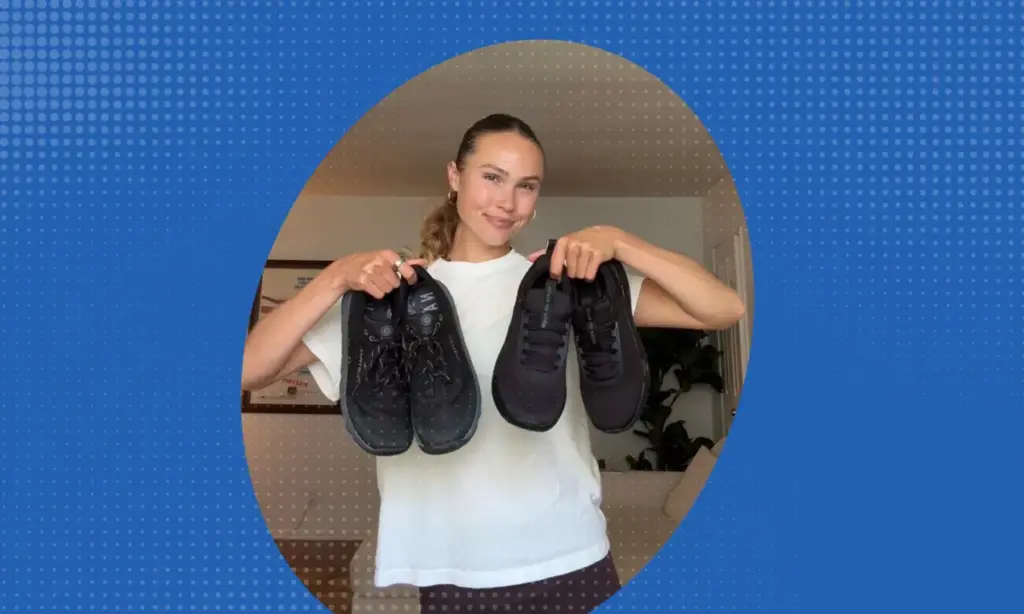
To address this, the experiment tested alternative footwear options designed to encourage natural biomechanics. The Astral TR1 Sensi HT offered a revealing introduction to wide toe boxes and zero-drop construction made with natural fibers, maximizing ground feel without sacrificing basic support. Transitioning to zero-drop shoes required a gradual, week-by-week approach to allow the feet to properly adapt after years in cushioned environments. For higher-impact days and general workouts, the While on Earth Move Trainer provided a wider toe box paired with a modest 6-millimeter heel-to-toe drop and slightly more cushioning, proving versatile enough for both gym sessions and long walks. Returning to traditional footwear afterward immediately highlighted the sensory deprivation and toe compression characteristic of conventional shoes.
Observed Changes and Real-World Impact
After a month of heightened foot awareness, the physiological adaptations were subtle yet remarkably noticeable. Stability improved significantly during single-leg exercises such as split squats and Romanian deadlifts, where balance plays a critical role. Post-activity foot fatigue notably decreased following long walks, runs, and athletic matches, while heavy barbell lifts felt more secure, grounded, and controlled.
Beyond physical metrics, the most profound transformation was cognitive. Heightened awareness of posture, weight distribution, and footwear mechanics fostered a continuous connection to movement, allowing for quicker postural adjustments when physical alignment felt compromised.
The broader lesson extends beyond personal routines. Modern fitness culture frequently directs vast amounts of energy toward visible aesthetics and performance metrics, often overlooking the 29 small muscles and 26 bones that form the literal foundation of the human body. Every athletic ambition, longevity target, and physical endeavor ultimately relies on the structural integrity of what lies underfoot.