


By Frederick Dreier
Updated September 29, 2026
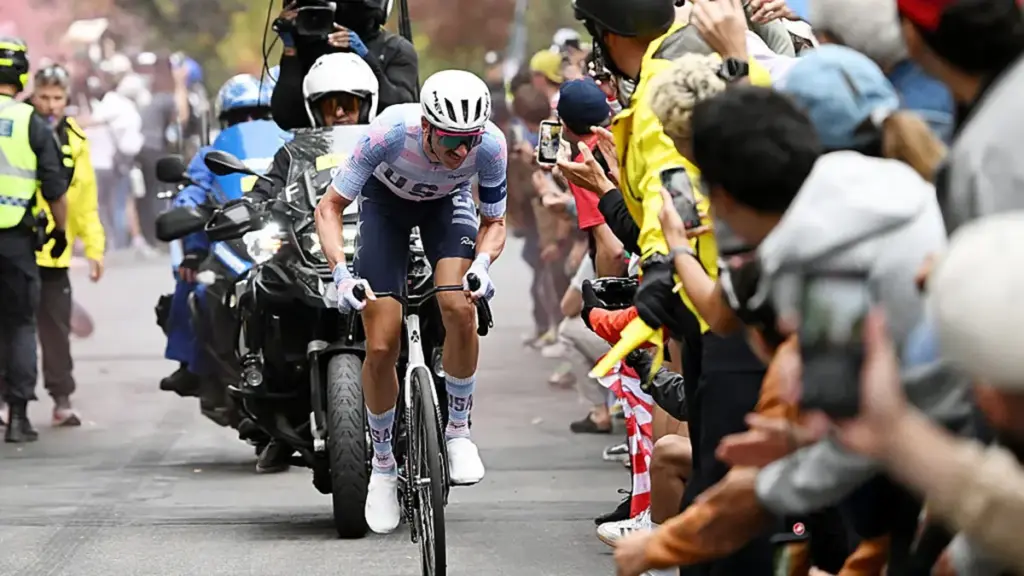
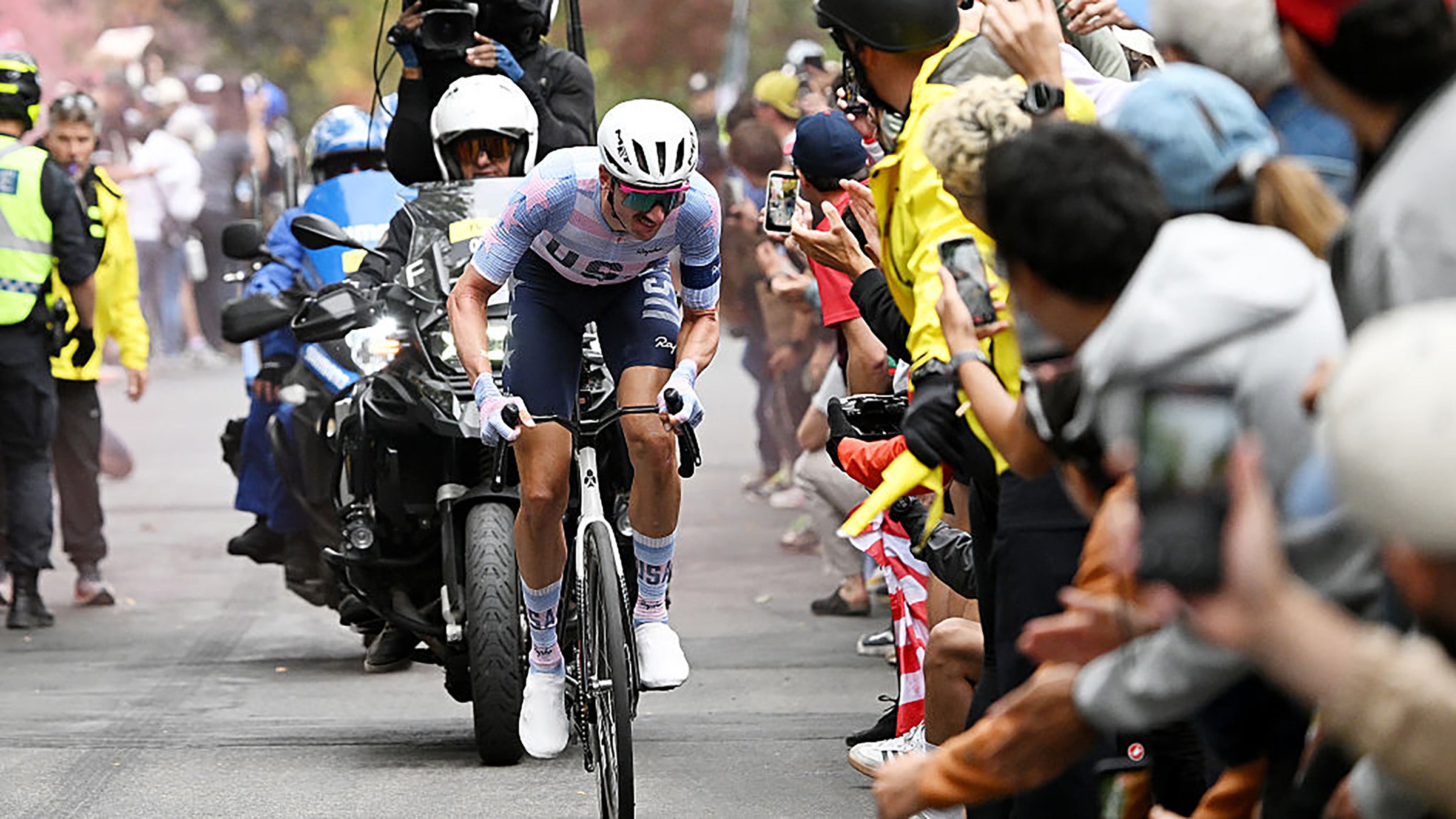
Cycling fans across the United States awoke to social media feeds flooded with celebrations on September 27, 2026, following a stunning athletic achievement in Montreal, Canada. American cyclist Brandon McNulty delivered a ride for the ages, executing a brilliant solo breakaway to capture the elite men’s road racing world championship.
McNulty secured the coveted gold medal in dramatic, nail-biting fashion during a grueling 170-mile contest. The decisive moment came when the American broke away from the main pack with 19 miles remaining, setting the stage for a desperate, white-knuckle pursuit by the world’s elite riders.
The closing miles of the race played out like a high-stakes goal-line stand in a championship football game. Multiple times, the chasing peloton closed the gap to mere seconds, making it seem less a question of whether McNulty would be caught, but rather when. Yet, every time the chasers threatened to swallow him up, the visibly exhausted American dug deep into his reserves and pushed his cadence higher.
When he finally crossed the finish line alone, his expression was a mix of sheer exhaustion and absolute disbelief, perfectly mirroring the emotions of cycling enthusiasts watching around the globe.
"I never really thought this was something possible," McNulty told reporters in the post-race press conference. "It’s absolutely crazy. It was my dream to be in the WorldTour even as a kid. But to do something like this is unbelievable."
For the dedicated community of American cycling fans, McNulty’s triumph stands as a watershed moment, comparable in significance to the 1980 U.S. men’s Olympic hockey team defeating the Soviet Union. Elite American men have historically struggled at the world championships, an annual event held in a new location near the conclusion of the professional racing calendar. Prior to Montreal, the last American man to claim the elite road title was Lance Armstrong in 1993, an era when alternative rock dominated the airwaves and Tour de France competitors still raced bare-headed.
Yet, the historic connection to Armstrong is only one chapter in the broader narrative of McNulty’s remarkable journey to the top step of the podium.
Who Is Brandon McNulty?
Long before writing for Outside, I served as the editor-in-chief of VeloNews, a print publication dedicated to professional cycling. During those years, I interviewed Brandon McNulty on numerous occasions, culminating in a comprehensive feature profile in 2017.
At the time, McNulty was a teenager—one of a select group of American wunderkinds whom national coaches hoped would guide the country back to international prominence. His father, R.J., shared photographs of a young Brandon mountain biking near their suburban home in Phoenix, Arizona, alongside stories of an unusual, innate drive for the sport.
While many children enjoy riding bicycles, very few possess an intrinsic desire to push themselves to the brink of physical exhaustion purely for personal satisfaction. When Brandon was just eight years old, his father took him on a three-mile mountain biking loop featuring a steep, punishing climb that was far too difficult for a child to clear without dismounting. When R.J. suggested they head home, the young boy became upset and refused to leave.
"He wouldn’t go home until he rode the climb," R.J. recalled during our 2017 interview. "I’m sure the other mountain bikers looked at me like I was some abusive dad forcing his kid to ride this hill. I was like, ‘It’s not me, it’s him!’"
By 2017, that youthful determination had transformed McNulty into one of the premier junior cyclists on the planet, placing him squarely on a trajectory toward the sport’s highest tier, the WorldTour. Major European teams expressed immediate interest after his victory in the junior individual time trial at the 2016 world championships—a definitive indicator of generational talent.
However, this is precisely where McNulty diverged from many of his peers. Most promising young prospects find it impossible to turn down the lucrative contracts offered by European professional squads. Yet the chasm between junior competition and the brutal European professional peloton is immense, akin to making the direct jump from high school athletics to the professional ranks. Every season, exceptionally talented teenagers rush across the Atlantic, experience severe culture shock and isolation, and ultimately burn out or quit the sport.
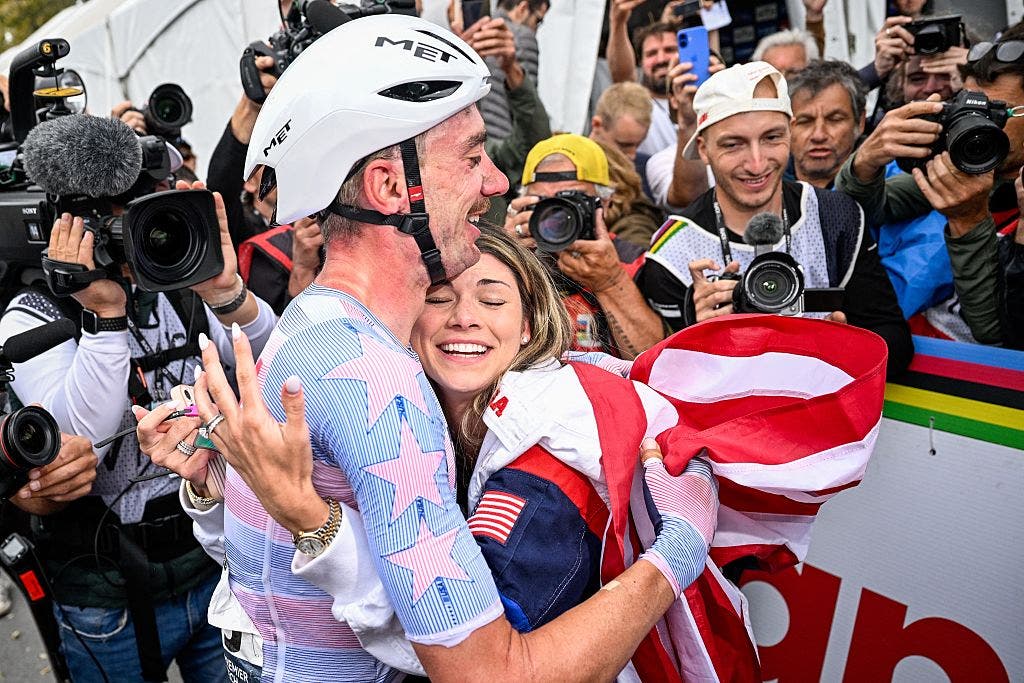
Acutely aware of these pitfalls, McNulty resisted the immediate allure of a lucrative European contract. Instead, he signed a three-year deal with a smaller American-based professional team that competed primarily in North America while occasionally dipping into European events. It was a measured, patient strategy, comparable to a basketball phenom choosing to play multiple collegiate seasons before entering the professional leagues.
"It was a really hard decision," McNulty reflected at the time. "Racing full-time in Europe is something I one day want to do. I’d rather do it slowly than jump into it."
The deliberate approach yielded dividends. Over the subsequent two seasons, McNulty evolved into a tactically astute professional. Although injuries hampered his results in 2017, he bounced back strongly in 2018 by capturing a victory on European soil. By 2019, he was consistently competing alongside and defeating some of the most established riders in the sport.
His patience ultimately validated itself. Ahead of the 2020 season, he signed with UAE Team Emirates, widely regarded as the premier squad in professional cycling and home to generational superstar Tadej Pogačar.
A Team Effort to Win the World Title
To understand the magnitude of McNulty’s victory in Montreal, one must examine the historical hurdles facing American riders at the world championships. Greg LeMond captured the rainbow jersey in 1983 and 1989, followed by Armstrong in 1993. In the decades that followed, however, elite American men largely faltered on the global stage.
Several factors contribute to this historical drought. The world championships traditionally take place at the tail end of the grueling professional season, leaving many top riders utterly depleted after competing in the Tour de France and other major tours. In certain years, top American contenders opted to skip the event entirely due to cumulative fatigue.
Furthermore, unlike standard professional races where riders compete for commercial trade teams, the world championships require athletes to represent their respective national federations. Consequently, Team USA often finds itself heavily outnumbered and out-resourced compared to powerhouse cycling nations such as Belgium, France, Italy, and the Netherlands.
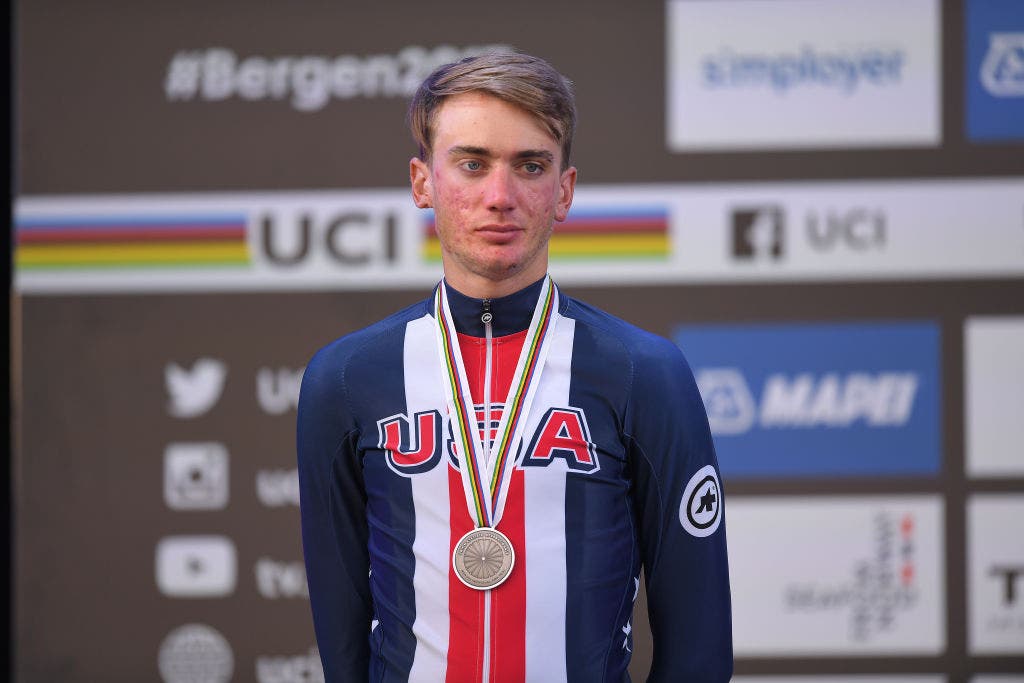
Despite these historical headwinds, signs emerged in 2026 that the American drought might finally end. At 28 years old, McNulty is part of a golden generation of American cyclists hitting their athletic peaks. Riders such as Matteo Jorgenson, 27, and Quinn Simmons, 25, have established themselves as regular fixtures in the Tour de France, alongside WorldTour veterans Riley Sheehan, Kevin Vermaerke, and Sean Quinn.
Securing a world championship, however, requires absolute selflessness and tactical cohesion. Individual riders must frequently sacrifice personal ambitions to protect and elevate a designated teammate. Team USA executed this delicate balance of intelligence and strength to perfection in Montreal.
With 45 miles remaining in the race, Simmons marked a dangerous attack launched by Dutch superstar Mathieu van der Poel, holding his wheel in an optimal position. When the field successfully neutralized that dangerous move, McNulty launched his decisive counter-attack.
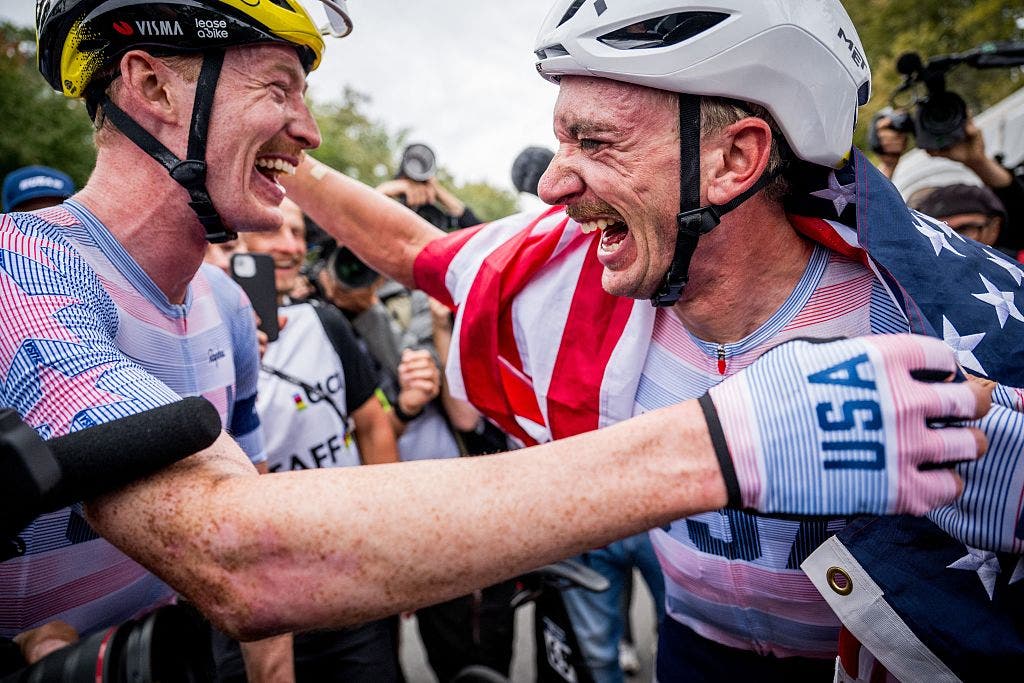
As McNulty forged ahead alone, Simmons and Jorgenson systematically disrupted the chase, shutting down subsequent counter-attacks and forcing rival nations to expend vital energy. Their disciplined, textbook team tactics successfully preserved McNulty’s dwindling advantage, culminating in the end of a 33-year championship drought.
What’s Next for McNulty?
Capturing the road world championship comes with one of the most iconic prizes in sports: the rainbow jersey. For the next twelve months, McNulty will compete in a distinctive white kit adorned with rainbow bands, making him instantly recognizable within the colorful peloton.
Beyond the prestige of the jersey, the monumental victory is unlikely to fundamentally alter McNulty’s core responsibilities within professional cycling for the 2027 season. Within the hierarchy of the sport, McNulty functions primarily as an elite domestique—a worker bee whose primary assignment is to support Tadej Pogačar, a five-time Tour de France champion.
During the grand tours, McNulty can frequently be found driving the pace at the front of the peloton on the steepest ascents of the Alps and Pyrenees, setting a tempo so punishing that most of the world’s best climbers are shed from the group before Pogačar launches his winning attacks.
While his historic performance in Montreal may earn him leadership opportunities at shorter, one-week stage races or select single-day events, his primary role at the Tour de France will likely remain unchanged.
Nevertheless, the events of September 27 permanently elevate McNulty’s status within the annals of cycling history. The UCI road world championships trace their lineage back to 1927, when the inaugural event was held on Germany’s Nürburgring racetrack. Historically, European riders have exercised near-total dominance over the race; prior to 2026, only three non-European men had ever captured the elite LeMond, Armstrong, and Australia’s Cadel Evans in 2009.
Brandon McNulty now stands proudly as the fourth, cementing his legacy in a triumph worth celebrating for years to come.