


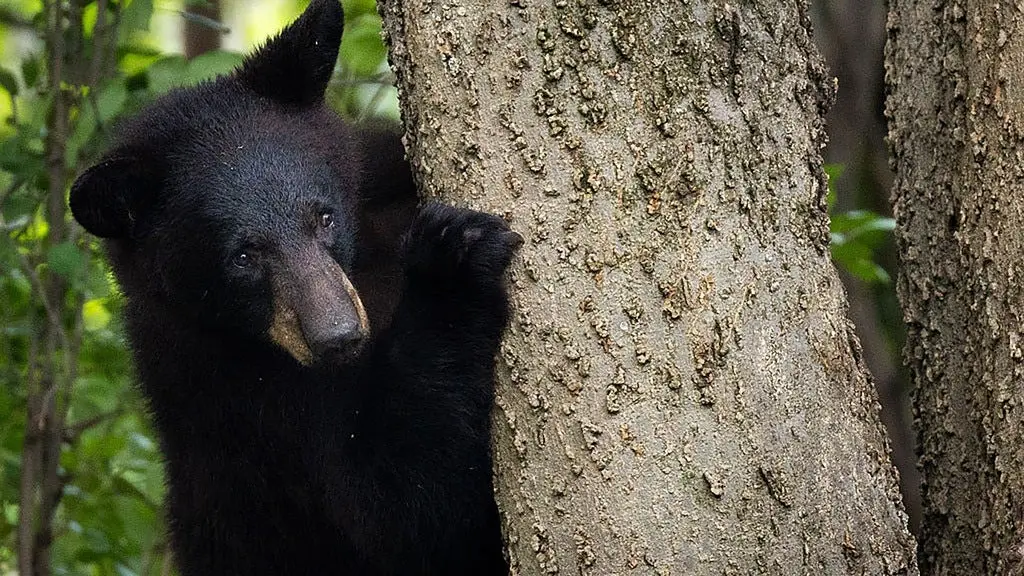
Montana state wildlife officials euthanized 14 black bears at a residential property north of Bozeman in late September, concluding that the animals had become dangerously habituated to human food and posed an immediate public safety risk.
According to an announcement released on September 29 by Montana Fish, Wildlife & Parks (FWP), state wildlife wardens responded to a report of suspected illegal bear feeding at the property. During their investigation on September 24 and 25, officials discovered 15 bears on the premises that were severely food-conditioned and had lost their natural wariness of humans.
Out of the 15 bears found at the scene, 14 were captured and euthanized. The remaining animal, a single cub, was transported to the Montana FWP’s Montana WILD facility in Helena, where officials evaluated it for potential placement at an accredited zoo.
Morgan Jacobsen, communications and education program manager at Montana FWP, noted that the sheer scale of the incident is highly unusual for the region. Speaking to Outside, Jacobsen stated that the investigation remains active and ongoing. State officials have yet to determine the exact timeline of how long the alleged feeding took place, what specific items the bears were consuming, or whether the supplemental feeding was intentional.
"This case is different from typical incidents involving bears getting into unsecured garbage or other food sources," Jacobsen said. "It involves the possibility of deliberate feeding."
Under Montana law, intentionally providing supplemental food to bears is strictly prohibited. While the investigation into the Bozeman property continues, state authorities have not yet publicly identified any individual or individuals deemed responsible for the alleged feeding activity.
What wildlife managers have definitively established is that the bears were intensely food-conditioned, a state in which wildlife learns to closely associate human presence and properties with an easily accessible, high-calorie meal. Chris Servheen, president of the Montana Wildlife Federation and a veteran grizzly bear recovery coordinator who spent 35 years with the U.S. Fish and Wildlife Service, explained that bears possess extraordinary memories when it comes to locating food sources.
"One feeding is all it takes, if there’s a significant amount of food there," Servheen told Outside. "Bears are information vacuums, and so every time they get food in a certain place, they’re going to remember that."
Servheen pointed out that a single substantial meal does not instantly transform a wild bear into a dangerous animal, but it effectively teaches the creature to return to a specific location. If food remains persistently available, bears quickly establish a routine of regularly visiting the property and eventually expanding their search to surrounding homes and neighborhoods.
Why Couldn’t the Bears Be Relocated?
While black bears frequently move through Bozeman and other mountain communities across Montana during their seasonal travels without creating conflicts, wildlife managers grow deeply concerned when animals repeatedly secure food sources around human habitations.
Incidents that routinely begin with a bear tipping over an unsecured residential garbage can can rapidly escalate into severe property damage, torn screens, and attempts by desperate or habituated animals to breach vehicles, garages, and homes. Furthermore, bears actively seeking human-provided food can display increasingly aggressive behavior toward people, though Montana FWP confirmed that no direct attacks involving the 14 euthanized bears were reported near Bozeman.
In this specific instance, Jacobsen explained that the bears demonstrated a complete lack of fear toward humans, had ceased natural foraging behaviors, and had already caused noticeable property damage. Their behavioral conditioning had become so deeply entrenched that wildlife managers ultimately determined the animals could not be safely rehabilitated or returned to the wild.
Attempting to relocate bears exhibiting this level of human habituation presents significant logistical and biological challenges, Servheen explained. Adult bears possess remarkably powerful homing instincts and are capable of traveling considerable distances across rugged terrain to return to familiar territory, particularly locations where they have previously secured food.
"Adults have a tremendous homing ability," Servheen said. "We can take them 40 miles, and they’ll be back in a couple of days."
Even in scenarios where a relocated bear remains within its newly assigned habitat, the animal faces steep survival hurdles. Wild bears acquire critical knowledge about finding natural sustenance and navigating their home ranges from a very young age, typically learning survival skills by following their mothers. Transplanting them into unfamiliar territory often leaves them struggling to locate natural food sources while simultaneously competing with established bear populations already occupying the area.
Permanent placement at an accredited zoo represents another theoretical alternative, but Jacobsen noted that Montana FWP must first identify a facility that possesses the necessary physical space and financial resources to care for the animal. In this case, wildlife officials successfully coordinated with a zoo that had the capacity to accept a young cub, but the facility lacked the space required to house an adult bear. That opening allowed Montana FWP to spare the cub and hold it temporarily at the Montana WILD facility rather than euthanizing it alongside the older bears.
According to Jacobsen, the decision to spare the cub was strictly a matter of its young age and available zoo capacity rather than any indication that it was less food-conditioned than the rest of the group. As of October 19, Jacobsen had no new updates regarding the final placement of the surviving cub.
Bear Conflicts Are Increasing Across Parts of the West
The grim discovery in Bozeman unfolds against the backdrop of an exceptionally challenging year for wildlife management agencies responding to human-bear conflicts across various parts of the American West.
In south-central Montana, state wildlife officials logged approximately 400 separate bear conflicts by late September, marking a dramatic surge compared to the roughly 175 total conflicts recorded during the entirety of 2025, according to data from Montana Public Radio. More than 200 of those conflicts were concentrated in Red Lodge alone by late August, where local authorities were similarly investigating reports of suspected intentional feeding.
Neighboring Colorado has also reported a sharp, unprecedented uptick in human-bear interactions. According to preliminary figures released by Colorado Parks and Wildlife, the agency received 8,672 reports concerning bear sightings and related incidents through August 31, compared with 3,680 reports over the same timeframe in 2025. Those comprehensive figures encompass all reported sightings as well as direct incidents.
A lack of abundant natural food availability can heavily exacerbate these seasonal encounters, particularly during the autumn months when bears enter hyperphagia, a biological period of intense, compulsive feeding. During this critical window, bears strive to consume maximum calories to accumulate essential fat reserves required to survive winter hibernation.
However, Servheen cautioned against the common assumption that bears seeking out human-provided food are necessarily starving. He compared the overwhelming appeal of an accessible, calorie-dense food source to walking directly into an ice cream parlor.
"It’s like putting yourself or myself in an ice cream store," he said. "It’s not that you’re starving, it’s just that you’re near such a good, concentrated thing to eat. Why should you go anywhere else to get food when it’s right in front of you? Even during years when natural food is plentiful, bears will take advantage of an easy meal."
How People Can Help Prevent Bear Conflicts
Mitigating these volatile situations requires far more than simply issuing public reminders urging residents not to feed wildlife, according to Alexander Metcalf, a researcher at the University of Montana who specializes in the human dimensions of wildlife management.
In a 2021 study published in the Journal of Wildlife Management, Metcalf and his research colleagues examined the complex motivations behind why Montana landowners choose to secure or neglect residential garbage and other attractants that lure bears. Their findings indicated that residents who had direct conversations with professional wildlife personnel were significantly more likely to adopt proper precautions, while the observable behavior and expectations of immediate neighbors also heavily influenced whether homeowners secured potential attractants.
"Most of them already want to do the right thing, but they’re also busy people," Metcalf told Outside. "Securing all of the attractants around your property, whether they’re put there intentionally or not, takes a lot of work, and fitting that into your busy life can be hard."
Metcalf emphasized that local communities can play a vital role by actively assisting residents in making garbage containment, fruit tree harvesting, and attractant removal more convenient, rather than depending solely on advisory warnings.
Julie Golla, a conflict prevention specialist working with People and Carnivores, a Montana-based nonprofit organization, regularly assists local residents in safeguarding their properties against bears seeking access to residential garbage, backyard chicken coops, and bird feeders. Her organization helps homeowners identify hidden attractants and implement physical deterrents, including the installation of electric fencing.
"Just because there are bears doesn’t always mean that there’s a problem," Golla told Outside.
Montana FWP strongly encourages residents to report any instances of bears accessing food sources near homes at the earliest possible stage. Jacobsen noted that prompt early intervention can frequently prevent simple food-seeking behavior from evolving into permanent, destructive habits, thereby providing wildlife managers with viable management alternatives well before euthanasia becomes the only remaining option.