


Throughout a legendary career that spanned decades, Charlton Heston achieved immortal status on the silver screen through monumental roles of epic scale. Whether he was parting the turbulent waters of the Red Sea as Moses in Cecil B. DeMille’s The Ten Commandments or gripping the reins of a chariot as the fictional prince Judah Ben-Hur in a tour-de-force performance that captured an Academy Award, Heston embodied heroism and larger-than-life dignity. Yet, despite the towering heights of his cinematic success, the actor maintained a deeply grounded perspective on his own existence. In his 1995 memoir, In the Arena, Heston reflected on the duality of being a motion picture icon, describing how early in his profession he viewed the studio soundstage as a kind of sanctuary.
"The studio was where I lived, really—where the work was," he wrote.
However, beneath the dazzling lights of Hollywood and the unrelenting demands of a public-facing career, Heston cherished something much quieter and more essential: solitude within the walls of his own home. He understood the intrinsic toll of the entertainment industry, noting that making films or plays is inescapably a collective undertaking and that those who pursue it often find themselves designated as public property.

"Still, you need time alone, all by yourself," Heston observed. "As a guy brought up in the Michigan woods, I really need it."
Born in 1923 in Evanston, Illinois, Heston was raised in the rugged backwoods of the Great Lakes State before embarking on an acting journey that would eventually lead him to establish homes across contrasting landscapes, from the bustling concrete canyons of New York City to the sprawling, sun-drenched hills of Beverly Hills. A retrospective look at his personal dwellings reveals the private chapters of a man whose domestic life evolved alongside his professional triumphs.
New York State of Mind
Long before he was commanding armies or racing chariots on international film sets, Heston’s domestic life was defined by the modest realities of early adulthood and post-war New York City. In 1944, he married Lydia Clarke, setting off on a lifelong partnership. In the early 1950s, the couple maintained an apartment in Manhattan’s Hell’s Kitchen neighborhood, a world away from the luxury estates associated with classic Hollywood stardom.

In his memoir, Heston painted a vivid picture of the residence, describing it as a classic nineteenth-century railroad flat. The dwelling required navigating four flights of walk-up stairs to reach two tiny rooms and an alcove designated for a bed, illuminated by just two narrow windows facing the street. The apartment lacked central heating, forcing the young couple to rely on the gas oven to warm the small space during cold winter months, while the summer heat offered no such relief. Despite these spartan conditions, Heston recalled the apartment as an absolute bargain at $30 a month, famously joking that the cockroaches were thrown in for free.
Feeling Thrifty
Faced with tight finances as they established their life together in Manhattan, the Hestons relied on resourcefulness and thrift to furnish their Hell’s Kitchen home. Heston wrote that they purchased some inexpensive linoleum for the kitchen and outfitted the front room with preowned carpeting sourced from secondary markets. Demonstrating practical craftsmanship, the actor built several pieces of furniture himself, constructing a bed frame integrated into two sides of the sleeping alcove, a custom closet in the corner of the kitchen, and bookshelves lining one wall of the living room.
The remainder of their furnishings came courtesy of the Salvation Army, an organization with which Heston would maintain a lifelong gratitude, eventually recording fundraising commercials for them. The actor reflected that the fundraising tapes he later produced for the charity left him still in their debt, acknowledging how the organization helped them set up a livable space to start off in during their earliest years in the city.

Movin’ Up
Heston and Clarke did not reside in the Hell’s Kitchen walk-up for long. The trajectory of Heston’s career shifted dramatically when legendary filmmaker Cecil B. DeMille cast him in what would serve as his breakthrough feature film role: circus manager Brad Braden in the 1952 box-office hit The Greatest Show on Earth. As his professional stature and financial stability grew toward the end of the 1950s, the family secured a significant domestic upgrade.
Relocating across Manhattan, the family moved into a sprawling penthouse apartment situated directly across from the United Nations headquarters. Heston described the new residence as an impressive space featuring a tiny kitchen, a massive living room anchored by a fireplace and dramatic 20-foot ceilings, two bedrooms, two private terraces, and sweeping views of the East River. Remarkably, even with the upscale amenities and prestigious location, the monthly rent remained modest, never exceeding $480.
And Baby Makes Three
The growing family soon welcomed new members. In 1955, Heston and Clarke celebrated the birth of their first child and only son, Fraser Clarke Heston. In a remarkable twist of fate, Fraser followed in his father’s footsteps before he could even walk, booking his debut acting role as the infant Moses in The Ten Commandments.

The casting came about through a direct suggestion by director Cecil B. DeMille. Months prior to production, upon learning that Lydia Clarke’s pregnancy would prevent her from traveling to Egypt for the location shoots, DeMille inquired about the baby’s due date. When informed the child was expected in February, the director immediately noted that the baby Moses scenes were scheduled to be filmed just three months later, proposing that if the baby turned out to be a boy, he could take the part. Shortly after Fraser was born, the family received a telegram from DeMille containing a simple and definitive message of congratulations confirming the newborn’s casting.
Family Man
The family expanded further in 1961 when Heston and Clarke welcomed their second child, Holly Ann Heston, through adoption. Writing in his memoir, Heston captured the immediate and profound bond they felt, noting that they brought Holly home on the second day of her life and that she was instantly and forever theirs. The actor also offered candid and affectionate reflections on the distinct emotional dynamics of parenting a son versus a daughter, observing that while a father’s love for a son involves a shared identity and the desire for the child to surpass him, the affection a man holds for his daughter is characterized by a unique, helpless devotion.
A Move to California
As production on the 1958 film The Big Country drew to a close, Heston recognized that his growing family required a vastly different environment—one that offered space and a connection to nature reminiscent of his own upbringing in the Michigan woods. He wanted room for young Fraser to run freely in an open landscape.

His search led him to a remarkable discovery: a small ridge spanning less than three acres, positioned just a seven-minute drive from the iconic Beverly Hills Hotel. Encircled by roughly 800 acres of untamed land that served as a natural habitat for local wildlife, including raccoons, hawks, and deer, the Coldwater Canyon landscape captivated the actor. Impressed by the seclusion and natural beauty of the site, Heston purchased the property the very day he saw it, deciding to build a custom home from the ground up.
“The House That Ben-Hur Built”
To bring his vision to life, Heston enlisted architect Bill Beckett. In his memoir, Heston recalled how Beckett immersed himself in the project, bringing over several dozen issues of Architectural Digest for the couple to review and spending an entire day and night sleeping in a sleeping bag directly on the ridge to study the movement of natural light and the contours of the land.
According to reports from the Wall Street Journal, construction on the modernist residence commenced while Heston was away filming Ben-Hur and reached completion just as production wrapped. Fraser Heston later shared that his father always referred to the property as the house that Ben-Hur built. The expansive estate featured a main residence containing four bedrooms, staff quarters, and a dramatic two-story library, alongside luxury amenities including a private screening room, a photography studio, a swimming pool, and a tennis court.

Alone Time at “The Ridge”
For Heston, the Beverly Hills sanctuary served as an essential retreat from the relentless pressures of the entertainment industry, providing the solitude he so deeply valued. Writing in his memoir, he emphasized how much he loved the ridge, noting that the surrounding hundreds of acres of canyon remained largely untouched, resembling the way they were originally created.
The estate’s comprehensive amenities allowed him to manage professional obligations without sacrificing his privacy. He noted that he had conducted live satellite television interviews from the property, linking him directly to broadcasting studios in London. For Heston, leaving the ridge was reserved only for critical meetings or the active execution of his craft on a film or play set.
Earning His Keep
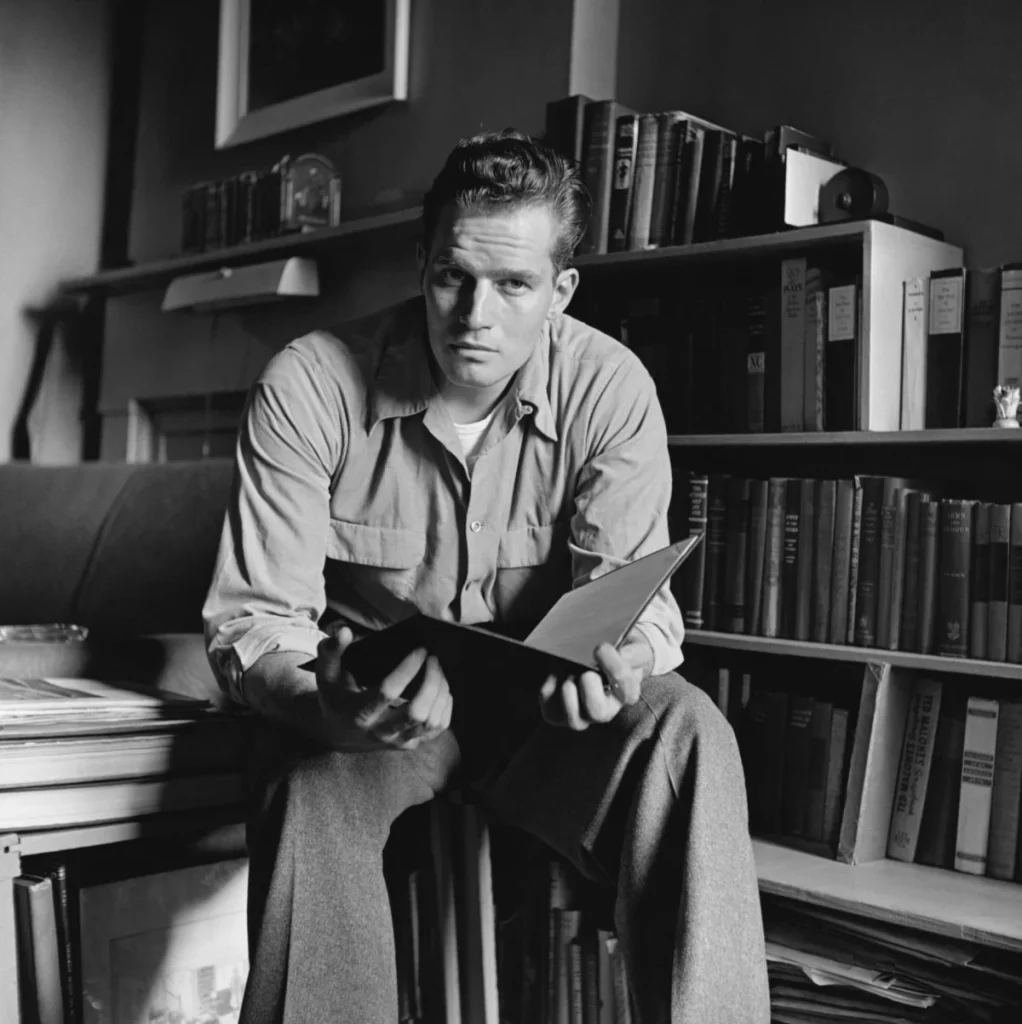
Photographed over the years in his natural element at home—frequently captured relaxing in a director’s chair or against the backdrop of vintage international movie posters for projects like his 1958 film Touch of Evil—Heston remained acutely aware of the responsibilities required to maintain his family’s lifestyle. In his memoir, he reflected on how the joys of his completed family and the sanctuary of the ridge deepened his determination to secure their future, a commitment that translated into reading numerous scripts and maintaining a vigorous professional output.

Forever Home
Heston continued to reside at the Beverly Hills estate for the remainder of his life until his death in 2008 at the age of 84, following complications from pneumonia. Years later, in 2015, the property was listed on the market for $12.25 million. Fraser Heston told the Wall Street Journal that choosing to sell the family home was a difficult decision, but noted that with his mother, Lydia—who passed away in 2018—no longer living there, the family felt it was the right time to part ways with the historic estate.
Subsequent ownership saw the property acquired by French film director Luc Besson, who later listed it for $14.9 million in 2020. The midcentury architectural landmark returned to the real estate market, underscoring the enduring legacy of a home built on the triumphs of Hollywood’s golden era and the personal sanctuary of one of its defining icons.