


You have put in the exhausting, deliberate work. Perhaps you finally found the courage to start regular therapy sessions, carefully adjusted your pharmaceutical regimen with your psychiatrist, or systematically addressed the chronic stress that was quietly running your life into the ground. Eventually, the acute panic attacks began to subside, the heavy, suffocating cloud of depression started to lift, and by almost any standard clinical measure, you are better.
So why does everything still feel so remarkably flat?
If you have noticed that your core anxiety or depression symptoms have noticeably improved, but you still cannot seem to feel genuinely excited, motivated, or capable of experiencing authentic happiness, you are certainly not imagining things. Groundbreaking new research suggests that reducing negative emotional states and actively restoring positive ones are two entirely separate psychological processes, and the vast majority of contemporary mental health treatments only address one half of that complex equation.
What Is Anhedonia—and Why You Might Not Realize You Have It
Anhedonia is the clinical terminology used by psychologists and psychiatrists to describe a diminished capacity to experience pleasure, interest, or motivation. Unlike sadness, which is an active, often overwhelming emotional state characterized by tears or grief, anhedonia is much more akin to a profound absence. The hobbies, creative pursuits, social interactions, and small daily pleasures that once used to light you up inside simply leave you feeling indifferent.
Within modern clinical research, anhedonia is increasingly recognized as a transdiagnostic feature, meaning it routinely appears across a wide array of psychological conditions, including major depressive disorder, generalized anxiety disorders, post-traumatic stress disorder, and severe professional or emotional burnout. Researchers describe it as encompassing profound motivational and affective deficits, which include a heavily reduced capacity to experience interest and pleasure in response to stimuli that are typically rewarding to the human brain.
In everyday life, anhedonia can manifest subtly. You might lose interest in listening to your favorite music, find yourself indifferent to eating food you once loved, or feel a pervasive sense of apathy toward professional milestones and social invitations. The truly tricky part is that anhedonia often flies completely under the radar. Individuals frequently assume they are simply exhausted, chronically stressed, or constitutionally "not a feelings person." But when genuine joy, spontaneous excitement, and intrinsic motivation quietly disappear from your baseline emotional landscape, researchers argue that it is a sign that demands clinical attention.
Why a Reward-Focused Therapy Outperformed Traditional Approaches
To better understand and combat this phenomenon, a recent clinical study evaluated a novel psychological intervention known as Positive Affect Treatment, or PAT. This therapeutic approach was designed specifically to rebuild the human brain’s neural capacity for reward and positive emotion, rather than merely focusing on the reduction of psychological distress.
The researchers recruited 98 adult participants who presented with severely low levels of positive affect alongside moderate-to-severe symptoms of clinical depression or anxiety. These individuals were then randomly assigned to receive either the new Positive Affect Treatment or a traditional comparison therapy known as Negative Affect Treatment, which focused heavily on traditional methods of reducing threat responses through systematic exposure, cognitive restructuring, and physiological arousal reduction. Both patient groups completed an intensive course of 15 weekly individual therapy sessions.
When the clinical data was analyzed, the findings revealed that Positive Affect Treatment produced greater overall clinical improvement compared to the traditional approach, with these therapeutic benefits successfully maintained at a one-month follow-up evaluation. This distinct advantage was driven primarily by greater overall reductions in depression and anxiety symptoms among the participants who received the reward-focused intervention.

Interestingly, improvements in interviewer-rated anhedonia and self-reported positive affect did not drastically differ between the two treatments when measured directly, suggesting that both clinical approaches can move the needle on those specific outcomes if they are explicitly targeted and assessed. However, what sets Positive Affect Treatment apart is its unique structural focus on three distinct phases of human reward processing: anticipating future positive events, actively experiencing rewarding moments in real-time, and effectively retaining those positive emotional memories for the future.
The study’s authors noted that conventional pharmacological interventions and psychological therapies have historically focused primarily on negative affect, while demonstrating remarkably limited efficacy in achieving true clinical remission of anhedonia. In standard clinical practice, this critical dimension of mental health is frequently left completely unaddressed by traditional treatment plans.
Negative and Positive Emotions Run on Separate Tracks
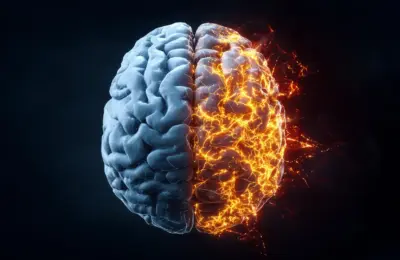
The foundational insight emerging from this line of research is that negative emotions and positive emotions operate on fundamentally different, parallel systems within the human brain.
Successfully reducing feelings of anxiety, persistent fear, or profound sadness does not automatically or magically restore an individual’s innate ability to experience joy, motivation, or deep pleasure. These distinct states are governed by separate psychological processes regulated by distinct neural circuits. Neuroscientists point out that human reward processing is centrally regulated by the mesocorticolimbic circuit, a complex network involving the prefrontal cortex, the ventral striatum, and various other brain regions that collectively govern how we anticipate, experience, and learn from rewarding experiences.
To understand this dynamic, it helps to think of the brain as having two separate volume knobs. Turning down the volume on chronic stress and panic is simply not the same thing as turning up the volume on joy and fulfillment. An individual can successfully quiet the overactive alarm system in their brain through therapy or medication, yet still find themselves living with a reward system that is essentially running on empty.
This neurobiological reality helps explain why so many people feel completely stuck in a persistent gray zone even after completing extensive mental health treatment. Their acute distress has decreased significantly, but their capacity for positive, fulfilling human experiences has simply never been rebuilt.
Supporting Your Brain’s Reward System
Because modern scientific research increasingly suggests that human reward sensitivity is not a fixed trait and can indeed be modified over time, mental health experts are exploring practical strategies to help individuals rebuild this vital capacity. Drawing from the principles utilized in Positive Affect Treatment, researchers emphasize the importance of deliberate practices designed to re-engage the brain’s reward pathways.
These strategies involve intentionally savoring positive moments rather than letting them slip by unnoticed, consciously anticipating future pleasant events to boost motivational drive, and actively engaging in activities that prompt a sense of mastery and connection. By deliberately training the mind to notice, appreciate, and hold onto positive emotional experiences, individuals can begin to bridge the gap left behind by traditional treatments.
Ultimately, this emerging body of research suggests that genuine psychological recovery is about much more than simply feeling less bad; true well-being requires actively rebuilding one’s capacity to feel good. If you have diligently done the heavy lifting on your mental health but still find yourself feeling emotionally flat and disconnected, it may simply indicate that there is another vital dimension of healing that requires attention, proving that cultivating positive emotions is just as essential to lasting health as subduing the negative ones.