


Published September 22, 2026, by Jack Jones
4 min read
International wildlife trafficking networks are driving endangered long-tailed macaques toward the brink of extinction, fueled by an insatiable and lucrative demand from the global animal experimentation industry. Year after year, laboratories in the United States pay top dollar to acquire primates for use in invasive biomedical and toxicological testing, creating a powerful economic incentive for criminal syndicates operating across Southeast Asia.
Recent investigations by People for the Ethical Treatment of Animals (PETA) have identified a sharp and alarming surge in monkey smuggling cases along the border between Thailand and Cambodia. This illicit uptick coincides directly with the resumption of monkey imports from Cambodia into the United States. Those imports had faced a nearly three-year freeze, a moratorium triggered by an intensive federal investigation into corruption, document falsification, and the integrity of the international primate supply chain. Across the region, law enforcement authorities have seized thousands of endangered monkeys in recent years, a trend that mirrors the catastrophic decline of wild long-tailed macaque populations in their native habitats.
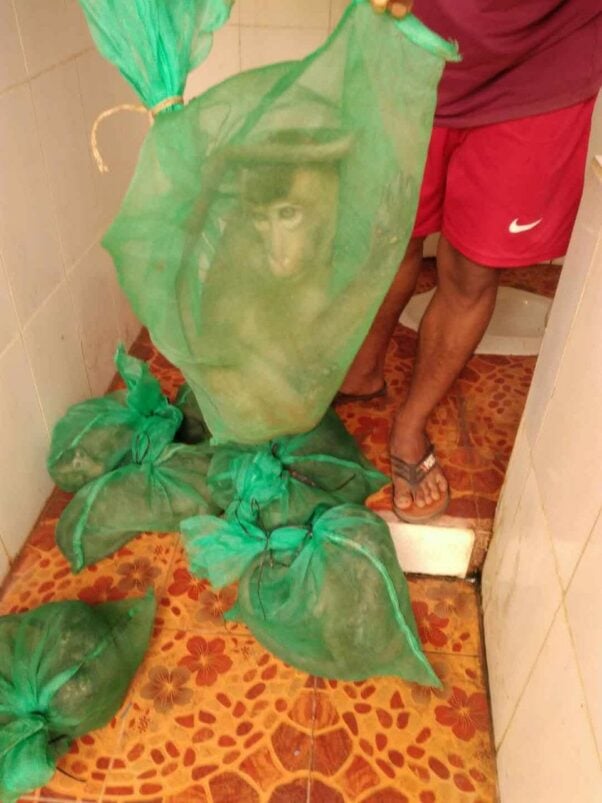
The mechanics of the wildlife trade are brutal and unrelenting. Smugglers routinely target wild populations, capturing entire social groups, including mothers clinging to their infants. To move the animals across international borders, traffickers cram the terrified primates into cramped mesh bags or wooden crates. These makeshift containers are then loaded onto vehicles alongside other contraband, where the animals endure grueling journeys lasting hours or even days. Packed tightly together with little to no room to move, the monkeys are frequently injured, terrified, and entirely deprived of food and water.
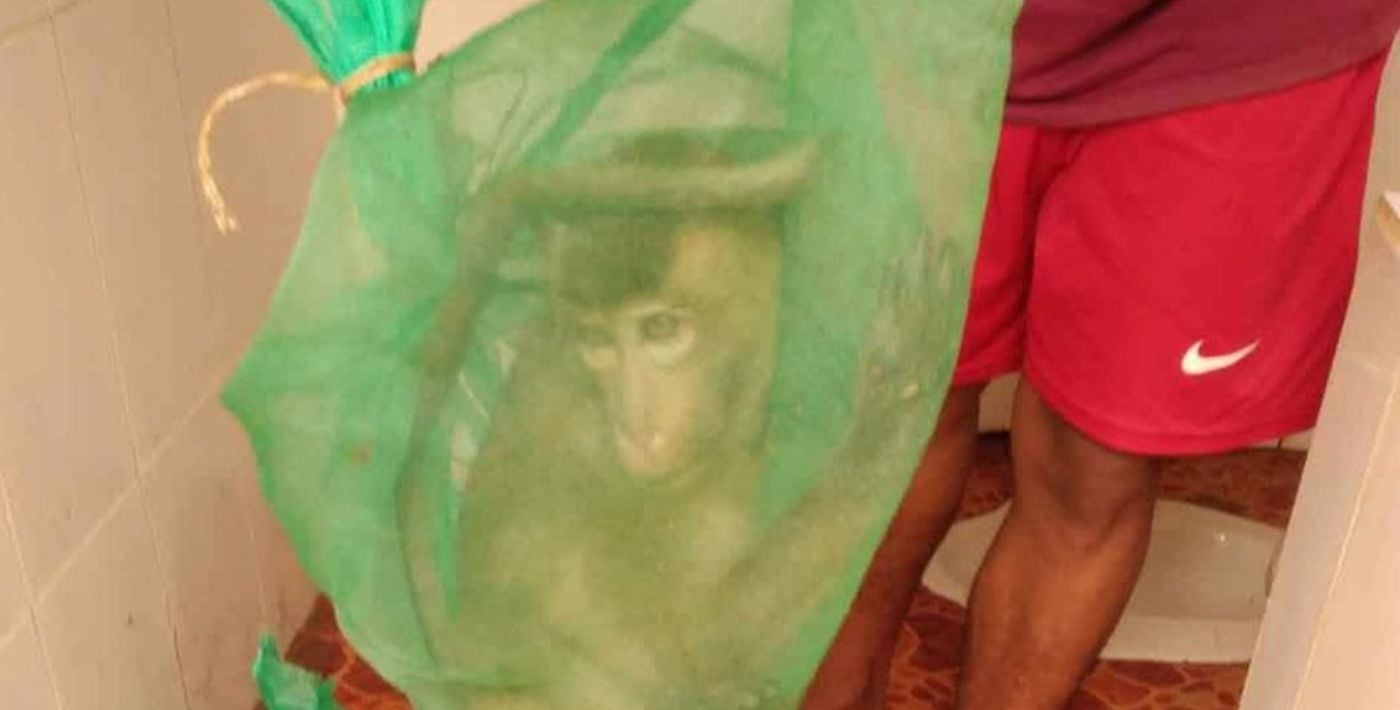
For those that survive the journey, the destination offers little relief. They are funneled into squalid, barren breeding facilities characterized by filthy conditions. In many instances, these wild-caught animals undergo a process of illicit laundering, where they are intentionally and falsely labeled as "captive-bred." Once equipped with these fraudulent designations, they are seamlessly injected into the international laboratory supply chain, effectively laundering stolen wildlife into legitimate-appearing biomedical markets.
Monkey Smuggling Surges Across Southeast Asia
The recent spike in intercepted smuggling cases along the Thailand-Cambodia border represents only one visible front in a much wider regional trafficking crisis. Historical law enforcement actions, border seizures, and judicial prosecutions across Cambodia, Vietnam, China, and Laos have repeatedly exposed how easily wild primates can be poached, stripped of their true origins, and absorbed into the sprawling international supply pipeline.
The scale of this underground economy became strikingly clear in 2022, when U.S. federal authorities uncovered a massive, sophisticated criminal conspiracy. According to court filings and federal indictments, the scheme relied on systematically falsified permits to launder tens of thousands of wild-caught long-tailed macaques from Cambodia, channeling them directly into the American experimentation industry under the guise of legal, captive-bred stock.
Monkeys, Weapons, and Drugs
The illicit trade in primates does not exist in a vacuum; rather, it is deeply embedded within sophisticated transnational organized crime. The very same transportation routes, hidden compartments, covert vehicles, and criminal networks traditionally utilized to traffic illegal firearms and illicit narcotics are routinely co-opted to move wildlife across borders.
Illustrating the overlapping nature of these illicit markets, Thai authorities executed a major border operation in August 2026 near the Thai-Cambodian frontier. During the raid, law enforcement officers seized a cache of AK-47 assault rifles alongside more than 24,000 rounds of ammunition from a suspected smuggling ring. Subsequent investigations revealed that the same criminal syndicate utilized the exact same boats and personnel to move long-tailed macaques that they used to traffic contraband cigarettes, smuggled labor, and other illegal goods. Similar convergence has been documented in Vietnam, where networks previously identified for moving pangolin scales and elephant ivory were found to be concurrently smuggling live monkeys into China.
Compromised Science
Within the biomedical research community, proponents of animal testing frequently argue that utilizing purpose-bred, specific pathogen-free, and thoroughly characterized primates is essential for maintaining experimental control and generating reliable, reproducible data. However, experts point out that this foundational scientific premise collapses entirely when wild-caught monkeys are fraudulently introduced into the system under false paperwork.
The unknown genetic backgrounds, undocumented health histories, and unrecorded environmental exposures of wild primates introduce profound, hidden variables into scientific studies. When researchers rely on animals whose biological origins have been falsified, the integrity of the resulting data is severely compromised, calling into question the scientific validity of experiments that rely on standardized physiological responses.
U.S. Public Health is at Risk
Beyond the severe welfare concerns and ecological devastation, the unauthorized importation of primates of unknown provenance poses a direct and tangible threat to public health in the United States. Every monkey that enters the country from unverified sources bypasses standard health vetting, carrying with it an unpredictable disease risk.
Wild-caught macaques smuggled across international borders arrive without valid health certificates or medical histories, offering no indication of the pathogens they may have encountered during their brutal transit inside squalid crates and cargo holds. Federal health data indicates that a significant proportion of the tens of thousands of monkeys imported annually for experimentation carry dangerous zoonotic pathogens. These include tuberculosis, melioidosis, Shigella bacterial infections, and Herpes B virus—all of which are easily transmissible to humans and capable of causing severe illness or death.
When wild monkeys captured directly from forest habitats are introduced into captive breeding facilities and mixed with existing populations, they create fertile ground for the amplification and mutation of untraceable diseases, posing a latent hazard to laboratory workers and the wider community.

What You Can Do
Legislative efforts are currently underway to address both the conservation crisis and the associated biosecurity vulnerabilities. The Preventing Risky Importation of Monkeys to Avoid Toxic Exposures (PRIMATE) Act has been introduced to prohibit the importation of non-human primates for use in laboratory experiments. Proponents emphasize that enacting the legislation would provide critical protections to endangered species, allowing devastated wild populations to recover, while simultaneously mitigating serious public health risks associated with unregulated primate imports.
Advocacy groups are encouraging concerned citizens across the United States to contact their federal congressional representatives and urge them to co-sponsor the PRIMATE Act. Simultaneously, international observers and animal welfare advocates are calling on the U.S. Department of Health and Human Services to take decisive administrative action to shut down the transnational monkey-abduction pipeline once and for all.