

The stock market has once again found a way to surprise investors, prompting a familiar wave of anxiety across households navigating retirement planning and long-term investments. As major indexes press toward historic valuations fueled largely by the current artificial intelligence boom, a persistent fear echoes through financial circles: whether this unprecedented enthusiasm is merely setting the stage for a historic correction that could eclipse the dot-com bust of the early 2000s.

For many long-term investors, the parallels to past speculative frenzies are difficult to ignore. Yet, seasoned financial commentators and early retirement advocates argue that while market volatility is an inevitable component of modern capitalism, the underlying panic surrounding technological shifts is often a symptom of human psychology rather than an objective evaluation of economic reality.

Will the AI Bubble Ruin Our Retirement?
Reflecting on decades of financial independence, observers who have navigated multiple market cycles note that the anxiety surrounding the future rarely changes in its emotional weight, even as the specific catalysts shift with the decades. Conversations about retirement security are frequently derailed by a barrage of global headlines—ranging from geopolitical tensions and inflationary pressures to towering national debt and technological disruption.

Looking back twenty years to the financial landscape of 2006 reveals a strikingly similar atmosphere of apprehension. During that era, investors weighed the looming threats of geopolitical conflict in the Middle East, escalating national debt, the outsourcing of labor to developing economies, and intense debates over "peak oil" supplies. Most notably, the prevailing market anxiety centered not on artificial intelligence, but on a massive overvaluation within the housing market.

What followed was the Great Financial Crisis, a severe economic downturn triggered by speculative real estate valuations and complex financial leverage. Yet, despite being the most significant market crash since the Great Depression, a long-term perspective reveals that steady investments managed to weather the storm, ultimately yielding substantial growth over the subsequent two decades. Alongside equity expansion, global indicators showed sweeping long-term improvements: extreme poverty rates dropped significantly, infant mortality was cut in half, and clean energy adoption accelerated as solar technology became drastically more affordable and electric vehicles gained widespread traction.

This historical resilience highlights a fundamental economic truth often overlooked by financial alarmists: prosperity does not originate from abstract numbers on a computer screen within the financial system, but rather from tangible productivity.

The Core Driver of Prosperity: Productivity and Human Adaptation
Economic systems are ultimately human inventions designed to allocate resources and track output. When financial markets experience severe contractions due to speculative excess or shifting sentiment, societies routinely restructure the underlying financial architecture and resume productive work. The true engine of standard of living, economic growth, and retirement security is high productivity, driven by continuous technological innovation and human ingenuity.

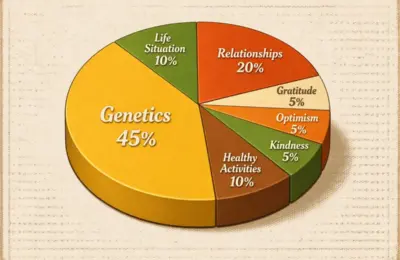
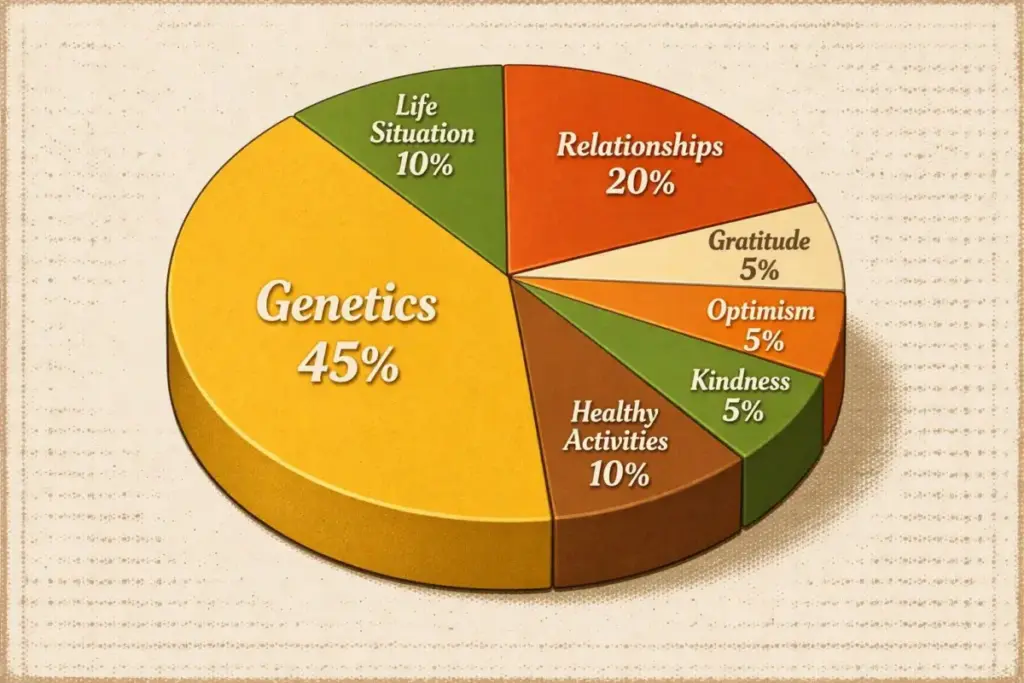
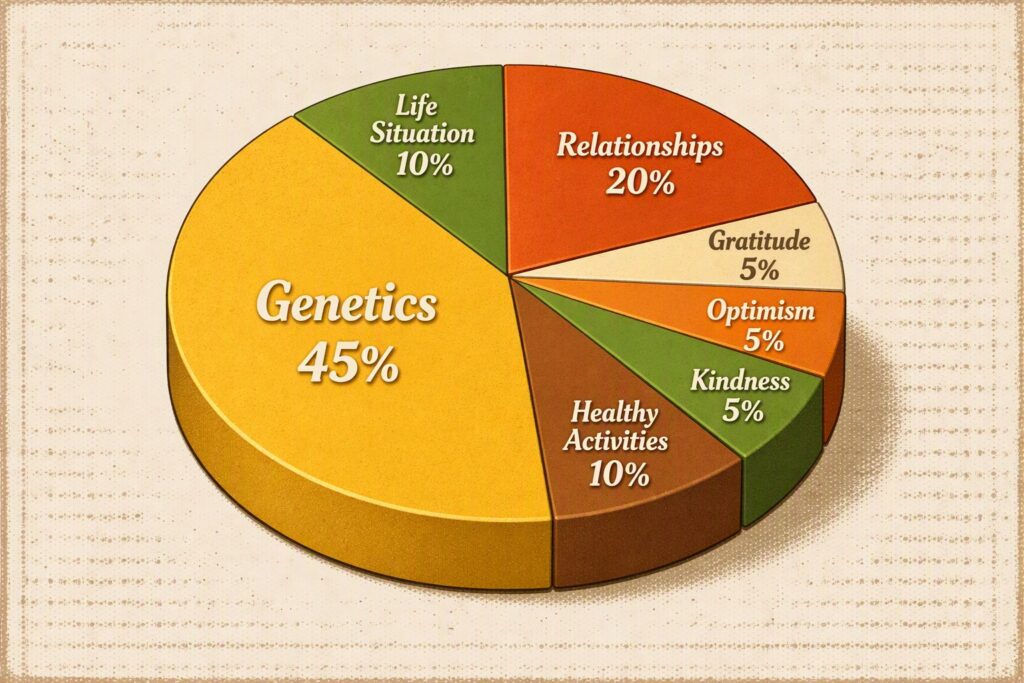
Beyond material wealth, psychological research and life experience suggest that human happiness plateaus past a certain baseline standard of living. Once basic societal needs and financial security are met, overall well-being relies far more heavily on personal health, close relationships, gratitude, and active engagement with the physical world.

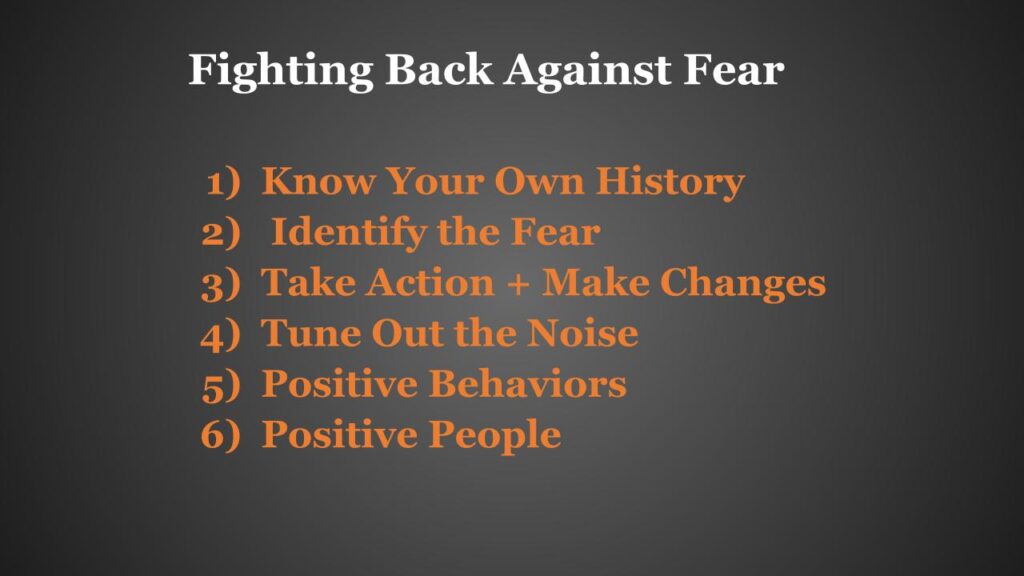
Despite these reassuring historical trends, background fear remains a pervasive element of modern financial life. Anthropological and evolutionary perspectives suggest that humans are fundamentally danger-detection machines. This trait, while vital for ancestral survival, often misfires in contemporary environments where physical threats are scarce, leading individuals to redirect their innate vigilance toward abstract concerns like stock market volatility, tax strategies, or future economic scarcity.
Overcoming this pervasive financial anxiety requires recognizing that much of the modern fear cycle is fueled by a constant diet of sensationalized media coverage rather than objective risk assessment. By shifting focus away from daily market fluctuations and toward personal behaviors, continuous learning, and outdoor physical activity, investors can regain a balanced perspective on risk. Rather than viewing emerging innovations through a lens of existential dread, approaching technological shifts as manageable experiments allows individuals to adapt to changing environments with resilience.

Viewing Artificial Intelligence as a Cognitive Tool
This experimental mindset is particularly relevant when examining the current artificial intelligence boom. While the rapid integration of machine learning into various industries has generated widespread anxiety regarding job displacement and market volatility, technological integration is not entirely unprecedented.
Rather than viewing artificial intelligence as an uncontrollable existential threat, industry observers describe it as a sophisticated "cognitive nail gun"—a powerful tool designed to enhance human efficiency, boost productivity, and ultimately drive broader economic prosperity. Like previous technological revolutions, from personal computing to the internet and smartphones, AI will inevitably displace certain entry-level administrative and technical roles while simultaneously lowering service costs and catalyzing entirely new industries.

The concentration of economic rewards among technology owners and shareholders mirrors historical industrial shifts, reinforcing the importance of broad market participation and adaptability. Ultimately, artificial intelligence represents another transitional phase in the ongoing evolution of human productivity, offering opportunities for those willing to engage with the technology constructively rather than yielding to speculative fear.