

A sweeping, nearly two-decade-long study involving more than 460,000 American adults is challenging conventional wisdom regarding ultra-processed foods and their relationship to colorectal cancer. While ultra-processed products have faced mounting public health scrutiny in recent years for their potential links to various chronic illnesses, the new research reveals that lumping every item in this category together may obscure a much more complex reality.
Researchers found that eating a higher overall quantity of ultra-processed foods was not directly associated with an increased incidence of colorectal cancer. However, the data uncovered a critical nuance: the health implications depend heavily on the specific nature of the food in question. Certain categories of ultra-processed items were actually linked to lower rates of cancer, while others were tied to a heightened risk.
Led by Erikka Loftfield of the National Cancer Institute and published in the open-access journal PLOS Medicine, the findings suggest that the level of processing alone may not serve as a reliable standalone indicator of a food’s potential health consequences. Instead, the underlying nutritional profile of what people eat appears to play a far more decisive role in cancer risk.
A Ubiquitous Part of the Modern Diet Under the Microscope
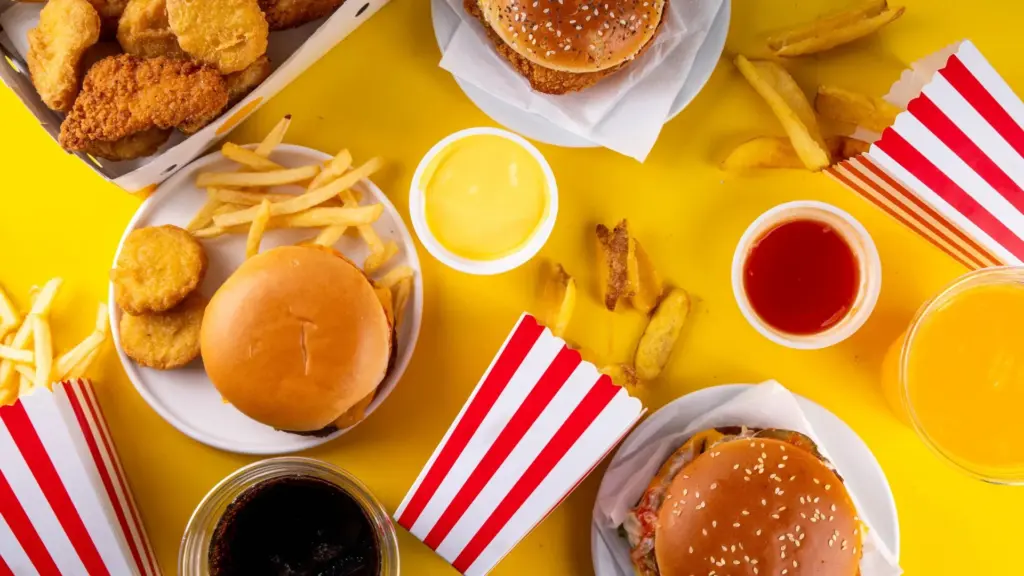
Ultra-processed foods—formulations made mostly from substances extracted from foods or synthesized in laboratories, often containing additives, colorings, and emulsifiers—have become a dominant fixture of the modern diet. In the United States, these products currently account for more than half of all calories consumed by adults.
Because of their heavy market penetration and widespread consumption, these convenience-oriented products have attracted intense scientific investigation regarding their potential connections to chronic diseases, including colorectal cancer. Yet the category itself is remarkably diverse. It encompasses everything from mass-produced white bread, sugary carbonated beverages, and reconstituted meats to packaged whole-grain breads, fortified plant-based milks, and flavored yogurts.
This vast heterogeneity has long posed a challenge for nutritional epidemiologists trying to evaluate the health effects of ultra-processed foods as a single, homogenous group. The new research directly addresses this limitation by breaking down the broad category into specific food groups and nutritional components.
A Massive Study Tracks Cancer Risk for Nearly 19 Years
To untangle these complex dietary relationships, researchers examined health records and dietary patterns from 461,682 American adults. The participants were between the ages of 50 and 71 when they enrolled in the landmark NIH-AARP Diet and Health Study during 1995 and 1996.
At baseline, participants completed comprehensive food-frequency questionnaires detailing how often they consumed a wide variety of food items. Scientists used these detailed responses to estimate each individual’s baseline intake of ultra-processed foods, categorizing and quantifying the types of products they routinely ate.
The cohort was then tracked meticulously through the end of 2018, yielding a median follow-up period of 18.8 years. This lengthy observational window allowed the research team to investigate how long-term dietary patterns correlated with the development of colorectal cancer over nearly two decades of aging.
When evaluating total consumption, the results showed no overall association between aggregate ultra-processed food intake and colorectal cancer incidence. In simpler terms, participants who consumed a higher volume of ultra-processed foods did not, as a collective group, experience higher rates of colorectal cancer compared to those who ate fewer of these products.
However, when the researchers peeled back the surface and analyzed individual food categories within the broader classification, a far more complicated picture emerged.
Some Ultra-Processed Foods Linked to Lower Cancer Risk
Rather than pointing uniformly toward harm, the granular analysis revealed divergent paths depending on what the ultra-processed foods actually contained. Higher consumption of whole grains, dietary fiber, dairy products, and calcium derived from ultra-processed food sources was consistently associated with a lower incidence of colorectal cancer.
Conversely, meat products derived from ultra-processed sources showed the opposite pattern. Greater consumption of ultra-processed meats was clearly associated with a higher cancer incidence, aligning with longstanding public health warnings regarding processed meats.
To further understand these dynamics, the team modeled what might happen if individuals replaced a portion of their ultra-processed diet with less processed alternatives. Their analysis indicated that substituting minimally processed foods for just 10% of total ultra-processed food intake by weight was associated with a modest 2% lower incidence of colorectal cancer.
These insights strongly suggest that the nutritional characteristics and specific food groups of individual items are far more informative than a blanket label of "ultra-processed." Foods grouped into the same broad manufacturing category can exhibit vastly different—and sometimes opposing—associations with human health and cancer risk.
Why the Findings Come With Important Limitations
Despite the sheer scale of the study, its exceptionally long follow-up period, and its rigorous analytical framework, the research team emphasizes that the conclusions come with notable caveats and may not apply universally to all populations.
Demographically, the study cohort consisted primarily of older, white American adults. Consequently, the findings may not accurately reflect the dietary realities, metabolic responses, or cancer risks experienced by younger adults, children, or more racially and ethnically diverse populations.
Another important limitation lies in how dietary data was collected. Participants reported their eating habits through questionnaires administered only once, at the very beginning of the study in the mid-1990s. Because of this baseline-only measurement, researchers were unable to account for how individual diets evolved, improved, or deteriorated over the subsequent two decades.
Furthermore, the commercial availability, formulation, and sheer variety of ultra-processed foods expanded dramatically in the years following the initial assessments. As a result, the baseline dietary evaluations may have underestimated participants’ actual cumulative consumption of ultra-processed products as the food supply changed over time.
Finally, because the investigation was observational in nature, it cannot definitively establish a direct causal relationship—proving whether particular foods directly cause or prevent cancer on an individual level.
What the Results Mean for a Healthy Diet
Rather than treating all ultra-processed foods as equally harmful or dismissing the category entirely, the findings support a more nuanced approach to nutrition. Foods should be evaluated according to their intrinsic nutritional content and specific health associations rather than strictly by their manufacturing processes.
Crucially, the results align closely with established dietary guidelines for colorectal cancer prevention. Existing public health recommendations have long encouraged the consumption of whole grains, dietary fiber, dairy products, and calcium-rich foods, while advising moderation or avoidance of processed meats.
Reflecting on the implications of the study, Erikka Loftfield noted that within this large population of older US adults, researchers observed no direct link between total ultra-processed food intake and colorectal cancer incidence overall. However, when examining specific food groups—such as whole grains, dairy, and meat—by their ultra-processed or non-ultra-processed sources, the associations matched current preventative dietary guidance, with higher whole-grain and dairy intake and lower meat intake correlating with reduced cancer incidence.
Ultimately, the study underscores why the broad label of ultra-processed may fail to tell the whole story. When evaluating risks related to colorectal cancer, the specific nature, composition, and nutritional quality of the foods people consume appear to matter far more than the manufacturing category alone.
The study was funded by the Intramural Research Program of the National Cancer Institute, part of the National Institutes of Health. Several current and former employees of the National Cancer Institute’s Intramural Research Program contributed to the research, with the funding organization playing no role in the study design, data collection, data analysis, manuscript preparation, or the decision to publish the findings.