

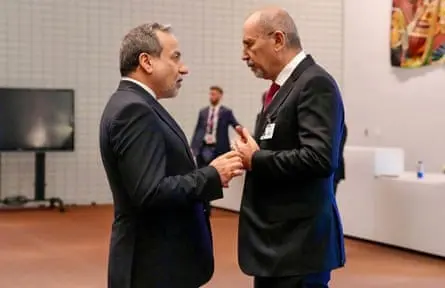
The diplomatic proposal, which was detailed by Iranian Foreign Minister Abbas Araghchi during meetings on the sidelines of the United Nations General Assembly in New York, is intended to accelerate framework agreements originally established under a memorandum of understanding signed by the US and Iran in June. Under the original terms of that pact, formal talks concerning Iran’s nuclear capabilities were not scheduled to begin for 60 days. By offering an expedited timeline for both the reopening of the strategic shipping lane and the resumption of nuclear diplomacy, Tehran aims to break the current diplomatic deadlock.
According to Iranian officials, a framework agreement covering a temporary maritime route through the Strait of Hormuz has already been struck with Oman and is considered a finalized arrangement by Tehran, which is prepared to officially register the technical details with the International Maritime Organisation. Araghchi confirmed that he was waiting for a formal response from American intermediaries, adding that Beijing has been fully briefed on the plan and has offered its complete support.
Regional geopolitics, however, present immediate hurdles to the implementation of the agreement. Saudi Arabia had been expected to endorse the Oman-Iran shipping route through the strait last week, but ultimately pulled back from the endorsement. Riyadh’s hesitation stems in part from ongoing regional friction, exacerbated by attacks launched against Saudi territory by Iranian-backed Houthi forces amid the broader conflict over the political future of Yemen. While Tehran maintains that it has urged the Houthi movement to halt its cross-border strikes against Saudi Arabia, Iranian officials have repeatedly stated that they do not exercise direct operational control over Houthi decision-making.
Speaking to reporters in New York, Araghchi emphasized that the conditions put forward by Tehran are not entirely new, noting that they align closely with the parameters outlined in the Islamabad memorandum of understanding previously signed by Donald Trump.
"We have introduced a plan to the US through the mediators that if certain conditions are met, the strait will be open within seven days and talks will start," Araghchi said. He noted that the primary advantage of the initiative, aside from relieving the severe chokehold on the global energy market and bringing down oil prices, would be fast-tracking diplomatic engagement on the nuclear file. With Brent crude trading at approximately $107 a barrel, the rapid reduction of energy prices is seen by observers as a vital domestic political imperative for the US administration ahead of upcoming midterm elections.
Despite the potential economic benefits for Washington, significant political and strategic obstacles remain. Privately, Iranian officials believe a deal with the US is achievable and that the Saudi hesitation over the shipping route can be managed, but they harbor strong concerns that Israeli influence could sway the US president against the proposal. Furthermore, Washington faces difficult choices regarding the demand to pressure Israel into ending military operations in Lebanon. Israeli authorities are reportedly deeply resistant to granting Iran such direct oversight over the navigation routes through the Strait of Hormuz, while Tehran simultaneously seeks to retain enough control over shipping traffic to prevent certain US military vessels from traversing the waterway. Secondary operational questions, such as whether littoral states Oman and Iran would eventually impose navigational fees or tolls, have been left for later stages of the negotiation process.

The diplomatic maneuvering in New York also brought together other key international players. Earlier in the week, UK Foreign Secretary Ed Miliband held his first meeting with Araghchi, marking the first high-level exchange between British and Iranian ministers in a year. The encounter followed London’s decision in July to proscribe the Islamic Revolutionary Guards Corps (IRGC) as a terrorist organization, a designation that has severely strained bilateral ties.
During their discussions, Miliband reaffirmed the United Kingdom’s unwavering commitment to freedom of navigation in the Strait of Hormuz and expressed a strong preference for a diplomatic resolution. He also reiterated British support for Saudi Arabia’s security in the context of the conflict in Yemen. At the same time, Miliband raised serious security concerns regarding Iranian activities inside the UK, including alleged threats directed at British Jewish communities, and pressed for immediate consular access for a British couple recently sentenced to 10-year prison terms in Tehran.
Araghchi also engaged in direct talks earlier in the week with Steve Witkoff, the US special envoy, on the margins of the UN General Assembly. Those discussions focused specifically on Iran’s conditions for clearing the strait, the timeline for implementation, and the expected window for a definitive American response. Araghchi indicated that while he was remaining in New York over the weekend to await Washington’s reply, Tehran was not operating under a sense of desperate urgency.
Within Iran’s domestic political landscape, competing factions hold divergent views on how to handle the current impasse. While some hardline elements, including within the IRGC, argue that Tehran should press its advantage and escalate the conflict rather than allow the diplomatic crisis to drift, senior military figures have openly warned of broader regional consequences if hostilities intensify. Major General Rahim Safavi cautioned that any new military action by the US could spark a wider confrontation centered around the Red Sea and the Bab al-Mandab strait, which is currently controlled by Iranian-backed forces.
The debate occurs against the backdrop of Iranian President Masoud Pezeshkian’s recent address to the UN General Assembly, which was widely viewed domestically as a political success. Pezeshkian struck a defiant tone against American pressure while simultaneously signaling an openness to renewed diplomatic dialogue. He also floated the concept of establishing a new regional security architecture in partnership with Gulf states—including nations that have previously faced attacks linked to efforts aimed at dislodging foreign military bases from the region.
Major General Ahmad Vahidi, the commander-in-chief of the IRGC, publicly praised the president’s UN speech, framing it as a reflection of national resolve. "We are not afraid of war," Vahidi said. "It is the loud and firm call of the Iranian nation—a call that resonated from the United Nations podium, through the words of the esteemed president, and reached the ears of the world."