


Most culinary media and recipe development are built around the foundational assumption of sharing. From multi-course dinner parties meant to impress a crowd to standard weeknight skillet meals designed to comfortably feed a family of four, the vast majority of recipes cater to pluralities. Yet, demographic shifts across the country paint a very different picture of modern households. In the United States, single-person households account for nearly 30 percent of the population. Despite this substantial demographic reality, the daily ritual of cooking for one is frequently treated as an afterthought—an exercise in eating leftovers out of a storage container or assembling a disjointed plate of snacks standing up at the kitchen counter.
Enter the ethos of dining strictly for oneself, a concept that reframes cooking a solo meal not as a chore or a compromise, but as a deliberate act of comfort and self-care. Whether you live completely alone or simply find yourself enjoying a rare evening to yourself while household members are away, sitting down to a meal designed for one and only one person should be an occasion to look forward to. When approached with the right mindset, the solo dinner becomes an opportunity for uncompromised culinary self-expression, free from the constraints of pleasing different palates or managing complex multi-dish timelines.
When left entirely to individual devices at the end of a demanding day, the pursuit of comfort food often leads to a singular, reliable conclusion: the omelet. While cultural associations frequently relegate eggs to the morning hours—conjuring images of bustling diners serving folded eggs alongside crisp strips of bacon and golden hash browns—the omelet possesses an innate versatility that makes it arguably even more ideal at the close of the day. Unlike many elaborate dinner dishes that scale poorly when reduced to a single portion, the omelet is uniquely suited for solo preparation.
Logistically, omelets are undeniably best prepared one at a time. Trying to scale up an omelet for multiple people in a single pan quickly turns into a frustrating exercise in crowd control, often resulting in overcooked edges and runny centers that fail to harmonize. Furthermore, an omelet is at its absolute peak when consumed immediately upon leaving the pan, making it an inherently solitary pursuit. Attempting to coordinate multiple omelets for a group means someone invariably eats last, sacrificing the delicate texture that defines a well-cooked egg. When cooking exclusively for oneself, however, these logistical hurdles vanish completely, allowing the cook to time the heat, the fold, and the plate with absolute precision.
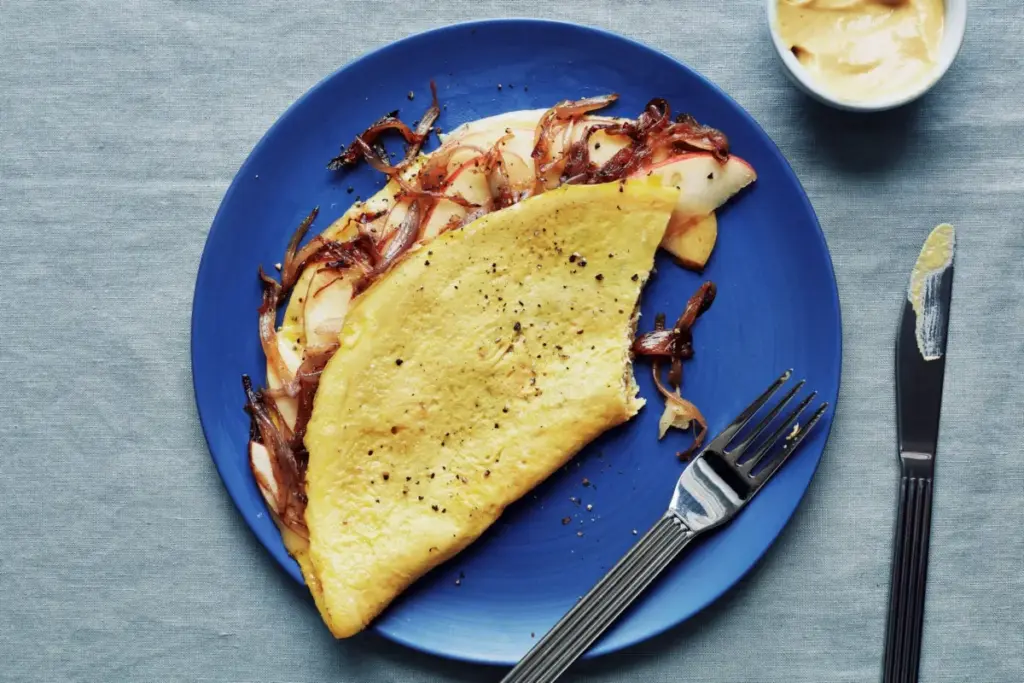
Embracing the omelet as a legitimate dinner option also allows for a departure from the delicate, French-style rolled omelets that often intimidate home cooks. Those seeking a refined breakfast or brunch item might spend precious evening energy attempting to craft a seamless, unbrowned cylinder, navigating the fine line between liquid and set eggs. For a late-night solo dinner after a long, exhausting day of work, a more relaxed approach yields far better results. By taking a cue from classic diner-style preparations, the home cook can lean into heavier, more substantial fillings—after all, this is dinner, not breakfast.
The technique requires little more than pouring beaten eggs into a hot pan, allowing them to set, piling them with hearty ingredients, and simply folding the eggs in half. This straightforward approach completely eliminates the need to fuss over delicately rolled versions when energy reserves are depleted. It is a forgiving, fast, and profoundly satisfying method that transforms basic refrigerator staples into a complete, comforting meal in a matter of minutes.
Achieving success with this approach relies heavily on the right hardware, starting with the cooking vessel itself. Cooks who happen to own a well-seasoned carbon-steel pan will find that a solo omelet provides the ideal occasion to put it to work. When properly heated, a carbon-steel surface develops a completely nonstick quality that rivals traditional synthetic coatings, with the added benefit of allowing the use of metal cooking tools. This means a spatula can glide underneath the eggs and maneuver them into a fold without any risk of scratching or damaging the pan’s surface.
Of course, dedicated nonstick pans work just as effectively for those who do not keep carbon steel in their kitchen arsenal. Sizing the pan appropriately is key to the process; a 10-inch skillet serves as the optimal vessel for a standard three-egg omelet, providing enough surface area for the eggs to spread and set evenly without becoming too thin or too thick. Cooks equipped only with a larger skillet will find that the eggs cook more rapidly due to the increased surface area. Alternatively, expanding the recipe by adding a fourth egg and a slightly more generous handful of cheese easily transforms the single-serving skillet meal into a hearty dinner for two.
While a well-executed omelet can easily stand entirely on its own as a complete meal, rounding out the plate requires very little effort for those desiring a more substantial spread. On evenings when ambition permits, assembling a quick green salad with a sharp vinaigrette provides a crisp, bright counterbalance to the rich, savory warmth of the eggs. Pausing to heat up a handful of frozen sweet potato fries in a toaster oven is another effortless way to introduce contrasting textures and flavors without adding meaningful labor to the routine.
Yet, the true beauty of the solo omelet lies in its ultimate simplicity. More often than not, the ideal conclusion to the cooking process involves nothing more complex than sliding the folded, steaming omelet directly onto a plain plate, swiping a streak of sharp mustard across the side, and calling it a night. In a culinary landscape that frequently demands excessive preparation, elaborate presentation, and communal sharing, the solo omelet remains a steadfast, uncomplicated refuge for anyone looking forward to a quiet night in.