

The pet food landscape has expanded rapidly in recent years, leaving dog owners with an unprecedented array of feeding formats. Where once the primary choice was between standard dry kibble and canned wet food, today’s market features gently cooked fresh meals, raw frozen diets, and shelf-stable freeze-dried options. Among these, fresh dog food has emerged as a particularly popular category, praised for its soft texture, moisture content, and highly visible ingredients.
However, premium nutrition comes with a premium price tag. For many households, the central question is whether the expense of a fresh diet is truly justified. Answering this requires looking past promotional discounts and attractive ingredient lists to evaluate the daily cost of feeding a dog. By calculating the cost of delivering a consistent calorie target, analyzing the logistics of storage and waste, and exploring mixed-feeding strategies, pet owners can make an informed decision that balances veterinary recommendations with practical household budgets.
This analysis incorporates pricing and product data from industry sources, including sponsored details from fresh-food provider JustFoodForDogs, which maintains a distinct role in the premium pet food sector while editorial standards remain independent.
Evaluating the Practical Value of Fresh Dog Food
Freshly cooked dog meals are highly appealing to pet owners who want to offer their dogs a wholesome, minimally processed diet. These meals are typically moist, soft, and prepared with recognizable whole foods. For owners who prefer the idea of a home-cooked meal but want to avoid the labor-intensive tasks of sourcing individual ingredients, balancing micronutrients, and cooking from scratch, commercial fresh food offers a highly convenient alternative. Furthermore, many dogs find the aroma and texture of fresh food highly palatable, which can simplify the daily feeding routine for owners of picky eaters.
However, veterinary experts caution against conflating the sensory appeal of fresh food with unproven health claims. While some manufacturers suggest that specific feeding formats can prevent chronic illnesses or directly extend a dog’s lifespan, these claims are rarely backed by robust, long-term clinical trials. A food’s high digestibility rating, which measures how much of the diet is absorbed by the body rather than excreted as waste, is a useful nutritional metric, but it does not guarantee a reduction in future veterinary bills.

When evaluating whether fresh dog food is worth the investment, owners should focus on immediate, observable benefits—such as improved palatability, manageable portioning, and dietary compatibility—rather than hypothetical medical savings. The decision should start with the fundamental role of the food. Pet owners must distinguish between complete daily diets and supplemental "toppers" or treats. Toppers are designed to accompany a primary food and do not contain the full spectrum of essential vitamins and minerals required for long-term health. Comparing the daily cost of a small package of topper to a full feeding plan can lead to highly misleading budgetary conclusions.
Under guidelines established by the Food and Drug Administration (FDA) and the Association of American Feed Control Officials (AAFCO), a pet food must feature a nutritional adequacy statement on its label. This statement confirms whether the diet is "complete and balanced" for a specific life stage, such as puppy growth, adult maintenance, or all life stages. Medical considerations, such as a dog’s need for a low-fat recipe or a therapeutic formulation, will further narrow the choices, regardless of whether the food is wet, dry, raw, or fresh.
The Calorie Target Method of Cost Comparison
The most common error pet owners make when comparing pet food prices is looking strictly at the retail price per pound or ounce. This approach fails because different pet food formats contain vastly different amounts of water. Fresh and raw foods are naturally rich in moisture, meaning a significant portion of their weight comes from water. Conversely, dry kibble and freeze-dried foods have had most of their moisture removed, making them highly concentrated sources of energy.
Because of these differences in moisture content, equal weights of fresh food and kibble do not deliver equal amounts of energy. The only accurate way to compare the cost of different feeding formats is to evaluate how much it costs to provide a specific number of calories. Calorie density serves as the essential bridge between the package price and the actual daily feeding budget.
To illustrate this comparison, a baseline of 500 calories per day can be used as a standard unit of measure. This baseline is purely for mathematical comparison and does not represent a universal feeding recommendation. A dog’s actual daily energy requirement depends on its breed, age, weight, activity level, and spay or neuter status. Veterinarians can help establish an accurate daily calorie target, which will inevitably change as a dog transitions through different stages of life.
To calculate the daily cost of any dog food based on calories, an owner must first determine the total calories contained in a single package of food. This is done by identifying the food’s caloric density (typically listed on the label as kilocalories per kilogram or cup) and multiplying it by the total weight or volume of the package. Next, the retail price of the package is divided by the total package calories to find the cost per single calorie. Finally, this cost per calorie is multiplied by the dog’s daily calorie target—such as 500 calories—to reveal the true daily feeding cost. Multiplying this daily figure by 30 provides a reliable monthly budget estimate.
When projecting monthly or annual costs, owners must also account for recurring pricing structures. Many fresh pet food companies offer substantial discounts on a customer’s first order or subscription box. While these introductory offers reduce the initial cost of trying a new food, they do not reflect the ongoing cost of maintaining the diet. A realistic budget must be based on the regular, non-discounted retail price.
Furthermore, the lowest advertised daily prices often assume a very small dog, a partial feeding plan, or a specific subscription volume. For owners of large dogs, the financial impact of a fresh diet is magnified. Because a large dog requires significantly more daily calories, the food-only cost increases proportionally. Large dogs also consume packages at a faster rate, which requires a steady supply of freezer space and frequent deliveries.
Analyzing the Cost of Fresh, Kibble, Raw, and Freeze-Dried Options
To understand how different pet food formats compare financially, we can examine pricing and calorie data collected in September 2026. These examples are based on specific product listings and do not represent absolute category averages, as retail prices, regional taxes, shipping fees, and retail promotions are subject to change.
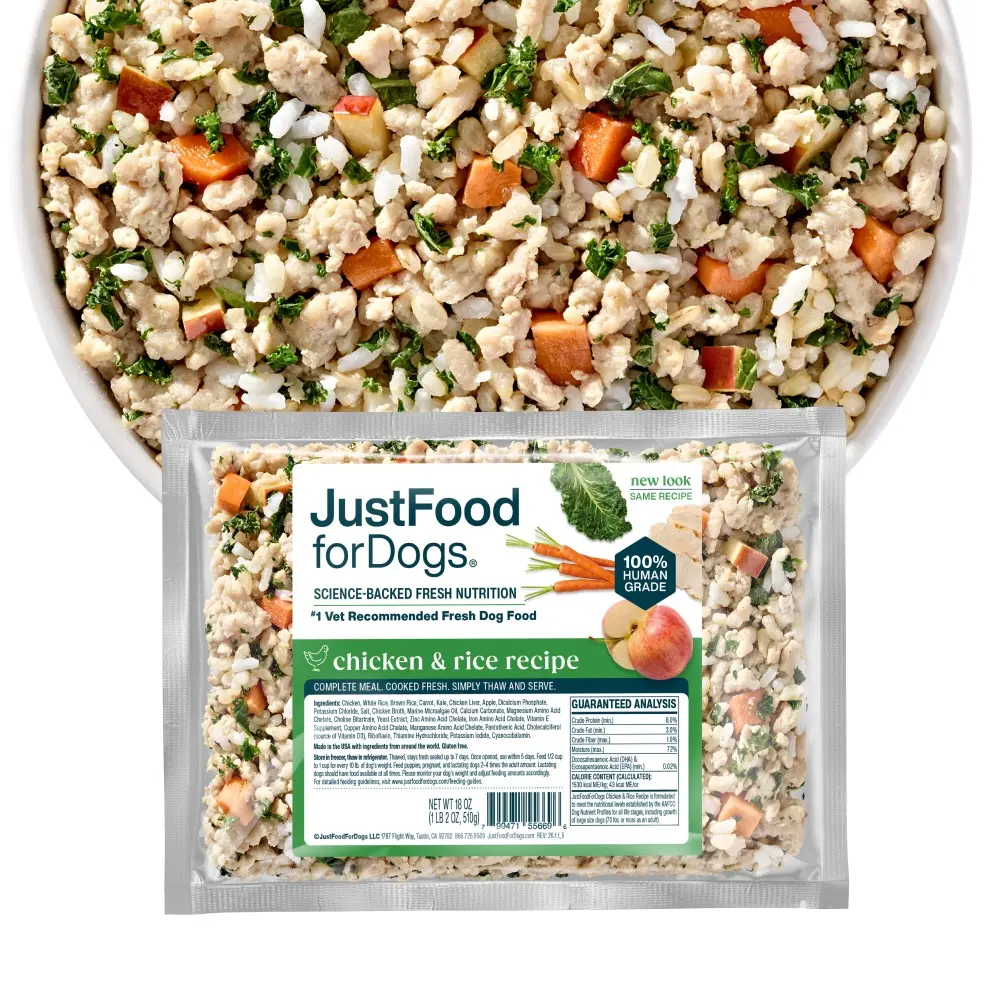
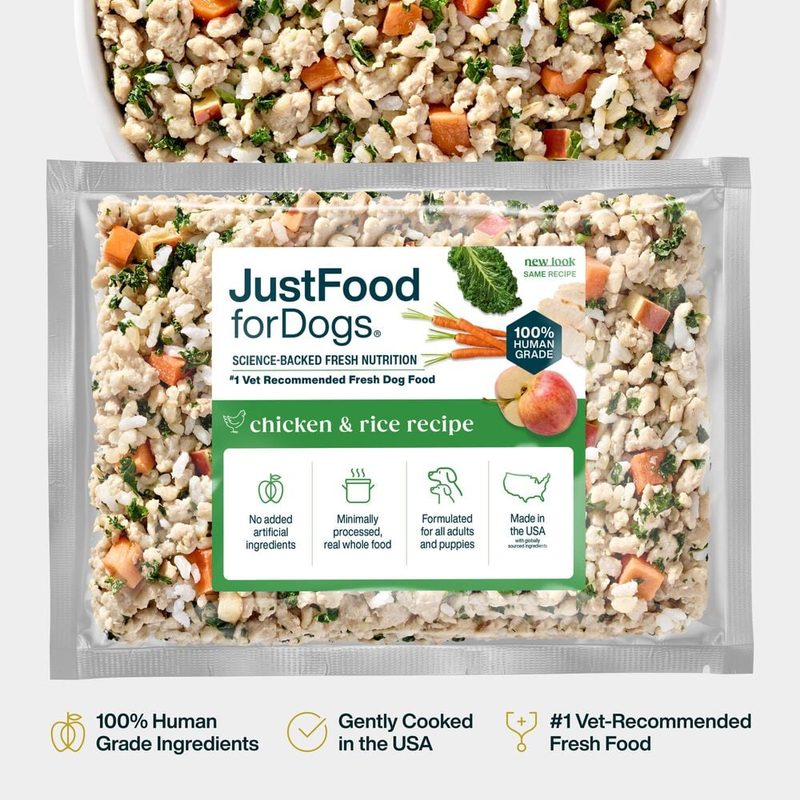
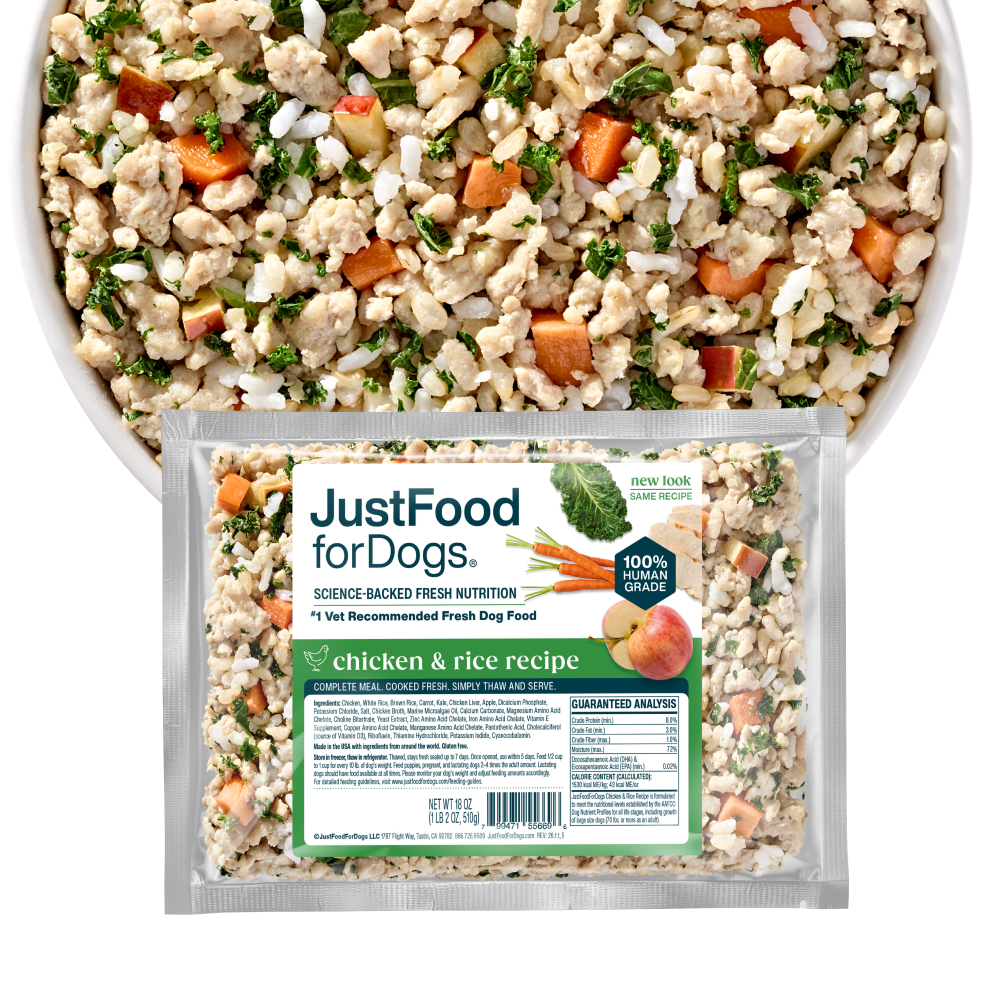
For the fresh food category, the JustFoodForDogs Chicken & Rice fresh frozen recipe serves as a representative example. A standard order of seven 18-ounce packages retails at a regular price of $76.99. Each 18-ounce package contains 774 calories, yielding a total of 5,418 calories per order. Under the 500-calorie daily baseline, this fresh diet costs approximately $7.11 per day, translating to a monthly cost of roughly $213.
In contrast, dry kibble remains the most economical format by a wide margin. Using Purina Pro Plan Complete Essentials Shredded Chicken & Rice dry dog food as a benchmark, a 5-pound bag retails for approximately $16.58. This product family features a calorie density of 3,790 calories per kilogram, meaning a 5-pound bag delivers roughly 8,596 calories. For a dog requiring 500 calories a day, this dry food costs just $0.96 daily, or about $29 per month.
Alternative premium formats, such as raw frozen and freeze-dried diets, occupy different pricing tiers. A 3-pound bag of Primal Chicken raw frozen nuggets, retailing at $26.99, contains approximately 2,112 calories based on a manufacturer listing of 44 calories per one-ounce nugget. This raw frozen diet costs approximately $6.39 per day, or about $192 monthly, placing it slightly below the cost of the fresh cooked example.
Meanwhile, freeze-dried options represent the highest cost tier due to the intensive manufacturing processes required to remove moisture while preserving raw ingredients. A 14-ounce bag of Primal Chicken freeze-dried nuggets retails for $39.99. Depending on the exact number of nuggets per ounce (which typically ranges from three to four, yielding 44 calories per nugget), a single bag provides between 1,848 and 2,464 calories. This results in a daily feeding cost of $8.11 to $10.82 for a 500-calorie target, or a monthly budget of $243 to $325.
While these figures highlight the clear cost advantages of dry kibble, they do not address the complex safety considerations associated with raw feeding. Raw frozen and freeze-dried raw diets carry inherent microbiological risks. The Centers for Disease Control and Prevention (CDC) warns that raw pet foods can harbor harmful pathogens like Salmonella and Listeria, which pose health risks not only to the pets consuming them but also to the humans handling the food. Consequently, owners must weigh the financial costs of these diets against the rigorous sanitation practices required to safely manage raw food in a household.
The Economics of Mixed Feeding
For pet owners who want the benefits of fresh food but find a 100% fresh diet financially unsustainable, mixed feeding offers a practical compromise. By blending a complete fresh recipe with a high-quality dry kibble, owners can introduce fresh ingredients into their dog’s bowl while keeping daily expenses manageable.
The critical factor in a successful mixed-feeding strategy is replacing a portion of the dry food’s calories with an equivalent calorie portion of fresh food, rather than simply adding fresh food on top of an unchanged kibble ration. Adding fresh food without adjusting the kibble portion can lead to accidental overfeeding and weight gain, as fresh food is highly nutrient-dense despite its moisture content.
Using the previous examples of Purina Pro Plan dry food and JustFoodForDogs fresh food, we can calculate the financial impact of different mixing ratios for a dog on a 500-calorie daily target:
- A 25/75 Calorie Split: If an owner decides to provide 25% of the dog’s daily calories (125 calories) from the fresh recipe and 75% (375 calories) from dry kibble, the daily cost would be approximately $2.50. Over a 30-day period, this mixed diet would cost roughly $75, offering a substantial saving compared to a fully fresh diet.
- A 50/50 Calorie Split: A balanced split, where 250 calories come from fresh food and 250 calories come from kibble, results in a daily cost of approximately $4.03. This brings the monthly budget to about $121, providing a middle ground in both cost and nutritional format.
When implementing a mixed-feeding plan, the percentages must always be calculated using calories rather than physical volume (such as cups) or weight. Because kibble is far more calorie-dense than fresh food, a cup of kibble contains significantly more energy than a cup of fresh food.
Additionally, mixed feeding assumes that both products are complete and balanced diets. Owners should exercise caution when altering the diet of a dog with specific medical needs, such as a therapeutic prescription diet or a strict hypoallergenic regimen. In these cases, mixing different foods can dilute the therapeutic benefits of the primary diet, and any dietary changes should be cleared by a veterinarian first.
Accounting for Hidden Costs and Storage Logistics
The retail price of a bag or box of dog food is only one component of the total household cost. Premium diets, particularly frozen fresh foods, introduce logistical demands that can affect a household’s utility bills, storage capacity, and daily schedule.
Frozen fresh meals require a reliable cold chain from the manufacturing facility to the dog’s bowl. When ordering online, shipping costs can add a significant premium to the order, especially if expedited shipping with dry ice is required to prevent thawing during transit. Once the food arrives, it must be stored in a freezer. A large bulk order of fresh food can easily overwhelm a standard household freezer, forcing some owners to limit their order sizes—thereby missing out on bulk discounts—or invest in a dedicated chest freezer.
Thawing and handling also require careful planning. Fresh food must be transferred from the freezer to the refrigerator to thaw safely before serving. Once thawed, fresh food has a limited shelf life, typically requiring use within three to seven days depending on the manufacturer’s instructions. If a small dog cannot consume an opened package before it expires, the remaining food must be discarded, resulting in costly waste. To prevent this, owners of small dogs must look for smaller, portion-aligned packaging, even if those smaller sizes carry a higher cost per calorie.
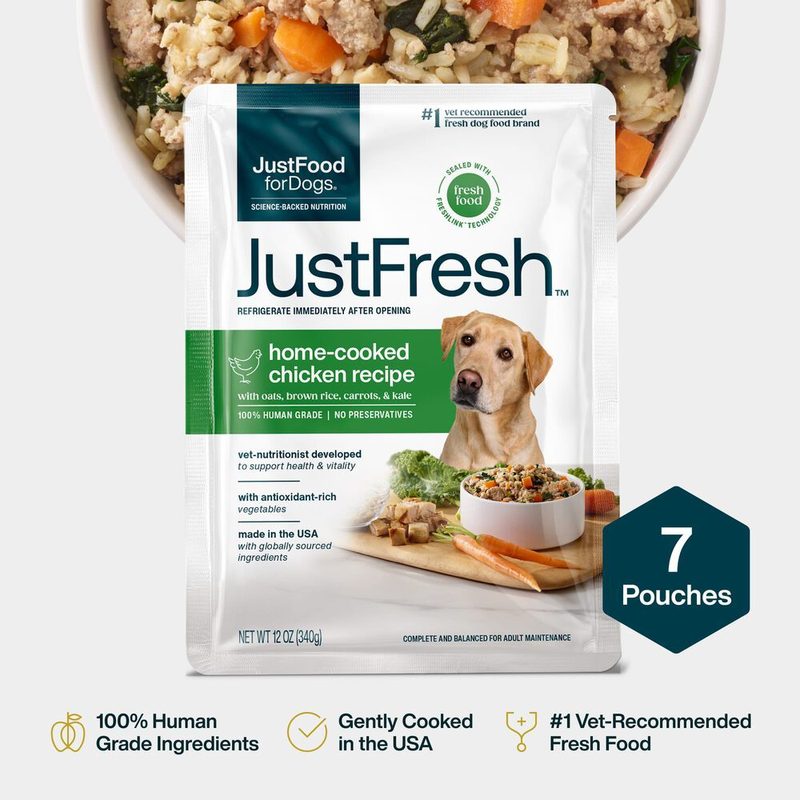
For households with limited freezer space or unpredictable travel schedules, shelf-stable fresh foods offer a viable alternative. Products such as JustFresh Chicken utilize specialized packaging to remain shelf-stable at room temperature until opened. While this eliminates the need for freezer storage, it does not remove post-opening refrigeration requirements. Once a shelf-stable fresh package is opened, it must be refrigerated and consumed within the manufacturer’s specified window, meaning the potential for food waste remains a factor for smaller pets.
A Practical Framework for Making the Switch

Before transitioning a dog to a new diet, owners should systematically assess whether the change is sustainable for their household. The transition process itself must be gradual, typically spanning seven to ten days, to allow the dog’s digestive system to adapt to the new ingredient profile and moisture level. During this period, owners should closely monitor their dog’s appetite, stool consistency, energy levels, and body weight.
A practical value check involves comparing a month of actual food consumption with a month of retail purchases. Because shipping cycles and box sizes do not always align perfectly with a 30-day calendar, some months may require large bulk purchases while others require none. Evaluating the long-term consumption cost—rather than the fluctuating checkout totals—provides a much clearer picture of the diet’s true impact on the household budget.
Ultimately, the decision to feed fresh dog food is highly individual. While fresh food provides undeniable benefits in terms of palatability, moisture content, and preparation convenience, high-quality dry kibble remains a safe, nutritionally complete, and highly economical choice that has supported generations of healthy pets. By stripping away marketing narratives and focusing on calorie-based costs, storage realities, and practical feeding routines, pet owners can choose a diet that supports their dog’s long-term health without compromising their own financial well-being.