




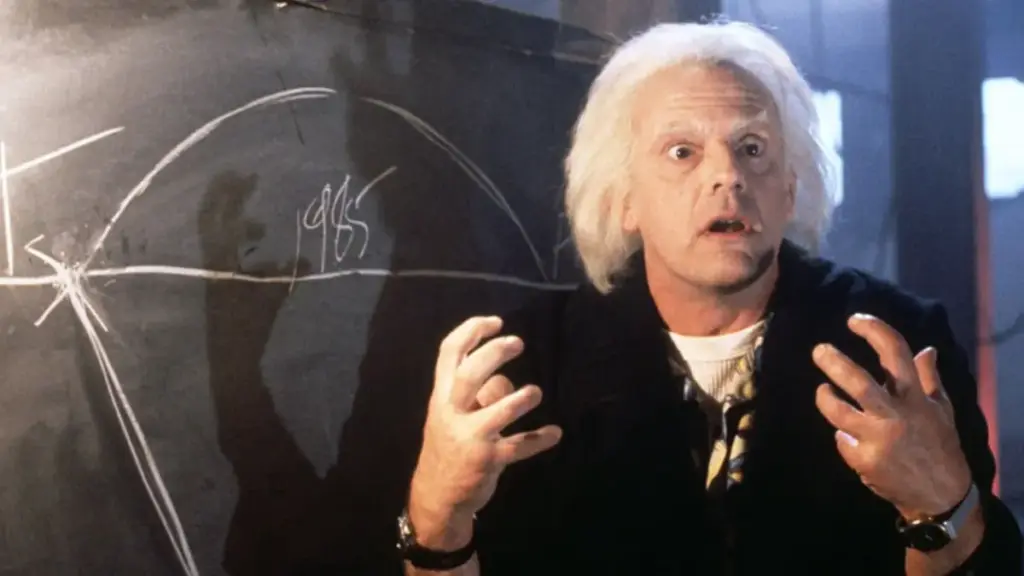
Most cinematic time travel adventures completely disregard the complex mathematical equations and quantum mechanics that would actually govern such a phenomenon. Screenwriters and directors traditionally cherry-pick whichever theoretical concepts serve their narrative needs while casually ignoring the rest. When Dr. Emmett Brown whisks Marty McFly and Jennifer Parker into the future in Back to the Future Part II, for instance, the characters are unable to encounter their future children because Marty and Jennifer’s physical absence from the timeline over the preceding three decades should have fundamentally altered reality. Yet, the film breezes past this paradox without a second thought.
That oversight represents just one instance of how even the most celebrated time-travel franchises routinely disregard the theoretical laws of physics. The moment viewers apply even the most basic principles of real-world science to the equation, the narrative foundation tends to disintegrate entirely.
Nevertheless, a select few cinematic projects genuinely attempt to align with scientific principles. In these rare cases, the creative teams either meticulously researched the established laws of quantum physics to shape their plots or originated their stories directly from theoretical scientific frameworks. Though undeniably uncommon in Hollywood, five notable films stand out for attempting to make real scientific sense of the impossible.
Interstellar
Christopher Nolan’s 2014 science-fiction epic Interstellar remains the most prominent mainstream film to thoroughly explore the complex laws of quantum physics and astrophysics. This high level of scientific fidelity is largely attributed to theoretical physicist Kip Thorne, who co-developed the foundational concept alongside producer Lynda Obst and subsequently served as the film’s primary scientific consultant.
The motion picture delves deeply into complex astrophysical phenomena, including supermassive black holes and gravitational time dilation. Furthermore, it incorporates speculative time travel mechanics during its dramatic final act. Within the narrative, an astronaut named Cooper, portrayed by Matthew McConaughey, plunges past the event horizon of a black hole and enters a mysterious construct known as a tesseract. This theoretical device, engineered by an advanced iteration of future humanity, represents the abstract concept of time as a tangible physical dimension, thereby enabling Cooper to communicate directly with his young daughter in the past.
While the existence of the tesseract is ultimately hand-waved by attributing its creation to humanity’s far-flung descendants, the narrative device functions as a thoughtful exploration of how time travel might theoretically manifest. Crucially, it leverages the ongoing real-world reality that black holes remain largely shrouded in cosmic mystery.
Planet of the Apes
Technically, any cinematic depiction of time travel in which a protagonist journeys exclusively forward into the future holds a distinct scientific advantage over traditional time-travel narratives. According to modern physics, forward-directed temporal displacement is entirely plausible; it simply requires traveling at velocities approaching the speed of light.
As established by modern astrophysics, time moves progressively slower the faster an object travels. While the observable effects of this phenomenon are entirely imperceptible under normal terrestrial conditions, they become profoundly noticeable at extreme velocities in deep space. For example, artificial satellites orbiting Earth experience relativistic time discrepancies compared to clocks on the surface. Consequently, if an astronaut were to traverse space at near-light speeds, subjective time would slow down drastically for that individual, while standard time continued to elapse normally back on Earth. This established scientific principle, known as time dilation, is explored with notable accuracy in Interstellar.
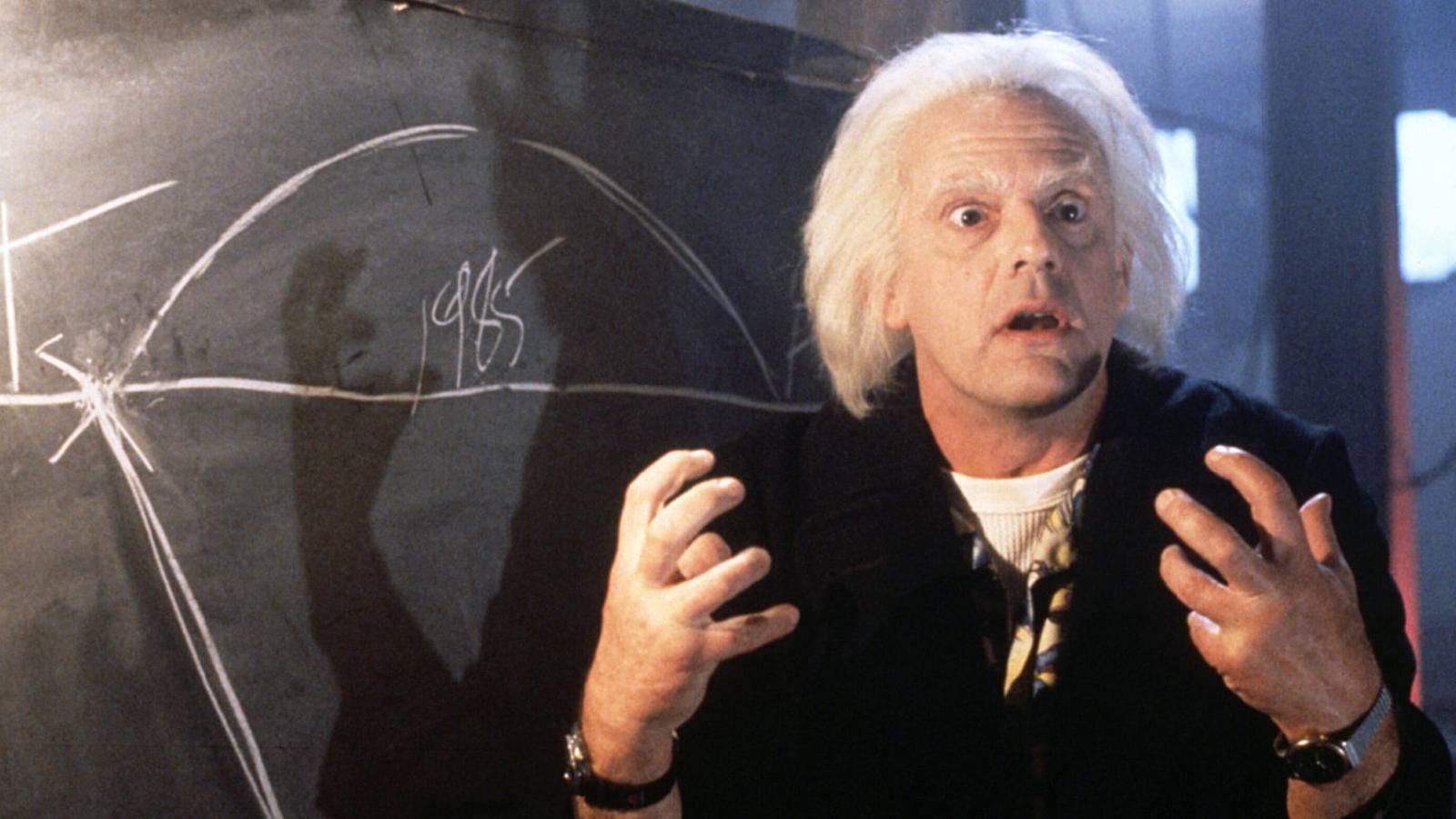
Within the context of the original 1968 classic Planet of the Apes, astronaut George Taylor, played by Charlton Heston, embarks on a deep-space exploratory mission aboard a vessel moving at relativistic speeds before crash-landing on an uncharted world. As Taylor gradually discovers during the iconic conclusion, the mysterious planet is actually Earth, advanced far into the future.
This specific mode of temporal displacement remains entirely grounded in theoretical physics, whereas traveling backward in time is widely considered an impossibility by leading scientific minds. Although subsequent sequels in the franchise introduced backwards time travel, the original 1968 film kept its scientific foundation remarkably sound.
Avengers: Endgame
It might initially seem counterintuitive to include a major superhero blockbuster featuring a gamma-irradiated green monster and a genetically enhanced talking raccoon in a discussion about scientific realism. However, Avengers: Endgame deserves legitimate credit for explicitly rejecting one of the most persistent and flawed tropes in the entire genre of time-travel fiction. Typically, the primary objective of temporal mechanics in cinema involves characters journeying into the past to alter historical events and thereby fix a broken future.
Avengers: Endgame deliberately refrains from utilizing this approach. Instead, the narrative depicts Earth’s surviving heroes venturing backward along the timeline to temporarily retrieve powerful artifacts before returning immediately to their native present to utilize them. While Scott Lang, portrayed by Paul Rudd, initially assumes this intervention will rewrite history, Bruce Banner, played by Mark Ruffalo, explicitly counters that altering the past is impossible. Instead, Banner explains that removing objects from their native points in time merely causes the timeline to branch outward, creating entirely separate parallel realities where those crucial items simply vanish.
Renowned British physicist David Deutsch has long proposed a similar theoretical framework, suggesting that any temporal intervention capable of altering the past would not modify the primary timeline, but rather generate an entirely new one. This narrative choice embraces the Many-Worlds Interpretation of quantum mechanics, a mathematically recognized hypothesis in modern theoretical physics.
Although the film relies on convenient cinematic shorthand when Tony Stark, played by Robert Downey Jr., invents a functional Time-Space GPS, the foundational premise that temporal transit is achieved through the Quantum Realm offers a subtle nod to real-world science. In actual quantum mechanics, time behaves in deeply unconventional ways and, according to certain theoretical models, may not fundamentally exist at all.
Primer
While viewers can easily enjoy Avengers: Endgame without deeply analyzing its underlying mechanics, the ultra-low-budget 2004 independent film Primer demands the absolute, undivided attention of its audience at every single narrative turn. Written, directed, and starring software engineer Shane Carruth—who holds an undergraduate degree in mathematics—the film utilizes its creator’s genuine technical background to construct a temporal mechanics puzzle widely regarded as the most scientifically rigorous time-travel movie ever produced.
The plot centers on two independent engineers who accidentally discover a method for backward temporal displacement during garage-based gravity experiments. Following this breakthrough, they construct a mechanical housing unit large enough to accommodate human occupants. As the narrative progresses, the protagonists begin utilizing the device with reckless abandon, monitoring financial markets to identify lucrative stocks before journeying into the past to purchase shares ahead of time. Along the way, they inadvertently generate temporal duplicates of themselves, systematically deceiving one another and shattering every theoretical rule typically established by standard science-fiction conventions.
The film operates under remarkably strict and unyielding temporal parameters. For instance, travelers cannot venture backward to any point prior to the initial activation of the containment box. Furthermore, the mechanics require a precise, linear investment of duration: to travel backward by one hour, an operator must activate the device, wait an hour, enter the apparatus, endure an additional hour of subjective waiting time, and finally emerge at the exact moment the machine was originally activated. For example, activating the unit at 1:00 p.m. and entering at 2:00 p.m. requires spending another hour inside before emerging back at 1:00 p.m. While time effectively moves backward for the occupant inside the enclosed space, no magical portal or instantaneous wormhole exists; the traveler must physically experience the intervening duration, albeit in reverse.
Carruth based this intricate system upon Feynman diagrams, which mathematically describe the simultaneous forward and backward movement of subatomic particles through space-time. To enhance the realism, Carruth deliberately incorporated complex, unsimplified technical dialogue to accurately reflect how actual engineers would converse when faced with such an unprecedented discovery. The resulting feature remains a dense, uncompromising cinematic puzzle that strictly adheres to its internal parameters, prompting enthusiasts to draft complex explanatory diagrams more than two decades after its initial release.
Predestination
Back in 1978, renowned astronomer Carl Sagan penned an essay for The New York Times exploring the inherent value of science-fiction storytelling. He explained how imaginative fiction can help audiences grasp complex universal truths by dramatizing real scientific principles and theoretical frameworks. Among the literary works Sagan highlighted was "All You Zombies—", a 1959 short story by Robert A. Heinlein.
The narrative follows an intersex protagonist possessing both male and female biological characteristics. Through the application of time travel, the character journeys into the past and inadvertently impregnates their younger, female iteration. The resulting offspring is a female infant who is subsequently abducted and transported backward through time, only to be abandoned at an orphanage. Ultimately, this child is revealed to be the exact same individual who later gives birth to herself and fathers herself, completing an immutable, self-contained temporal loop devoid of any external origin point.
This narrative serves as a thorough, uncompromising exploration of a causal loop, functioning as a literal manifestation of the temporal paradoxes that characters like Dr. Emmett Brown frequently warn against in popular cinema. If a traveler journeys into the past to rectify a crisis and succeeds, the foundational reason for undertaking the journey ceases to exist, theoretically causing the original problem to re-emerge in an infinite cycle.
This complex deterministic concept is examined in Heinlein’s original text, which was faithfully adapted into the 2014 psychological thriller Predestination. The film stars Ethan Hawke as the older male iteration of the protagonist and Sarah Snook as his younger female counterpart, bringing the closed-loop mathematics of the premise to life.
Ultimately, stories of this nature function less as scientifically plausible depictions of actual temporal mechanics and more as rigorous, mathematical explorations highlighting why traditional cinematic time travel fundamentally defies the laws of the physical universe.