
For an average peanut butter and jelly or a straightforward turkey and cheese, a formal recipe is likely unnecessary. Most people can assemble these everyday classics without a second thought, relying on instinct and personal preference. However, when it comes to veggie sandwiches, things can get surprisingly complicated. The landscape of vegetarian handhelds is vast and varied, leaving cooks to ponder the precise direction of their meal.
One might lean in the direction of a California veggie sandwich, piled high with creamy avocado, crisp sprouts, and tangy chèvre. Perhaps they might crave something warm and savory, like an eggplant panini pressed to golden perfection. Or they might prefer a delicate cucumber and cream cheese number, with the crusts neatly removed, if one pleases. Regardless of the chosen vegetables and meatless protein, vegetarian sandwiches require careful measurements and deliberate technique to achieve the right balance of flavor and texture. Crafting one for yourself becomes more than just preparing a meal; it transforms into the ultimate self-care ritual, a moment of mindful creation in a busy week.
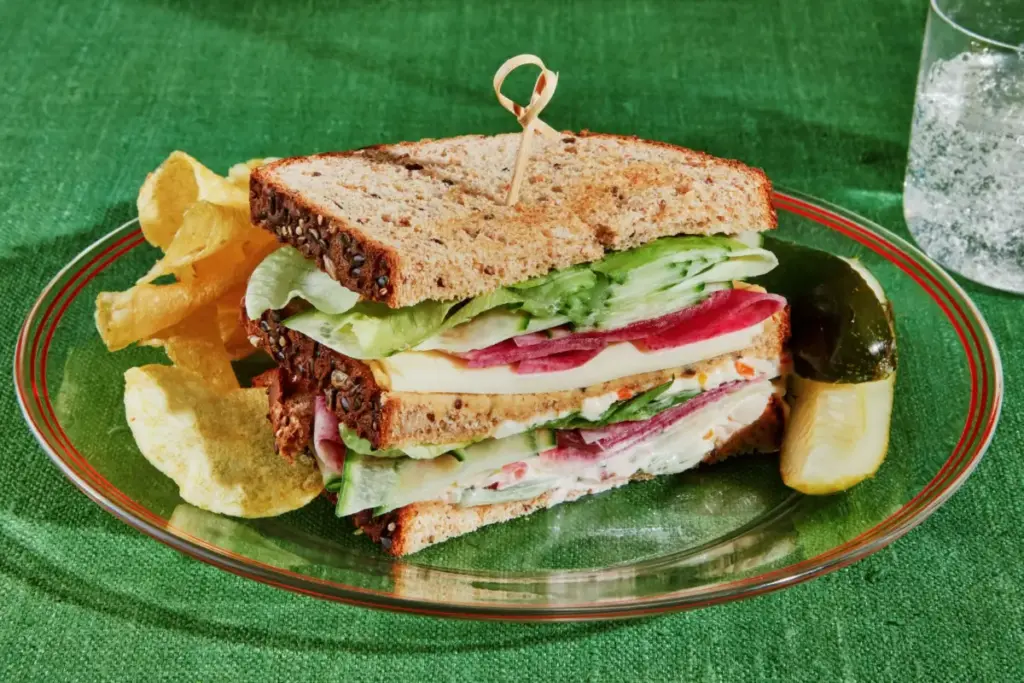
Delving into this philosophy, the featured veggie sandwich is cleverly modeled after two distinct regional and traditional favorites: the classic club sandwich and the New Jersey sloppy joe. Both of these inspirations share a defining characteristic as double-deckers, traditionally loaded with at least two kinds of meat to create a towering, substantial meal. In reimagining this concept for a vegetarian audience, the traditional three slices of bread—which remain critically important for providing the structure necessary for a hearty sandwich—are retained. However, the cold cuts and bacon are entirely ditched in favor of a modern, plant-focused alternative consisting of thinly sliced, vinegar-brine-dressed crunchy vegetables paired with rich, sharp cheddar cheese.
To bring this towering creation together, the sandwich is glued with a few layers of giardiniera-enhanced mayonnaise, adding a bright, zesty punch, alongside a thick swipe of earthy hummus. Because of its height and generous filling, securing the structure requires a bit of mechanical support, leading to the recommendation of sticking in long toothpicks for extra stability and security during transport and eating.
Achieving the right texture for the vegetable layers requires precision, particularly when it comes to the cut. The best way to get razor-thin vegetable slices that successfully mimic the mouthfeel and appearance of traditional deli meat is to use a mandoline. Using such a tool requires confidence and careful attention, but for those who are brave and acutely aware of their finger placement, the results will be well worth the effort, yielding delicate, evenly sliced produce that elevates the entire culinary experience.
This thoughtful approach to meatless midday meals is part of a broader ongoing culinary exploration within the Test Kitchen. Readers looking to expand their repertoire of nourishing, feel-good dishes can discover more recipes in the collection, such as a vibrant berry protein cottage cheese smoothie designed for a refreshing boost, a fiber-packed lentil and barley salad meant to satisfy hearty appetites, and a textured chopped salad featuring sardines and preserved lemon for a bold, Mediterranean-inspired flavor profile. Through these thoughtful creations, everyday cooking continues to find beauty in simplicity and intention.