


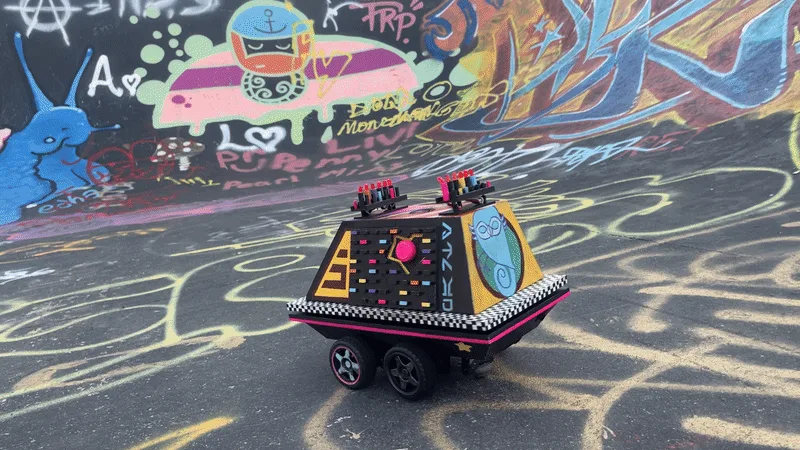
Now, one inventive Canadian maker known as Cass, who operates under the moniker Chaos Theory, has decided to rescue one of these quintessential Imperial workhorses from a life of bureaucratic drudgery. In a creative fusion of two different eras of Star Wars lore, Cass has built a fully autonomous, 3D-printed mouse droid that has ostensibly abandoned its rigid Imperial duties to become a graffiti-covered, rebel-inspired rave machine. The project cleverly imagines what might happen if an MSE-6 unit fell into the hands of Sabine Wren, the vibrant and prolific Mandalorian graffiti artist introduced in the animated series Star Wars Rebels.
The resulting creation is far more than a simple cosmetic modification of an existing remote-controlled toy. Cass set out to build a sophisticated, open-source mobile robot from scratch, ensuring that the droid could not only navigate its environment completely on its own but also feature a dedicated "panic mode" and, crucially, a party button. Bringing this rebellious machine to life required a careful blend of modern microcontrollers, custom-designed hardware, and traditional maker ingenuity.
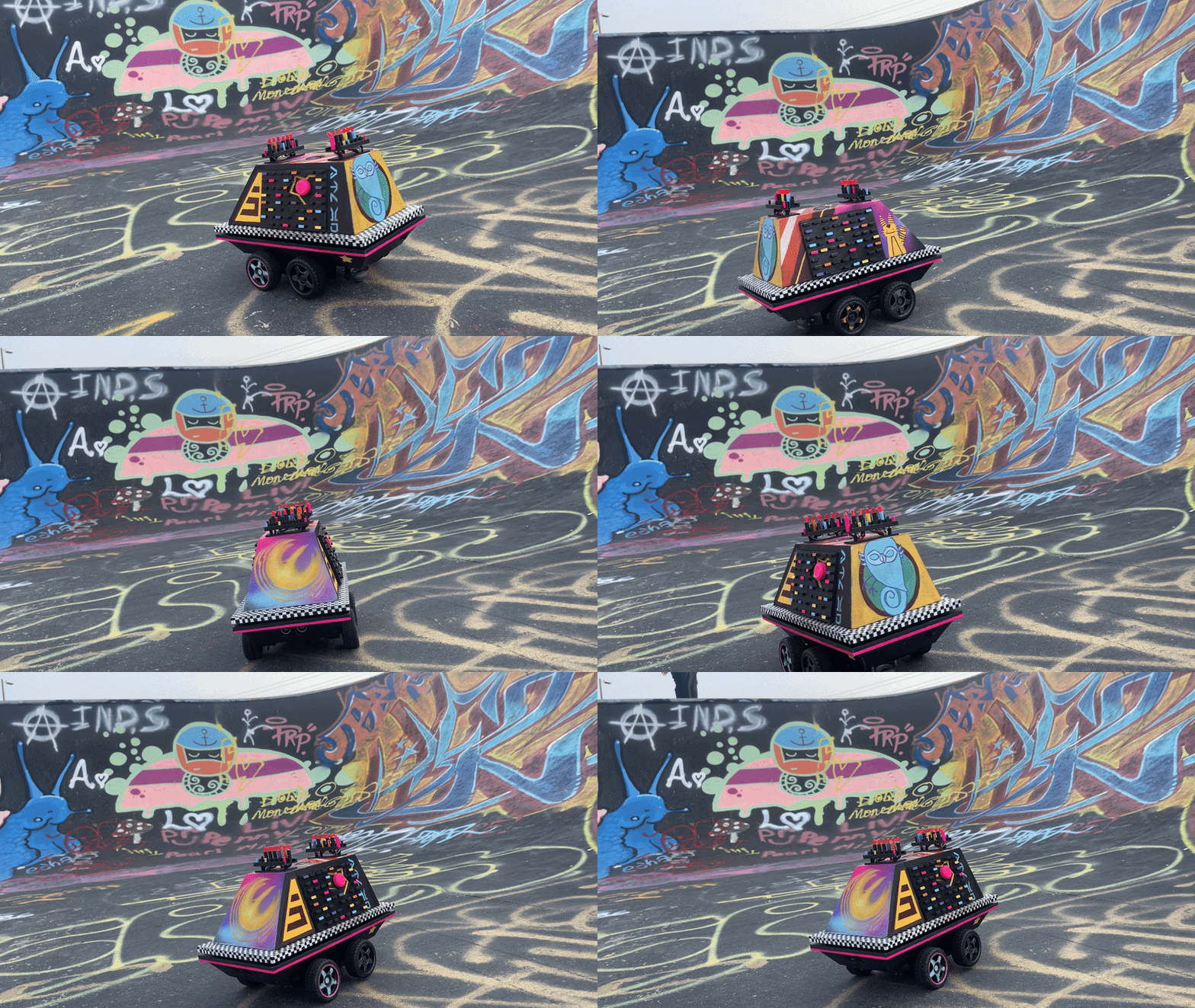
At the heart of the droid’s processing capabilities sits an Arduino UNO microcontroller, paired with a DFPlayer Mini MP3 module to handle the unit’s onboard audio playback. To ensure the autonomous vehicle could successfully navigate through real-world spaces without constantly crashing into walls or furniture, Cass integrated an ultrasonic distance sensor. Because standard off-the-shelf hobby vehicles rarely come equipped with this specific combination of specialized electronics and autonomous sensors, Cass quickly realized that modifying a stock car would not suffice. Instead, the entire machine had to be conceptualized and constructed from the ground up.
The build process involved a heavy reliance on modern digital fabrication techniques, most notably 3D printing. Cass designed a custom chassis to house the electronics, sensors, and internal components, giving the exterior its distinct, iconic mouse droid shape while accommodating all the modern hardware required for full autonomy. Despite the extensive custom design work, the creator did incorporate a foundational element from existing hardware to simplify the initial mechanical assembly.
A flat, pre-existing metal Mecanum chassis was utilized underneath the custom 3D-printed shell purely as a structural mounting point for the drive motors. This provided a sturdy, reliable framework where the motors could be securely screwed into place while the rest of the exterior and internal layout was still being developed. Reflecting on the engineering process, Cass noted that if a hypothetical second version of the project were to be undertaken, the underlying Mecanum support could likely be eliminated entirely in favor of mounting the motors directly using custom brackets attached with heat-set inserts.

Opting to design the vast majority of the chassis from scratch offered distinct practical advantages that extend well beyond personal satisfaction. By creating a fully custom, 3D-printable framework, the project becomes remarkably accessible and replicable for other makers across the global maker community. Rather than forcing fellow enthusiasts to track down a specific discontinued RC car model or spend hours hacking together an awkward existing platform, anyone with access to a standard 3D printer can download the necessary files and fabricate their own exact version of the rebel rave droid.
Beyond the purely practical engineering benefits, the project was also driven by a genuine passion for hands-on fabrication and skill development. Pushing the boundaries of personal craftsmanship is a core tenet of the maker movement, and this build provided the ideal testing ground for new techniques. Notably, this project marked Cass’s first foray into utilizing heat-set inserts for securely fastening electronic and structural components directly to 3D-printed plastic parts, a method that ultimately yielded exceptionally sturdy and clean results.
The fusion of classic Star Wars nostalgia, advanced DIY electronics, and vibrant rebellious art has already captured the imagination of the wider maker community. For builders and science fiction fans alike, the project serves as a reminder of the endless possibilities unlocked when open-source hardware meets creative passion. Detailed documentation, design files, and instructions for building a personalized autonomous mouse droid complete with its own functional party mode have been made available online through platforms like Instructables, allowing enthusiasts around the world to bring a little piece of the rebellion—and a lot of automated chaos—into their own workshops and living rooms.