

Published October 4, 2026 11:21PM
A few days into a demanding weeklong backcountry skiing trip, a fellow traveler introduced an exercise routine unlike anything encountered before on the trail. Leading a sequence of rolling, stretching, and flexing movements designed to target neglected and overworked muscles in the feet and ankles, the routine offered immediate relief. The movements were part of Gyrotonic and Gyrokinesis, two specialized exercise methods that many outdoor enthusiasts have yet to discover. For trail-weary feet and travel-stiffened bodies, learning more about these movement systems quickly became a priority.
Gyrotonic is an innovative movement system utilizing specialized equipment originally developed to assist dancers in recovering from injuries. While the apparatus shares visual similarities with Pilates equipment, the underlying movement principles draw deep inspiration from qigong and tai chi, ancient Chinese practices that prioritize slow, deliberate movement and focused breathing. Many Gyrotonic sequences feature circular or spiraling motions that carry joints through a complete, fluid range of motion. Gyrokinesis employs very similar movement concepts, but the exercises are performed off the specialized machines, utilizing a simple stool or a mat instead.
Leslie Hubbard, a certified Gyrotonic instructor and owner of Hidden Root Studio in Maple Falls, Washington, emphasizes the unique kinetic qualities embedded in the system. There are distinct energetic qualities to the system within the movement, according to Hubbard. The practice is highly circular and three-dimensional, looking at the human body as a singular, unified whole where all systems are interconnected.
The overarching goal of the practice is to bring multiple biological systems into harmony, actively promoting healthy blood flow and aiding in cellular repair. Much like the immediate relief experienced in weary feet, this specialized type of movement can heavily benefit hikers and backpackers wanting to address nagging stiffness, soothe deep aches, rehab old injuries, or simply build robust, full-body strength capable of meeting the rigorous demands of the trail.
Hubbard notes that the practice places a heavy focus on small, safe movements that originate deep within the core, effectively building strength from the inside out. The core idea is to foster stability throughout the entire physical structure, rather than just isolating certain muscle groups. This holistic approach can prove immensely beneficial for hikers carrying heavily loaded backpacks or navigating treacherous, varied terrain. By bringing deep awareness to the entire body, Gyrotonic and Gyrokinesis ultimately help outdoor enthusiasts move with greater fluidity and significantly less pain.
Because physical needs vary widely from person to person, Hubbard explains that Gyrotonic and Gyrokinesis are deeply individualized practices. She carefully curates classes and movement sequences depending entirely on each participant’s unique physical abilities and limitations. Not everybody is the same, she points out, highlighting what she considers to be a truly beautiful aspect of the system: instructors look closely at who is in front of them rather than relying on a cookie-cutter approach.
When exploring these movement sequences, practitioners are encouraged to listen intently to their bodies, focusing primarily on sensations that feel good rather than forcing their joints through extreme ranges of motion. Even the smallest range of motion can be remarkably satisfying for the body, particularly after navigating a long day of strenuous hiking, Hubbard explains.
Gyrotonic and Gyrokinesis for Hikers
Outside of a dedicated professional Gyrotonic studio, individuals can still experience the comprehensive benefits of Gyrokinesis. These movements can be practiced at home or right in camp, keeping in mind the importance of tuning into the body and moving in ways that feel entirely natural and comfortable. Participants are advised to stop immediately if they experience any discomfort or pain.
Spine Sequence
After supporting the weight of a heavy backpack for an entire day on the trail, the spine benefits greatly from targeted attention. This specific spine mobilization serves as a fundamental building block for many Gyrokinesis movements.
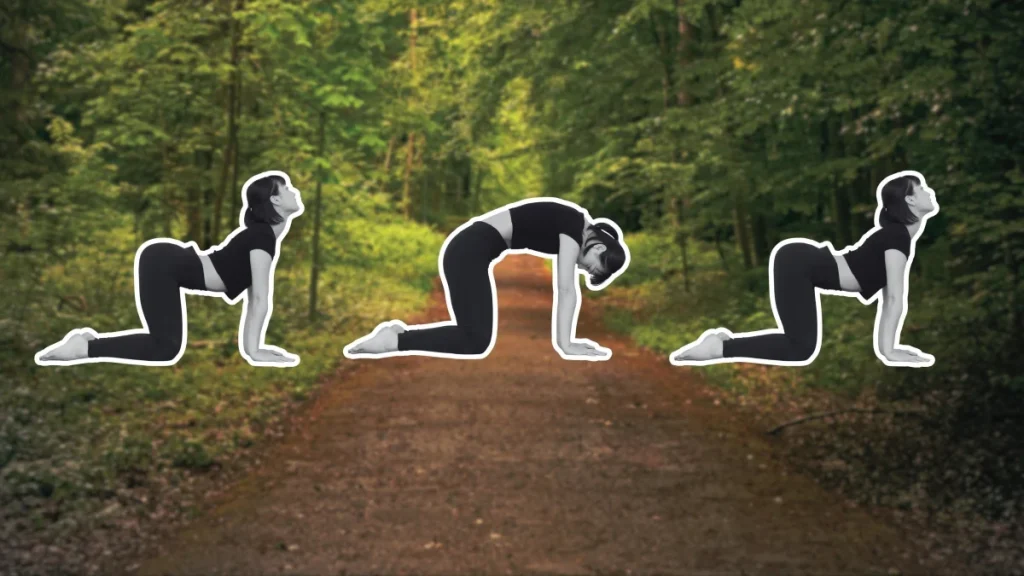
Sitting upright on a stool, or while in camp on a suitable rock or log, practitioners gently begin to mobilize the spine by alternating between arching and curling motions. The movement is driven from the pelvis rather than the neck, rippling smoothly through the entire spinal column, comparable to a seated version of the cat-cow pose found in yoga. This is repeated as many times as feels comfortable and beneficial.
Next comes the spiraling of the spine, which involves rotating the trunk gently from side to side, again driving the rotation from the pelvis rather than the head. This is followed by incorporating side arches, slowly leaning to the left and right to stretch the lateral body. The sequence then transitions into a wave pattern with the spine: keeping the arms relaxed at the sides, the practitioner curls and arches the spine while drawing the chest forward and back in a fluid motion.
Foot and Ankle Sequence
The foot and ankle sequence offers a direct introduction to the restorative potential of Gyrokinesis. By removing shoes and socks while seated, practitioners can work systematically through targeted areas.
Laying one ankle across the opposite knee allows easy access to the foot from a seated position. The process begins with what Hubbard terms foot openings, which involve massaging the sole of the foot using the thumbs, working systematically from the heel through the arch and out to the toes, with a special focus on areas that feel particularly tight. The undersides of the toes should not be neglected, as this attention feels exceptionally rewarding after a long day of hiking. Following this, each toe is grasped individually and stretched gently forward and back, along with stretching the delicate webbing situated between the toes.
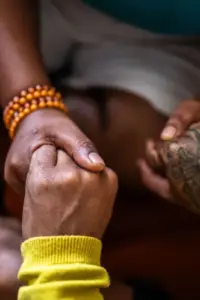
The routine continues as the foot is grasped with fingers snugly threaded between the toes, ensuring that the webbing of the foot meets the webbing of the hand. With the opposite hand providing stability to the ankle, the hand grasping the foot guides the toes through gentle circles in one direction, then reverses the direction. Next, the stabilizing hand moves above the ankle, and while the fingers remain threaded between the toes, larger circles are drawn utilizing the entire ankle joint. This dual action creates space and strength at the same time, according to Hubbard.
After removing the fingers from between the toes, the practitioner uses an open hand to gently slap the bottom of the foot. While it may seem unconventional, this action successfully brings fresh blood flow to the sole of the foot, notes Hubbard. The ankle is then shaken out to release remaining tension. Experiencing this routine highlights the immediate difference it makes, leaving the treated foot feeling distinct and refreshed compared to the untreated side.
Further foot and ankle work is best performed at home on a flat floor, or alternatively by laying a foam pad on a level patch of ground in camp. From a seated position, placing the tops of the toes on the ground stretches the front of the ankle joint, alternating between the left and right foot. With the tops of the toes remaining against the ground, the ankle joint is then rolled outward from the big toe toward the little toe, designed to achieve a thorough stretch through the front of the ankle and the entire joint complex.
Next, placing the soles of the feet completely flat on the floor, practitioners lift and spread their toes, reaching them forward as they lower them back down. They then pull the toes backward as if attempting to grip a towel lying on the floor, lifting through the arch simultaneously. After several repetitions, the motion is reversed, keeping a sharp focus on actively engaging the arch of the foot throughout the exercise.
Transitioning to a standing position, practitioners lean forward to place their hands securely on a stool, rock, or log, maintaining an engaged core without arching the back. With knees slightly bent and body weight supported through the hands, they rise onto the balls of the feet and circle their ankle joints outward, rolling across the balls of the feet toward the little toes. The circle is completed by lowering the heels and rolling onto the inside edge of the feet. Reversing directions involves rolling the ankles inward, followed by completing full circles both clockwise and counterclockwise until the joints feel thoroughly loosened and comfortable.
The ultimate objective of the entire sequence is for it to feel genuinely good, functioning in a way that mimics a therapeutic massage, Hubbard concludes. It remains completely acceptable if the achieved range of motion is small, provided the practitioner continues to listen closely to their body and halts any movement that feels uncomfortable.